
Last updated September 24, 2026
DIY vs Professional Insulation: The Cedar Park Homeowner’s Decision Guide
Renting an insulation blower for $200 and adding eight inches of cellulose over your existing attic insulation is a legitimate DIY job. But if that existing insulation sits over unsealed top plates, can lights, and wire penetrations, you’ve buried the leaks under a warm blanket, not fixed them. In Cedar Park’s climate, where attic temperatures exceed 140°F from June through September, those buried leaks pull conditioned air upward faster than the new insulation can slow it. We’ve tested hundreds of Cedar Park attics where a homeowner’s weekend project produced a 7% bill reduction, while the same home, professionally air-sealed first, then insulated, delivered 22%. This guide draws the precise line between what you can realistically do yourself and what requires equipment, training, and verification that changes the outcome; for How to Hire a Insulation Contractor in Cedar Park: A Step-by-Step Guide, see our companion resource.
Quick Answer
Most Cedar Park homeowners can handle topping off existing blown insulation, weatherstripping an attic hatch, and installing baffles at eave vents. The work that actually moves energy bills, blower-door-verified air sealing of top plates and penetrations, requires two-component foam, confined-space safety protocols, and pressurization testing equipment that costs more than most home improvement budgets. If your attic’s air-sealing status is unknown, DIY insulation alone typically yields 5-10% savings; professional air sealing plus insulation yields 18-28% on the same house.
Table of Contents
- What Homeowners Can Reasonably DIY in a Cedar Park Attic
- What Requires Professional Equipment, Training, or Certification
- The Performance Gap: What DIY Insulation Actually Delivers
- Cedar Park Climate, Building Codes, and Permit Requirements
- Liability, Resale, and Insurance Implications of DIY Envelope Work
- Cost Comparison: Real Numbers for Cedar Park
- Decision Matrix: Which Path Fits Your Situation
What Homeowners Can Reasonably DIY in a Cedar Park Attic
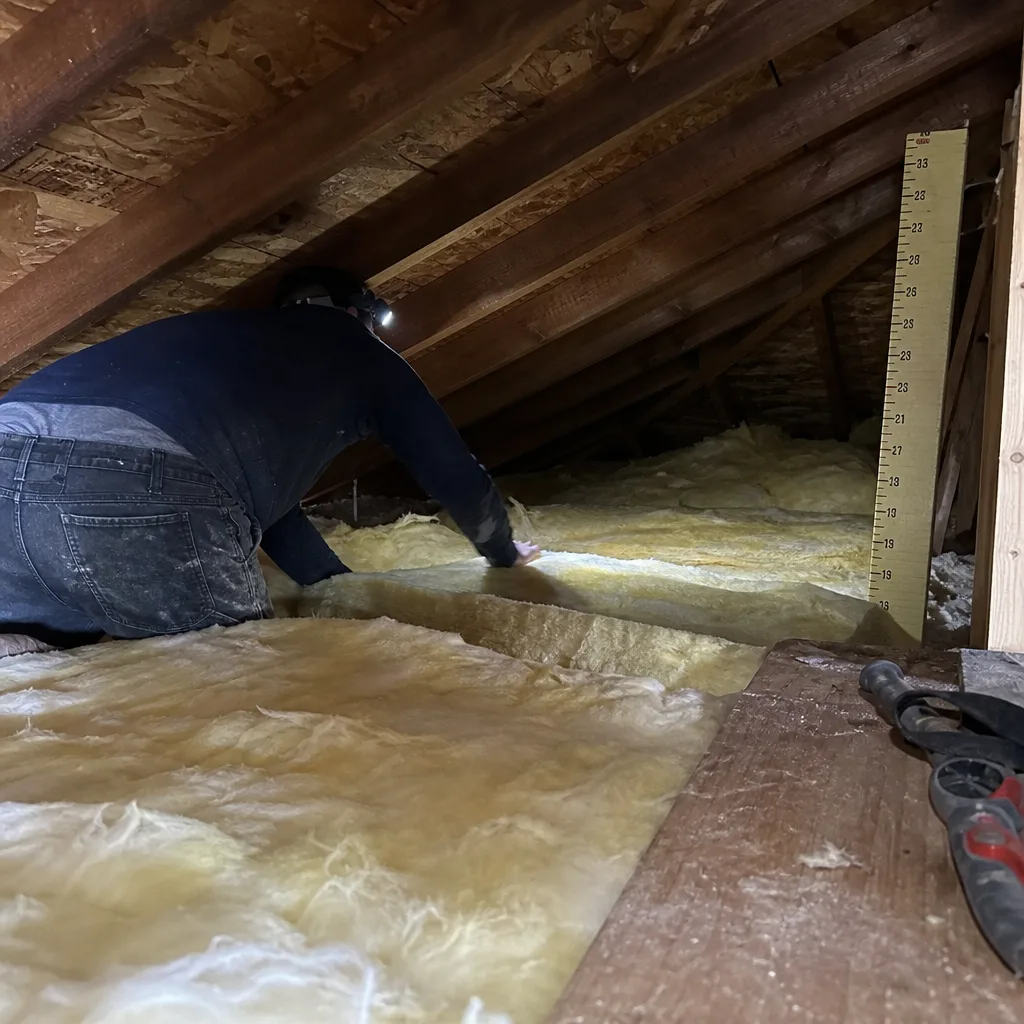
Three attic insulation tasks are genuinely within reach for a motivated homeowner with basic tools and a free weekend. Each assumes safe attic access, adequate flooring or planks to distribute weight, and work performed during morning hours before attic temperatures peak.
1. Cellulose Top-Off Over an Already Sealed Deck
This is the most common DIY insulation project, and it’s appropriate when you know, with documentation, that your attic floor was professionally air-sealed within the past few years. You’re adding thermal resistance, not solving a leakage problem.
Tools and materials:
- Insulation blower rental from Sunbelt Rentals or Home Depot in Cedar Park: $200-$280 for 24 hours
- Blown cellulose, GreenFiber or comparable: $12-$15 per bag, 20-30 bags for typical 2,000 sq ft attic to add R-19
- Respirator with P100 filters, not a dust mask: $35-$50
- Headlamp, long sleeves, taped cuffs, knee boards
- Depth markers (paint stirrers marked at target depth) every 100 sq ft
Process:
- Verify eave vents remain open; install baffles beforehand if insulation will block them
- Set blower in garage or driveway, run hose through attic access
- Work from far corner toward hatch, maintaining even depth
- Photograph depth markers and overall coverage for your records
The critical caveat: if you have recessed can lights, a chase for a fireplace or HVAC duct, or visible gaps around top plates where interior walls meet the attic floor, stop. Those leaks undermine everything you’re about to add.
2. Weatherstripping the Attic Hatch
The attic hatch is often the largest uninsulated surface in a Cedar Park ceiling. A 2′ x 3′ hatch with no seal leaks as much conditioned air as a 6-inch diameter hole in the wall.
Materials:
- Compressible foam gasket tape, 1/2″ thick: $8-$12
- Insulation board to affix to hatch underside: $25-$40
- Hook-and-eye latch or spring bolts to ensure positive closure against gasket
Clean the frame, apply gasket to the frame (not the hatch), install insulation board with foil face toward attic, and verify the latch pulls the hatch firmly closed. This 90-minute job typically improves whole-house leakage by 100-150 CFM50 on a blower-door test.
3. Installing Baffles at Eave Vents
Cedar Park’s summer humidity and winter temperature swings require continuous soffit-to-ridge ventilation. Blocked eave vents create moisture accumulation in insulation, reducing R-value and risking mold.
Materials:
- Cardboard or foam baffles, CertainTeed or comparable: $2-$4 each
- Staple gun with 1/2″ staples
Slide baffles between rafters at each eave vent, extending from soffit opening to at least 6 inches above eventual insulation height. Staple to rafter sides, not faces. Verify daylight visible through soffit vent from attic side.
What Requires Professional Equipment, Training, or Certification
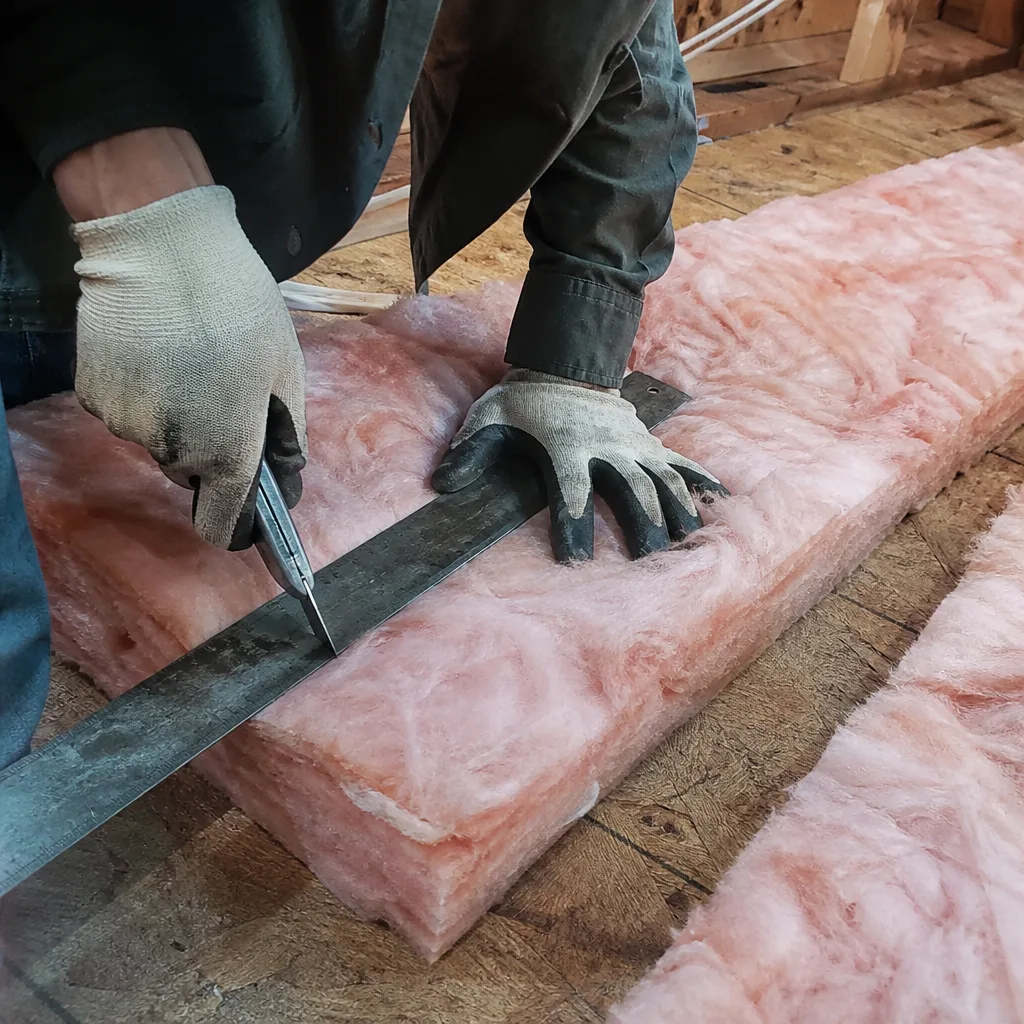
Four categories of work separate amateur results from professional outcomes. The equipment alone often exceeds $10,000; the training and regulatory compliance add further barriers that are impractical for a single project.
Two-Component Spray Foam at Top Plates and Penetrations
Top plates, the horizontal framing members where interior walls meet the ceiling, create a continuous leak path in most Cedar Park homes built before 2015. Sealing them requires accessing the narrow gap between roof trusses, often 18 inches or less, while applying expanding two-component polyurethane foam. The chemical reaction generates heat and isocyanate vapors; professional application requires supplied-air respirators, not cartridge masks, and ignition barrier coating if foam remains exposed in the thermal envelope. In Texas, spray foam applicators must hold TDLR registration, and improper installation has led to off-gassing complaints that required complete removal.
We’ve removed DIY spray foam from three Cedar Park attics in the past two years, all from homeowners who watched online tutorials. The foam was either under-applied and cracked, or over-applied and bowed framing. Both conditions trap moisture.
Blower-Door-Guided Air Sealing
A blower door, a calibrated fan that pressurizes or depressurizes the house to 50 Pascals, provides the only objective measurement of envelope leakage. Without it, you’re guessing. With it, a technician can locate leaks by pressure differential, seal them, and verify reduction. The equipment costs $3,500-$5,000; the training to interpret results and avoid false positives takes months of supervised fieldwork.
Our standard on every attic insulation in Cedar Park job: blower-door test before any work, targeted air sealing with real-time feedback, blower-door test after completion. The homeowner receives both numbers in writing. A typical Cedar Park home of 2,200 sq ft starts at 3,800-4,500 CFM50 and finishes at 2,200-2,800 CFM50 after proper sealing.
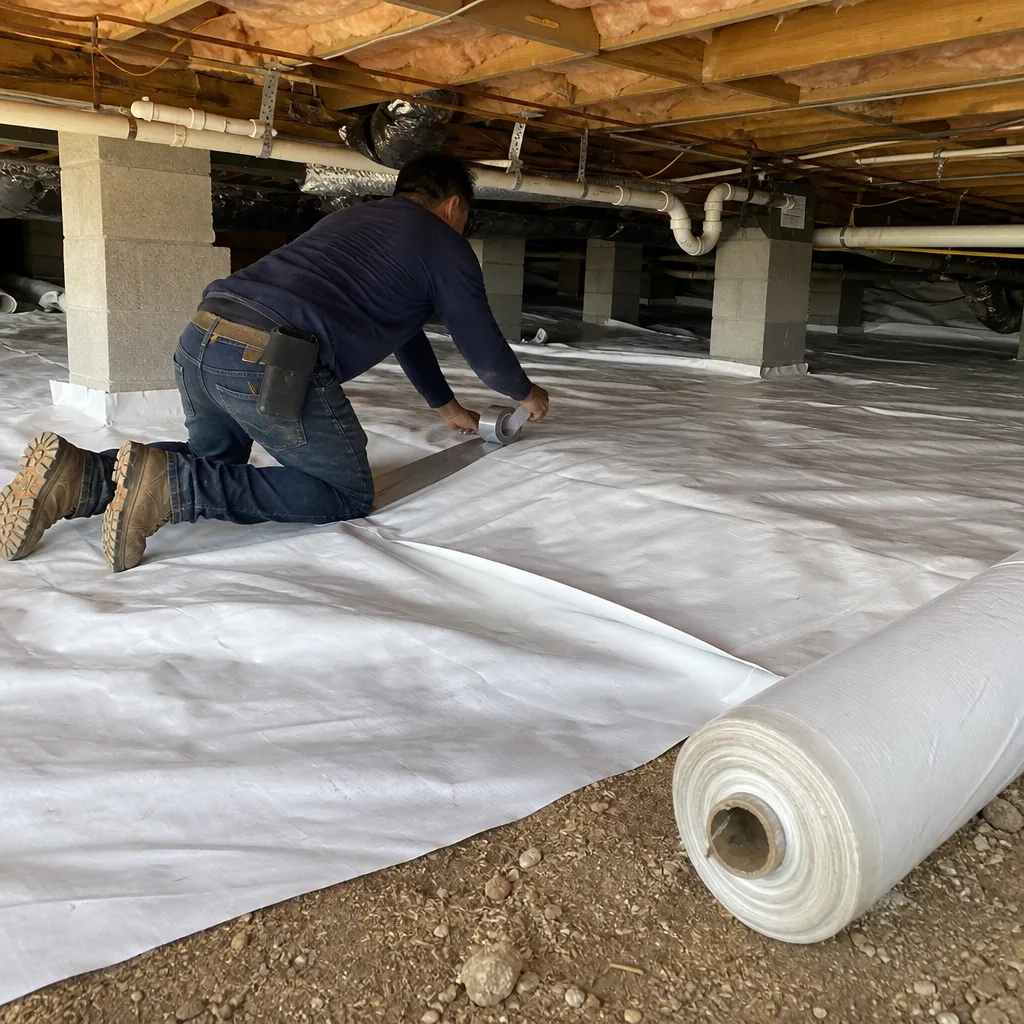
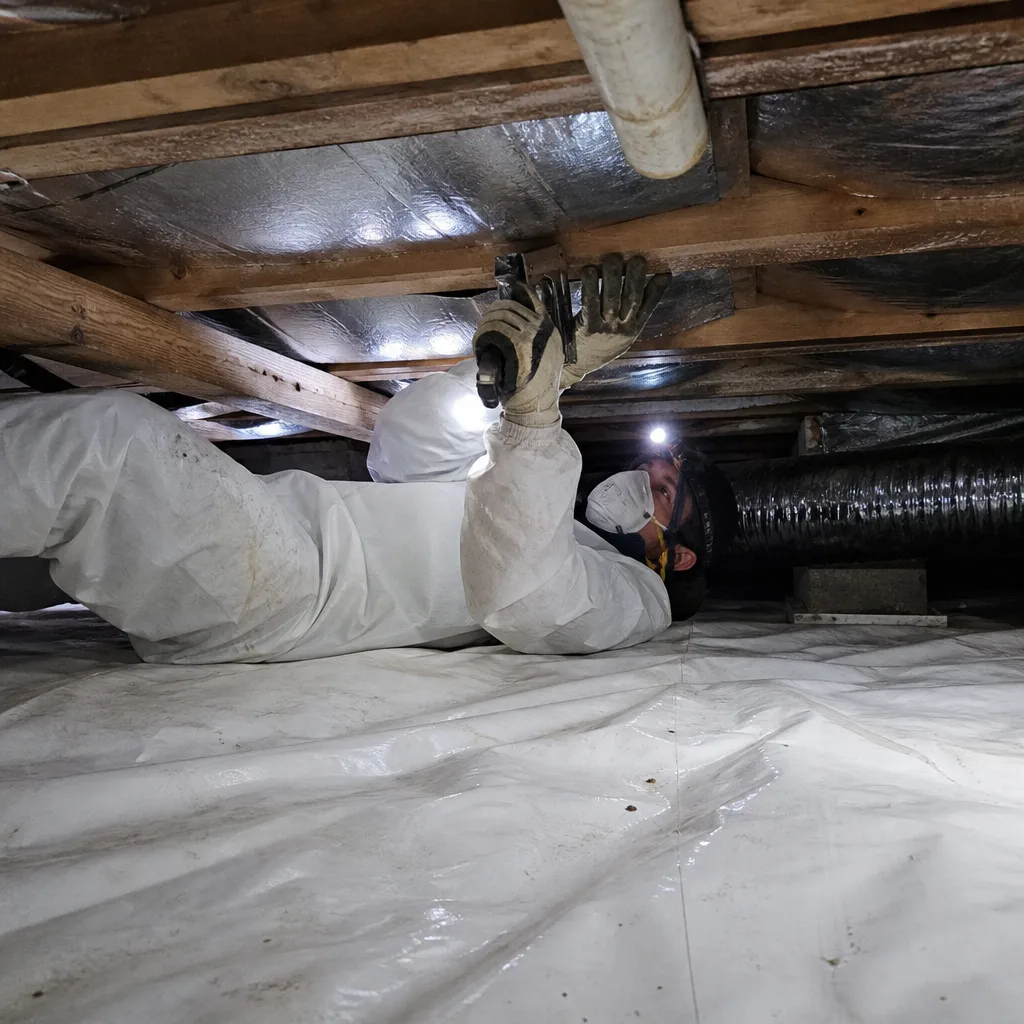
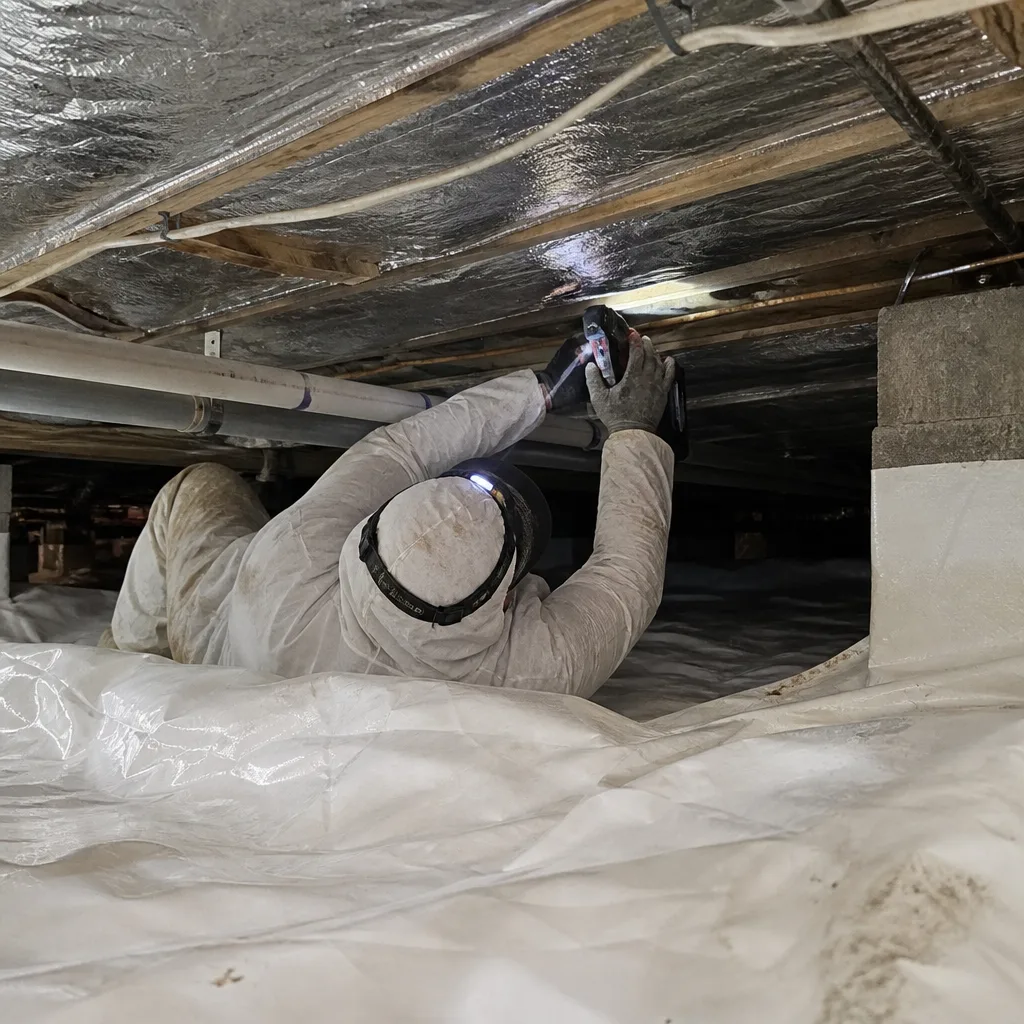
Spray Foam Encapsulation of Roof Decks or Crawl Spaces
Converting a vented attic to an unvented conditioned space, or encapsulating a crawl space, changes the building’s moisture management strategy. These projects require:
- Engineering assessment of HVAC capacity, since the envelope volume changes
- Ignition barrier coating or intumescent paint meeting IRC Section R316
- Vapor barrier design that accounts for Cedar Park’s 30-inch annual rainfall and clay soils that expand and contract
- Documentation for resale, since unpermitted encapsulation frequently appears on inspection reports
Our crawl space encapsulation and vapor barrier in Cedar Park service includes soil gas testing, drainage assessment, and written coordination with any existing HVAC contractor before foam is applied.
Insulation Removal and Contaminated Material Handling
Attics with rodent infestation, water damage, or fire smoke require removal before new insulation. This involves HEPA-filtered negative-air machines, personal protective equipment beyond homeowner grade, and disposal following Texas Commission on Environmental Quality guidelines for potentially biohazardous material. We include this in our Topside Attic Insulation Cedar Park home service line when conditions require it.
The Performance Gap: What DIY Insulation Actually Delivers
The difference between DIY and professional results is not primarily skill in handling material. It’s whether the work addresses the dominant heat flow mechanism in your specific attic.
In Cedar Park’s climate zone (IECC Zone 2), cooling dominates energy use roughly 70% of the year. Attic heat gain occurs through three paths: conduction through the ceiling assembly, radiation from the hot roof deck, and air leakage carrying conditioned air upward and superheated attic air downward. Of these, air leakage is typically the largest contributor in homes built before 2015, and the only one unaffected by additional insulation depth.
Measured outcomes from our Cedar Park jobs, 2019-2024:
| Condition | Typical Energy Reduction | Payback Period |
|---|---|---|
| DIY cellulose top-off, no prior air sealing | 5-10% | 6-10 years |
| Professional air sealing only | 12-18% | 3-5 years |
| Professional air sealing + insulation to R-49 | 18-28% | 4-7 years |
| Professional air sealing + insulation + radiant barrier | 22-32% | 5-8 years |
The 5-10% DIY result comes from our follow-up testing. Homeowners who added cellulose over unsealed attics in Cedar Park’s Anderson Mill West, Cypress Canyon, and Ranch at Brushy Creek neighborhoods reported modest comfort improvement but minimal bill change. When we later tested those attics, blower-door numbers were unchanged; the new insulation had simply buried the leaks.
By contrast, a home in Buttercup Creek where we performed air sealing first, dropping CFM50 from 4,100 to 2,400, then added Knauf Jet Stream blown fiberglass to R-49, showed a 24% cooling reduction documented across two full billing years. The insulation mattered, but only after the sealing established a boundary that could hold the thermal barrier in place.
Spray foam insulation in Cedar Park provides both air sealing and insulation in one application, which is why it occupies a distinct category, but it requires the professional application described above.
Cedar Park Climate, Building Codes, and Permit Requirements
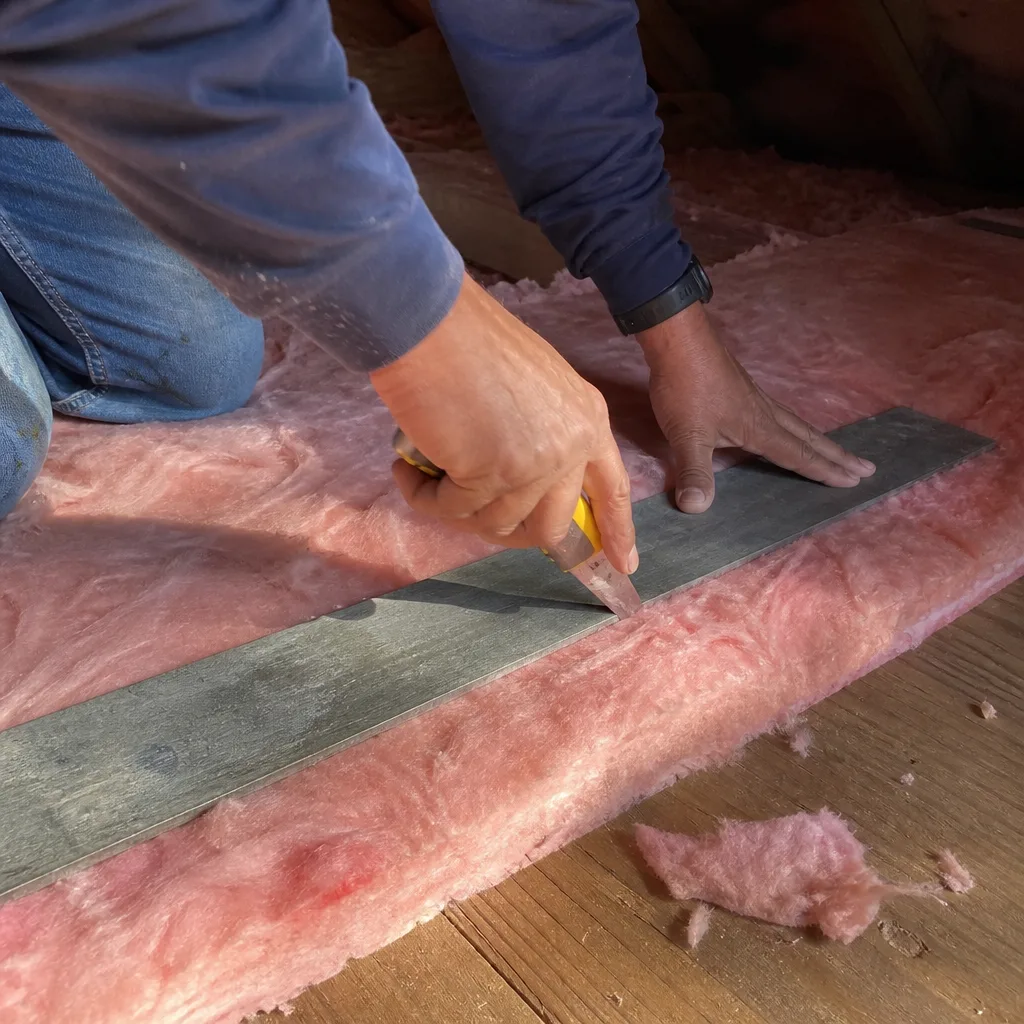
Cedar Park sits at the edge of the Texas Hill Country, with elevation 850-1,100 feet, slightly cooler nights than Austin proper, and more pronounced temperature swings. These factors matter for material selection and installation timing.
Climate-Specific Considerations
Summer attic temperatures in Cedar Park regularly reach 140-150°F, with roof deck surfaces exceeding 170°F on dark shingles. This extreme differential drives powerful stack effect, the buoyancy force that pulls conditioned air upward through any available path. In winter, occasional hard freezes, typically 2-4 nights below 25°F annually, create reverse stack effect. An envelope that leaks in summer leaks in winter; the direction simply reverses.
Humidity management is equally critical. Cedar Park’s 30-35 inches of annual rainfall, concentrated in spring and fall, plus clay soils with poor drainage in newer developments like Parkside at Mayfield Ranch, create moisture risk in crawl spaces and at eave vents. Insulation that blocks ventilation or traps moisture fails prematurely regardless of R-value.
Code and Permit Requirements
The City of Cedar Park adopts the 2021 International Residential Code with local amendments; Insulation Permits, Codes & Inspections in TX: What You Need to Know covers these in detail. Relevant requirements include:
- Attic insulation: minimum R-38 in ceilings, R-30 if space constraints exist (IRC N1102.1.1)
- Air barrier: continuous air barrier required at thermal envelope; penetrations sealed (IRC N1102.4.1)
- Spray foam: ignition barrier required if foam is exposed to living space or attic access; thermal barrier required in occupied spaces (IRC R316)
- Permits: required for spray foam application exceeding 500 board feet, for any modification of HVAC ductwork in attic, and for crawl space encapsulation that alters ventilation strategy
Unpermitted spray foam discovered at resale has delayed or killed transactions in Cedar Park’s competitive market. Inspectors flag missing ignition barriers, improper coverage depth, and foam applied over knob-and-tube wiring or unapproved recessed fixtures. The remediation cost, removal and reinstallation, typically exceeds the original professional installation price.
Neighborhood-Specific Patterns
Homes in Cedar Park’s older core, built 1980-2000, typically have minimal original air sealing and fiberglass batts that have settled to R-19 or below. Homes in 2010-2015 developments often have better initial sealing but builder-grade recessed can lights that create major leak paths. Newer construction, 2018 onward, generally meets code minimums but rarely exceeds them; the “performance gap” between code and optimized envelope remains 15-25% in our testing.
Liability, Resale, and Insurance Implications of DIY Envelope Work
DIY insulation carries risks beyond suboptimal energy savings. Three categories deserve specific attention before you start.
Homeowner’s Insurance and Fire Risk
Most homeowner’s policies cover fire damage from installed building materials, but claims adjusters investigate whether work was performed to code and by qualified persons. DIY spray foam without proper ignition barrier has been cited in claim denials following attic fires in Texas. Fiberglass and cellulose, properly installed, do not present comparable risk, but cellulose must be kept from recessed light housings not rated for insulation contact. The “IC” rating, stamped on approved fixtures, is easy to miss if you’re working quickly.
HVAC Warranty and Envelope Pressure
Sealing an attic without assessing HVAC return air paths can create negative pressure in the house, pulling garage fumes, soil gases, or attic dust into living space. It can also overload air handlers not sized for reduced envelope leakage. We’ve corrected three Cedar Park homes where aggressive DIY sealing, using caulk and foam board, made the house so tight that the existing furnace failed to establish draft, triggering rollout safety switches. The HVAC manufacturer’s warranty did not cover the service calls because the envelope modification was unprofessional.
Resale Disclosure and Inspection Findings
Texas Property Code requires sellers to disclose known defects and material alterations. Unpermitted spray foam, visible DIY wiring modifications in attic, or insulation blocking ventilation are common inspection findings in Cedar Park. Buyers in this market, particularly those relocating from California or the Northeast with experience in energy-efficient homes, often request blower-door testing as a contingency. A home with no documentation of envelope work, or with visible amateur installation, sells at a discount or requires pre-closing remediation.
The documentation we provide, written scope, blower-door numbers, photo record, and permit verification, transfers to subsequent owners and supports resale value.
Cost Comparison: Real Numbers for Cedar Park
These ranges reflect our 2023-2024 pricing for typical Cedar Park homes of 1,800-2,800 sq ft; for a deeper dive, see our Insulation Cost Breakdown: The Cedar Park Homeowner’s Reference for 2026, with comparable DIY material costs sourced from local suppliers.
| Approach | Cost Range | What’s Included | Typical Energy Reduction |
|---|---|---|---|
| DIY cellulose top-off only | $400-$700 | Blower rental, 20-30 bags cellulose, basic PPE | 5-10% |
| DIY with hatch sealing and baffles | $550-$950 | Above plus weatherstripping, baffles, upgraded respirator | 7-12% |
| Professional air sealing only | $1,800-$3,200 | Blower-door testing, two-component foam at plates/penetrations, written report with before/after numbers | 12-18% |
| Professional air sealing + blown insulation to R-49 | $3,500-$6,500 | Above plus cellulose or fiberglass to depth, depth verification, photo record | 18-28% |
| Professional spray foam encapsulation, roof deck | $8,000-$15,000 | Closed-cell foam at R-38 equivalent, ignition barrier, HVAC coordination, permit, documentation | 25-35% |
The DIY cost advantage is real but narrow. A professional air sealing job at $2,400, delivering 15% energy reduction, pays back in 4-5 years at current Texas energy rates. The DIY top-off at $600, delivering 8% reduction, pays back in 6-8 years. The professional path also delivers documented results, transferable warranty, and no exposure to the liability risks above.
Under Haven Standard Clause 1, we provide a Written Price Before Any Work Starts on every job. Our Free Second Opinion on Any Written Estimate means you can bring us a competing quote and we’ll review it line by line, no obligation.
Decision Matrix: Which Path Fits Your Situation
Four variables determine whether DIY or professional work is appropriate for your Cedar Park home. Match your situation to the recommended path below.
| Budget | Attic Access | Air Sealing Status | Time Available | Recommended Path |
|---|---|---|---|---|
| Under $800 | Good flooring, standing height | Known sealed (documentation within 3 years) | 1 weekend | DIY cellulose top-off with hatch sealing; verify eave vents |
| Under $800 | Good flooring, standing height | Unknown or unsealed | 1 weekend | DIY not recommended; leaks undermine investment. Call for Free Second Opinion on any estimate you’ve received |
| $800-$3,000 | Limited, trusses at 24″ o.c. or less | Any | Flexible | Professional air sealing with blower-door verification; defer insulation if budget requires |
| $3,000-$7,000 | Any | Any | Flexible | Professional air sealing + insulation to R-49; best value for most Cedar Park homes |
| $7,000+ | Any | Encapsulation candidate (HVAC in attic, duct leakage, moisture issues) | Flexible | Professional spray foam encapsulation with full building science assessment |
| Any | Poor or hazardous (steep pitch, vermiculite, active leaks) | Any | Any | Professional only; safety and contamination protocols required |
The most common mistake we see in Cedar Park: homeowners in the second row, unknown air sealing status with limited budget, proceeding with DIY anyway. The $600 spent on cellulose that buries leaks is $600 that could have funded a professional air sealing job, or at minimum, a blower-door test to establish baseline leakage and prioritize work.
Common Mistakes to Avoid
- Insulating over recessed can lights not rated for contact. Standard can lights generate 200°F+ surface temperatures; burying them in cellulose creates fire risk. Only “IC-AT” rated fixtures can be covered. Check the stamp inside the housing before you start.
- Blocking soffit vents with new insulation. Cedar Park’s humidity requires continuous ventilation. Baffles cost $3 each; skipping them creates moisture damage that costs thousands to remediate.
- Applying spray foam without understanding expansion ratios. Two-component foam expands 100:1 or more. Over-application bows framing, cracks drywall below, and requires structural repair. We’ve removed DIY foam that lifted roof sheathing.
- Ignoring the hatch. A leaky attic hatch negates R-49 insulation above it. The thermal image always shows a bright rectangle. Weatherstripping is a 90-minute job with $15 in materials.
- Working without adequate respiratory protection. Cellulose dust, fiberglass shards, and rodent droppings are common in Cedar Park attics. A dust mask is insufficient; P100 filters or better are required for any extended work.
- Assuming more insulation is always better. Beyond R-49 in Cedar Park’s climate, additional insulation yields diminishing returns while potentially compressing existing material and reducing effective R-value. Air sealing provides better return on investment than over-insulation.
- Failing to document before-and-after conditions. Photos of depth, coverage, and any conditions encountered protect you at resale and help professionals assess later work. Our Documented Photo Record on Every Visit is standard because we’ve seen how often documentation resolves disputes.
When to Call a Professional
Call a professional when your attic’s air-sealing status is unknown, when spray foam or encapsulation is involved, when access is hazardous, or when you need documented results for resale or warranty purposes. The test is simple: if the work requires equipment you cannot rent for under $500, or training you cannot acquire in a single weekend, professional application will deliver better return on investment and eliminate liability exposure.
Topside Attic Insulation Cedar Park offers free estimates in Cedar Park. Every estimate includes a written scope, flat price, and explanation of what documentation you’ll receive. Call (737) 245-6428 to schedule, or bring us any written estimate for a Free Second Opinion, and explore more guides & resources on attic insulation. We’ve sealed and insulated over 9,000 homes since 2016, every one with a written price before work started and a documented record when the crew left. Under Haven Standard, you get a named technician, a text when they’re en route, and the 365-Day Done Right Promise on all completed work.
Frequently Asked Questions
Most professional attic insulation jobs in Cedar Park, including air sealing and blown insulation to R-49, run $3,500-$6,500 for a typical 2,000 sq ft home. Air sealing alone, with blower-door verification, runs $1,800-$3,200. We provide a Written Price Before Any Work Starts on every job, no exceptions. Call (737) 245-6428 for an exact quote on your home, estimates are free.
You can, but sequence matters critically. Air sealing must precede insulation; once cellulose covers the attic floor, locating and accessing leaks requires removing material, doubling labor cost. If your budget requires phasing, complete professional air sealing first, then DIY the cellulose top-off with our written guidance on depth and coverage. We’ve provided this path for Cedar Park homeowners who wanted to participate in the work without sacrificing results.
Spray foam provides the highest performance in Cedar Park’s extreme attic temperatures, particularly for homes with HVAC equipment or ductwork in the attic, where it effectively brings that equipment inside the conditioned envelope. The premium over blown insulation is substantial, $8,000-$15,000 versus $3,500-$6,500, but payback is faster for homes with high cooling loads or duct leakage. We assess this specifically during our energy audit, measuring duct leakage and attic temperature stratification before recommending foam.
DIY fiberglass or cellulose installation, properly executed, rarely affects warranties. DIY spray foam without ignition barrier, or any work that causes moisture damage, fire, or structural modification, can trigger coverage disputes. The specific risk is unpermitted work discovered at claim time or resale. We recommend checking your policy language for “work performed by qualified persons” clauses before proceeding with any envelope modification beyond basic top-off.
Look for documentation: a written report with CFM50 numbers, photos of sealed top plates with two-component foam, and a dated invoice from a contractor who performed blower-door testing. Without this, assume the attic is not sealed. Visual inspection helps, foam at top plates, sealed can light covers, gasketed attic hatch, but many leaks are invisible until pressurized. We offer blower-door testing as a standalone service for Cedar Park homeowners who want certainty before deciding on insulation scope.
Spring (March-May) and fall (September-November) offer moderate attic temperatures for crew work and allow the home to benefit before peak summer or winter demand. However, professional crews work year-round, starting early to avoid afternoon heat. DIY work should be confined to mornings in summer; attic temperatures above 120°F create heat illness risk regardless of fitness. We schedule Cedar Park jobs with crew safety as a priority, and never push speed over conditions.
The Bottom Line
The DIY versus professional insulation question in Cedar Park is not about whether you can handle the material. Most homeowners can. It’s about whether the work you can do addresses the mechanism that actually drives your energy bills. In our experience across 9,000 homes, air sealing is that mechanism in 80% of cases, and it requires equipment, training, and verification that aren’t available at retail. If your attic is documented as sealed, a DIY cellulose top-off is sensible economy. If the sealing status is unknown, professional assessment first prevents spending money to hide problems rather than fix them. The documented result, a number you can hold in your hand, is what separates insulation that performs from insulation that merely exists.
Written by Wes Okafor, Owner at Topside Attic Insulation Cedar Park, serving Cedar Park since 2016.