
Last updated September 24, 2026
Insulation Cost Breakdown: The Cedar Park Homeowner’s Reference for 2026
Here’s the problem we’ve watched play out across Cedar Park for nine years: two neighbors on the same street, both with 1,800-square-foot homes built in 1994, both receive attic insulation quotes within a week of each other. One pays $2,800. The other pays $4,600. Both signed for “attic insulation.” Neither bid broke down what was actually included. The cheaper job blew fiberglass over unsealed top plates and recessed can lights. The insulation performed at roughly 60 percent of its labeled R-value because conditioned air poured out as fast as the HVAC produced it. In Cedar Park’s 2,900 annual cooling degree days, that gap shows up on the July Oncor bill, not on the day of installation. This guide exists because insulation quotes in Cedar Park vary by 40 to 60 percent for identical square footage, and the difference is almost never explained on the page. For Insulation Warning Signs: A Cedar Park Homeowner’s Reference Guide, see our companion resource.
Quick Answer
Most complete attic insulation jobs in Cedar Park run between $3,200 and $6,800 for a typical 1,800- to 2,500-square-foot home, depending on whether air sealing, material removal, and blower-door verification are included. Blown cellulose top-offs start around $1.40 per square foot per inch of depth. Open-cell spray foam encapsulation averages $2.80-$4.20 per board foot installed. The lowest bid is usually missing the air-sealing labor line, which typically costs $400-$900 and determines whether your insulation performs at rated R-value or wastes it.
Table of Contents
- Why Cedar Park Insulation Quotes Vary by 40-60% for the Same House
- 2026 Installed Costs by Material and Scope
- The Hidden Line Items That Change Your Bid
- The Blower-Door Test: What It Costs and Why It Belongs in Your Bid
- Real Payback Math for Cedar Park’s Climate and Rates
- 2026 Rebates and Tax Credits: What You Can Actually Claim
- How to Compare Quotes That Are Actually Comparable
- Common Mistakes to Avoid
- When to Call a Professional
- Frequently Asked Questions
Why Cedar Park Insulation Quotes Vary by 40-60% for the Same House
The variation isn’t markup. It’s scope collapse. Contractors know that “attic insulation” is a label homeowners search for, so they optimize their bids to win on that search term, then strip out the work that makes insulation function.
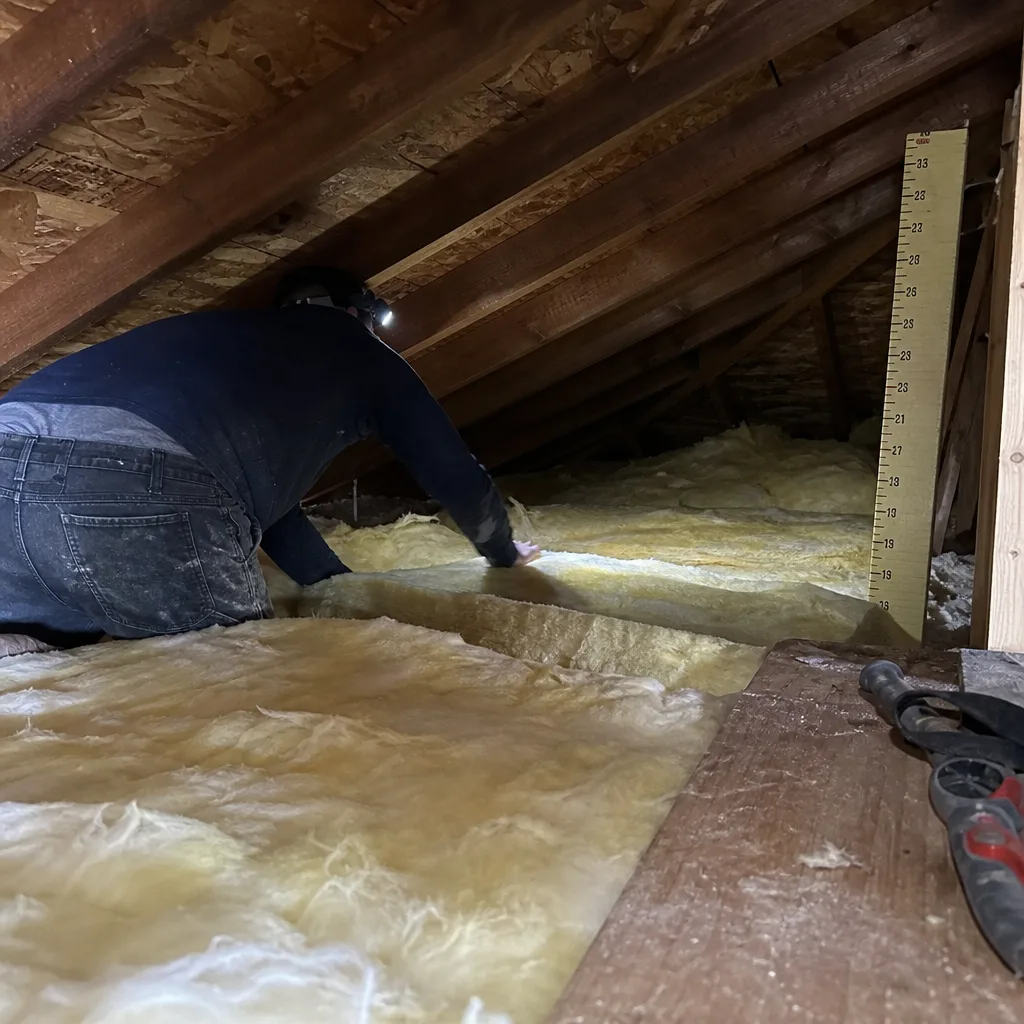
We’ve walked attics in Ranch at Brushy Creek, Buttercup Creek, and the older sections of Cedar Park west of 183 where the 1980s and 1990s builds sit. The pattern repeats. A bid for “R-38 blown insulation” at $2,400 assumes the attic floor is ready to receive material. It is not. The top plates where interior walls meet the attic deck are leaking. The recessed can lights are unsealed. The bath fan ducts terminate at the soffit or dump moisture into the insulation. The HVAC chase has a gap you could slide a notebook through. Air sealing this assembly properly adds $400-$900 in labor on a standard 1,800-square-foot slab home in Cedar Park. Without it, you’re paying for R-38 and getting R-22 performance, if you’re lucky.
The second source of variation is material specification. One contractor bids fiberglass batts at R-30. Another bids blown cellulose at R-38. A third bids open-cell spray foam at 5.5 inches. These are not interchangeable products. They have different installed densities, different air-sealing contributions, different handling requirements for ignition barriers, and different lifespans in Cedar Park’s attic temperatures, which reach 140°F in August.
Third, access difficulty. A pull-down stair with a framed opening is straightforward. A scuttle hatch in a closet ceiling requires cutting, framing, and installing a proper access door to maintain the thermal boundary. Some Cedar Park homes in the newer sections east of Ronald Reagan Boulevard have truss attics with 24-inch vertical clearance at the eaves. Others in the original Cedar Park core have 1960s rafter attics with headroom but no decking, meaning crews work from planks. These conditions change labor hours significantly.
Finally, existing material status. If your attic contains vermiculite, compressed fiberglass from a 1980s install, or rodent-contaminated cellulose, removal and disposal adds $1.00-$2.50 per square foot before new material goes in. Many low bids assume a clean deck.
2026 Installed Costs by Material and Scope
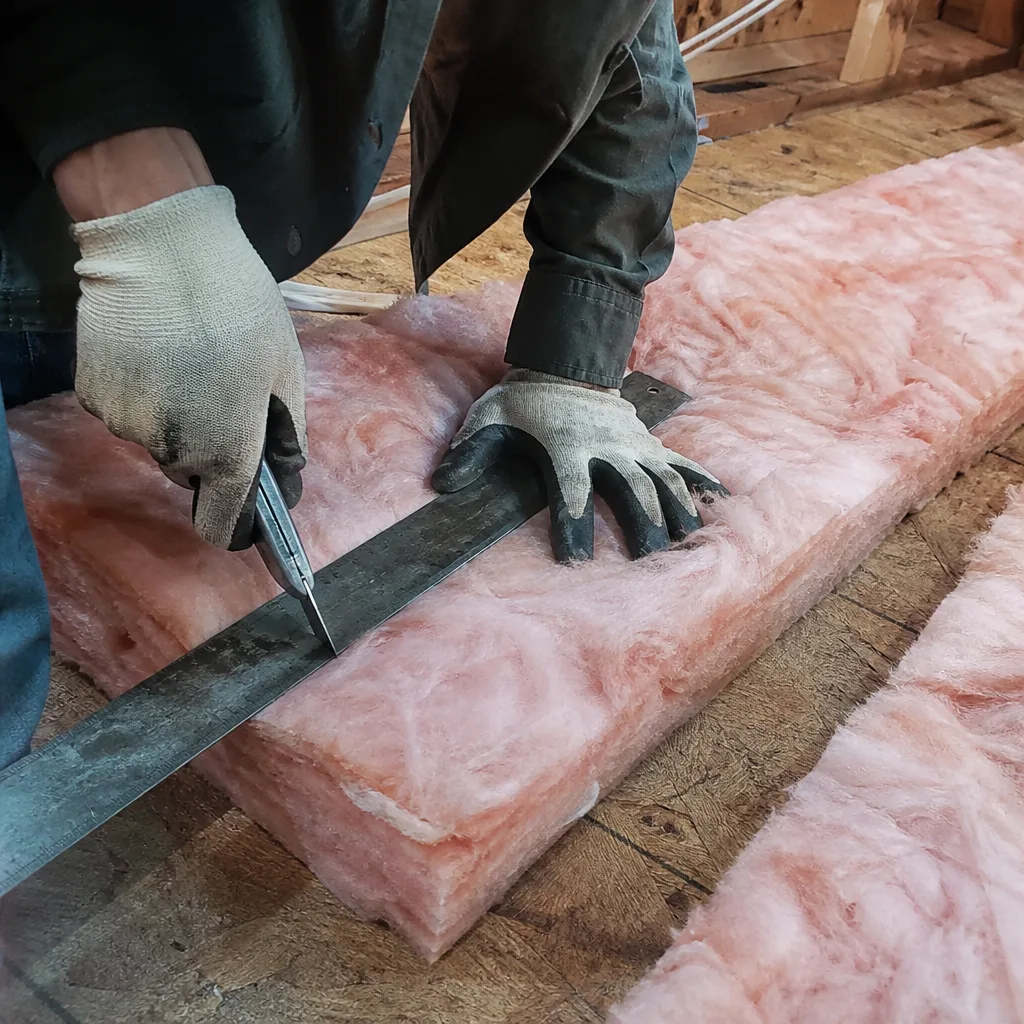
These ranges reflect Cedar Park’s labor market, material sourcing through regional distributors, and the current code requirements under the 2021 IECC with local amendments. For details on permitting, see Insulation Permits, Codes & Inspections in TX: What You Need to Know. Prices include installation but may or may not include air sealing, removal, or blower-door testing. Read carefully.
Blown Cellulose
Cellulose, typically sourced from GreenFiber or manufactured by Johns Manville, is the most common retrofit material in Cedar Park. It’s ground paper fiber treated with borate fire retardant, and it performs well in our climate when installed at proper density.
- Top-off over existing insulation (3-6 inches): $1.40-$1.85 per square foot. Assumes the existing material is clean, uncompressed, and the attic floor is already sealed.
- Full replacement with air sealing, R-38: $2.80-$3.60 per square foot. Includes removal of old material to the deck, sealing of top plates, can lights, penetrations, and blower-door verification.
- Full replacement with air sealing, R-49: $3.20-$4.10 per square foot. Required for new construction under current code; recommended for Cedar Park’s cooling load.
For a 1,800-square-foot home with 1,200 square feet of attic floor, a full R-38 replacement with air sealing typically runs $3,400-$4,300.
Blown Fiberglass
Knauf Jet Stream or CertainTeed Optima are common products here. Fiberglass doesn’t settle like cellulose but requires higher installed thickness for the same R-value and provides minimal air-sealing contribution.
- Top-off, R-19 equivalent: $1.20-$1.60 per square foot
- Full replacement with air sealing, R-38: $2.60-$3.40 per square foot
- Full replacement with air sealing, R-49: $3.00-$3.90 per square foot
Spray Foam Insulation
Spray foam is a two-component chemical system that expands on application, creating both an air barrier and thermal barrier in one step. It’s the most expensive option and the most often misunderstood.
Open-cell spray foam (half-pound density, vapor permeable):
- Attic encapsulation (roof deck application, 5.5-7 inches): $2.80-$4.20 per board foot
- Typical 1,800 sq ft attic, roof deck: $6,500-$10,500 depending on pitch complexity
Closed-cell spray foam (two-pound density, vapor impermeable):
- Rim joist sealing, crawl space or basement: $4.50-$7.00 per board foot
- Typical 1,800 sq ft home rim joist perimeter: $1,800-$3,200
Open-cell applied to an attic roof deck in Cedar Park requires an ignition barrier if the space is used for storage or contains mechanical equipment. This is an International Residential Code requirement, not a contractor preference. An intumescent coating or thermal barrier adds $0.40-$0.80 per square foot of coated surface.
Mineral Wool / Rockwool
Rockwool Comfortbatt or Knauf Insulation mineral wool products are less common in Cedar Park attics but excel for fire blocking, sound control, and applications where moisture resilience matters. Batts run $2.20-$3.00 per square foot installed, with limited blown-in availability in this market.
Radiant Barrier
Foil-faced radiant barrier, either stapled to rafters or sprayed as a low-emissivity coating, addresses radiant heat gain rather than conductive loss. In Cedar Park’s sun-exposed climate, it can reduce attic temperatures 20-30°F.
- Stapled foil, rafter application: $0.75-$1.25 per square foot
- Spray-applied radiant barrier coating: $1.20-$1.80 per square foot
The Hidden Line Items That Change Your Bid
These are the scope elements that separate a $2,800 quote from a $4,600 quote for the same address. We’ve itemized what we actually encounter in Cedar Park homes.
1. Air Sealing Labor
The line item most commonly omitted. Includes sealing top plates with caulk or foam, boxing recessed can lights with fire-rated covers, sealing bath fan housings and duct boots, and closing the HVAC chase. On a typical Cedar Park home: $400-$900. Without this, your insulation is a filter, not a barrier.
2. Existing Material Removal and Disposal
Old fiberglass batts, compressed cellulose, or rodent-contaminated material must be bagged and removed. Cedar Park disposal runs through Waste Management or Austin Resource Recovery for qualifying materials. Cost: $1.00-$2.50 per square foot of attic floor, depending on access and contamination level.
3. Deck Repair or Reinforcement
Some 1980s and 1990s Cedar Park homes have 3/8-inch OSB decking that won’t support a blower-door fan or crew traffic. Spot repair: $150-$400.
4. HVAC Equipment Relocation or Protection
If your air handler sits in the attic, it may need temporary support or relocation to insulate beneath it properly. Simple protection: $200-$400. Full relocation by licensed HVAC contractor: $800-$1,500.
5. Ignition Barrier for Exposed Foam
Required by IRC R316 for open-cell or closed-cell foam left exposed in occupied attics or crawl spaces. Intumescent paint or thermal barrier board: $0.40-$0.80 per square foot of foam surface.
6. Access Improvement
Converting a scuttle hatch to a proper pull-down stair with insulated door: $400-$800. Required if the attic is to be used for storage or if code-compliant access is needed for future maintenance.
7. Blower-Door Testing
Pre- and post-test with documented report: $250-$450. More on this in the next section.
The Blower-Door Test: What It Costs and Why It Belongs in Your Bid
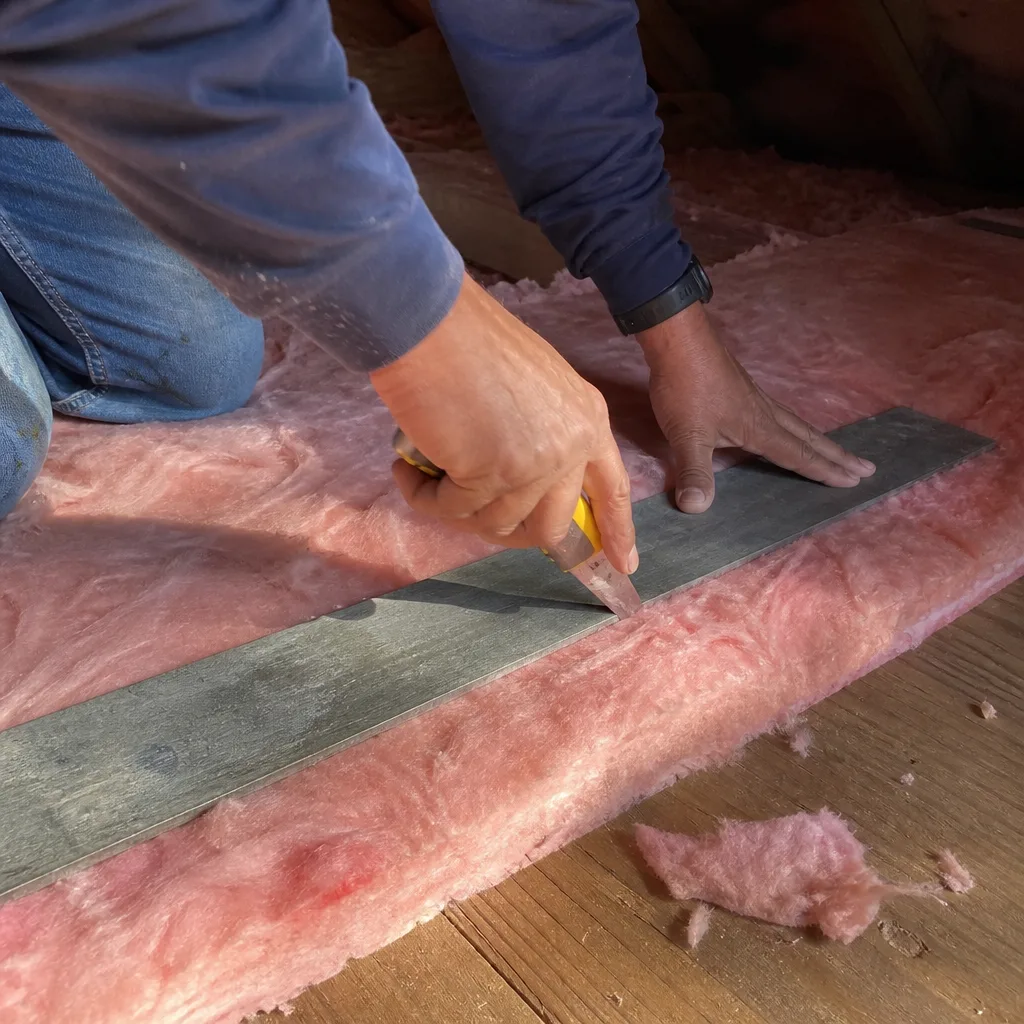
A blower-door test is a pressurization measurement that shows, in a single figure, how much air your building envelope is losing. The fan mounts in an exterior door, depressurizes the house to 50 Pascals, and measures airflow in cubic feet per minute at that pressure: CFM50. Lower is tighter. Better is lower.
In our experience across Cedar Park, a 1990s tract home in neighborhoods like Shenandoah or Cedar Park Center typically tests at 8-12 ACH50 (air changes per hour at 50 Pascals) before any work. That’s loose. A home built to 2012 IECC standards might test at 5-7 ACH50. After proper air sealing and insulation, we regularly see 3-5 ACH50 in retrofits. The blower-door test is how you know the work achieved something.
The test costs $250-$450 for a pre/post pair in the Cedar Park market. Some contractors bundle it. Some don’t offer it at all. Its presence in a bid signals something important: the contractor is willing to document a result and attach their name to a number. Under Haven Standard, we publish before-and-after blower-door numbers on every applicable job. The homeowner receives the readings in writing, with the photo record, before the crew leaves.
Here’s what a meaningful bid structure looks like:
- Pre-work blower-door test: establish baseline CFM50 and ACH50
- Air sealing of attic floor, top plates, penetrations, can lights
- Insulation installation to specified R-value and density
- Post-work blower-door test: verify reduction, identify remaining leaks
- Written report with both readings, photo documentation, and warranty
A bid without step 1 and step 4 is a bid without accountability. The contractor can install perfect insulation and leave the same air leaks open. You’ll never know. In Cedar Park’s climate, that gap costs you $30-$80 per month in extended cooling season, depending on home size and Oncor rate tier.
Real Payback Math for Cedar Park’s Climate and Rates
We’ve run the numbers honestly because inflated payback claims damage trust. Here’s the actual calculation for a typical Cedar Park scenario.
The home: 1,800 square feet, built 1994, original insulation compressed to R-19 or less, unsealed attic floor. Pre-upgrade blower-door: 10 ACH50. Cooling degree days for Cedar Park: approximately 2,900 annually. Heating degree days: approximately 1,800, though cooling dominates the load.
The upgrade: Remove old material, air seal attic floor, install R-38 blown cellulose at proper density, verify with blower-door test. Target post-upgrade: 4-5 ACH50.
The result: Verified air sealing typically reduces HVAC runtime 15-25 percent in this envelope type and climate. At current residential electricity rates through Oncor (approximately $0.13-$0.16 per kWh depending on plan and usage tier), annual savings run $380-$620 for a home this size with standard 14 SEER cooling equipment.
The investment: $3,800-$4,800 for the complete scope described above.
Simple payback: 6.5 to 11 years on energy savings alone. Shorter if the home has older, less efficient HVAC equipment. Longer if rates stabilize or the home is already reasonably tight.
But energy savings aren’t the only return. The payback calculation should include:
- HVAC equipment lifespan extension: Reduced runtime means delayed replacement. A 3-ton system replacement in Cedar Park runs $4,500-$7,500. Extending it two years is worth $900-$1,500 in avoided future cost.
- Comfort value: Rooms that were 6°F warmer than the thermostat in July now hold temperature. This has no line on the Oncor bill but has value.
- Rebates and tax credits: See next section. These can reduce first cost 10-30 percent.
We don’t promise 3-year payback because it’s not honest for most Cedar Park homes. We do document the actual result so you can verify it yourself.
2026 Rebates and Tax Credits: What You Can Actually Claim
Federal and utility programs change. Here’s what’s active for insulation upgrades in Cedar Park as of early 2026.
Federal 25C Tax Credit (Energy Efficient Home Improvement Credit)
The Inflation Reduction Act extended and modified 25C through 2032. For insulation and air sealing:
- Credit amount: 30 percent of qualifying costs, up to $1,200 annual maximum for the combined building envelope category (insulation, air sealing, doors, windows)
- Qualifying work: Must meet 2021 IECC standards or equivalent. Blown cellulose, fiberglass, spray foam, and air sealing materials all qualify when installed to code-required R-values.
- Documentation required: Itemized invoice from contractor showing material and labor separation, manufacturer’s certification statement for products used, and IRS Form 5695. The contractor must provide the manufacturer’s certification; you cannot claim without it.
- Limitation: $1,200 is the combined annual cap for all building envelope improvements. If you also replace exterior doors, the total credit across all envelope work cannot exceed $1,200 in one tax year.
Oncor Electric Delivery Energy Efficiency Program
Oncor maintains a residential rebate program for insulation upgrades in its service territory, which includes all of Cedar Park. Program details shift seasonally, but typical structures include:
- Attic insulation upgrade: $0.15-$0.30 per square foot for R-value increase of R-19 or greater, with pre- and post-inspection
- Air sealing with verified reduction: $150-$300 flat rebate when blower-door testing demonstrates 15 percent or greater reduction in CFM50
- Whole-home performance package: Higher tier rebates when insulation, air sealing, and duct sealing are completed together with pre/post testing
Documentation required: Pre-upgrade inspection by program-approved contractor, post-upgrade inspection with blower-door test, and utility bill account verification. The rebate is typically paid as a bill credit or check within 8-12 weeks of final inspection. Browse more guides & resources on home performance in Central Texas.
City of Cedar Park / Williamson County Programs
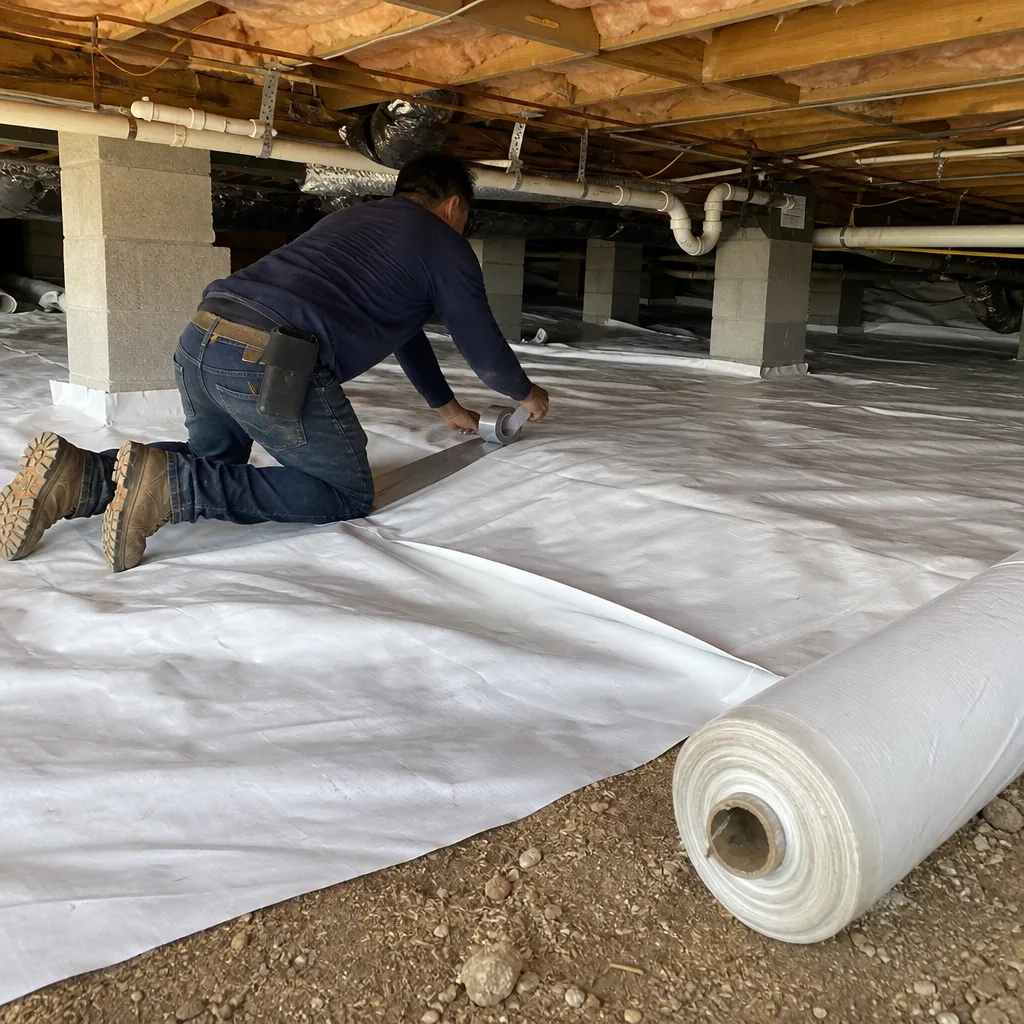
No direct municipal insulation rebate program is currently active. Some homeowners in the Brushy Creek Municipal Utility District may qualify for water-efficiency rebates if crawl space encapsulation includes moisture management tied to plumbing protection. Check current MUD statements.
Net Cost Example
For the $4,200 complete attic job described earlier:
- Base cost: $4,200
- Less Oncor rebate (attic + air sealing): ~$350
- Less 25C credit (30% of $4,200 = $1,260, capped at remaining envelope allowance): ~$850 if no other envelope work claimed
- Net cost: ~$3,000
- Adjusted simple payback: 5-8 years
How to Compare Quotes That Are Actually Comparable
We’ve reviewed competitor bids brought in for our Free Second Opinion service. The pattern is consistent. Here’s how to read them.
Step 1: Verify the R-Value and Where It’s Measured
R-38 at the attic center is different from R-38 average across the entire envelope, including over the eaves where insulation tends to thin. Ask: “Is this R-38 at the center, or R-38 average? What depth achieves that after settling?” Cellulose settles 10-15 percent. Fiberglass blown settles less. The bid should specify settled depth, not installed depth.
Step 2: Check for Air Sealing as a Separate Line
If air sealing isn’t itemized, it’s probably not included. Ask directly: “Are you sealing top plates, can lights, bath fans, and the HVAC chase before blowing insulation?” If the answer is “we’ll do what’s needed” or “we seal as we go,” ask for it in writing with a scope. Under Haven Standard, air sealing is completed before any insulation is added, and the scope is written before anyone lifts a tool.
Step 3: Confirm Material Specification
“Blown insulation” is not a material. Is it cellulose, fiberglass, or mineral wool? What brand and product line? We source from Owens Corning, Johns Manville, Knauf, Rockwool, CertainTeed, Icynene, Demilec, and GreenFiber depending on the application. The bid should name the product, not the category.
Step 4: Ask About Removal and Disposal
If you have existing insulation, the bid must address it. Leaving old, compressed, or contaminated material in place reduces new insulation performance and can violate manufacturer warranties for density and coverage.
Step 5: Request Blower-Door Documentation
A pre-test establishes what you’re paying to fix. A post-test proves it was fixed. A bid with neither is a bid without a finish line.
Step 6: Review the Warranty and What Triggers It
Our 365-Day Done Right Promise is simple: if it’s not done right, we make it right. The written scope and written warranty are delivered before work starts. Ask any contractor: “What document do I receive before the crew arrives, and what does it obligate you to?” If the answer is verbal, it doesn’t exist.
Common Mistakes to Avoid
- Choosing by price per square foot alone. A $1.40/sq ft top-off over unsealed leaks performs worse than a $2.80/sq ft job with proper air sealing. The cheaper option costs more over time.
- Ignoring ignition barrier requirements for spray foam. We’ve seen unprotected open-cell foam left exposed in Cedar Park attics. It’s a code violation and a fire hazard. The correction costs double what proper initial application would have.
- Assuming all contractors use the same installation density. Blown cellulose at 0.5 pounds per square foot is not the same product as blown cellulose at the manufacturer’s specified density for the R-value claimed. Low-density installation settles, gaps, and underperforms.
- Neglecting the access door. A pull-down stair with a 1/4-inch plywood door and no weatherstripping is a 2-square-foot hole in your thermal boundary. It defeats R-49 everywhere else.
- Skipping the pre-upgrade blower-door test. Without a baseline, you cannot verify improvement. Some contractors avoid testing because it creates accountability they don’t want.
- Claiming the 25C credit without manufacturer certification. The IRS requires this. Not all contractors provide it automatically. Ask before you sign.
- Timing work for the wrong season. Cedar Park attics are uninhabitable July through September. Schedule air sealing and insulation for October through April when crews can work carefully and material sets properly.
When to Call a Professional
Call when your summer upstairs rooms won’t cool below 78°F despite the HVAC running continuously. Call when your insulation is visibly compressed, discolored, or disturbed by rodent activity. Call when you’re comparing bids that don’t line up and you need a third party to read them with you.
Topside Attic Insulation Cedar Park offers free estimates in Cedar Park, and we don’t require a commitment to receive a written scope. Every estimate includes a documented attic assessment, a written price before any work starts, and the option for a Free Second Opinion on any competing written estimate you bring us. Call (737) 245-6428. A live person answers, 24/7.
Frequently Asked Questions
Most complete attic insulation jobs in Cedar Park run $3,200-$6,800 for a typical 1,800- to 2,500-square-foot home, with blown cellulose full replacement at R-38 averaging $2.80-$3.60 per square foot including air sealing. The lowest bids typically omit air sealing, which adds $400-$900 and determines actual performance. Call (737) 245-6428 for a written estimate with itemized scope.
Top-offs over clean, uncompressed existing insulation cost 40-50 percent less than full replacement, but they’re only appropriate when the existing material is in good condition and the attic floor is already air-sealed. In most Cedar Park homes built before 2005, we find compressed, contaminated, or poorly installed original material that requires removal for any upgrade to perform. A documented attic assessment determines which path applies.
No. Under Haven Standard, every job begins with a written price and a written scope delivered before work starts. Same-day installation skips the assessment, the blower-door baseline, and the documentation that makes accountability possible. We typically schedule installation within 5-10 business days of estimate approval in Cedar Park.
Open-cell attic encapsulation at 5.5 inches and closed-cell rim joist sealing at 2 inches are different products with different material costs, different ignition barrier requirements, and different labor profiles. One quote may include the intumescent coating; another may not. One may assume a clean deck; another includes removal. The only valid comparison is line-item scope, not bottom-line price.
If your home was built before 2012 and has never had a blower-door test, it needs air sealing. In Cedar Park neighborhoods like Buttercup Creek and Ranch at Brushy Creek, we regularly see top plate gaps, unsealed can lights, and bath fan housings leaking 200-400 CFM50 each. These leaks are invisible from the living space but dominate energy loss. The blower-door test reveals them in minutes.
R-value measures resistance to conductive heat flow through a material. Air sealing stops convective heat and moisture movement through gaps. A high R-value with poor air sealing performs like a winter coat with the zipper open. Both matter. In Cedar Park’s cooling-dominated climate, air sealing often delivers more immediate comfort improvement than R-value increase alone.
Permit requirements depend on scope. Simple blown-in top-offs over existing insulation typically don’t trigger permitting. Full removal and replacement, spray foam application, or any work involving ignition barriers may require a permit through the City of Cedar Park Development Services Department. A contractor who handles permitting as part of scope is preferable to one who leaves it to the homeowner. We include permit coordination in applicable bids.
The Bottom Line
Insulation quotes in Cedar Park vary widely because they’re pricing different jobs under the same label. The homeowner who understands line-item scope, air sealing, blower-door verification, and available rebates can compare accurately and choose based on value, not just price. The lowest bid is rarely the cheapest over the life of the home, especially in a climate with 2,900 cooling degree days and attic temperatures that stress every component of the building envelope. Demand written scope, documented results, and a contractor willing to put their name to a number you can verify.
Written by Wes Okafor, Owner at Topside Attic Insulation Cedar Park, serving Cedar Park since 2016.