
Last updated September 24, 2026
Seasonal Insulation Care for Cedar Park: Year-Round Homeowner’s Guide
The February 2021 freeze damaged more Central Texas attic assemblies through condensation on cold surfaces than through pipe failures, and that damage keeps working silently for months after temperatures normalize. In Cedar Park, we’ve pulled back batts in July that were still damp from February air leaks, the sheathing above them stained with mold that started growing while homeowners were running sprinklers in March. Most insulation failures here aren’t dramatic. They’re the slow accumulation of four seasonal stressors that never get addressed because the homeowner only thinks about insulation when the August electric bill arrives. This guide assigns specific inspection tasks to each season, with the tool, the threshold reading, and the decision point for calling a contractor, building on our Complete Guide to Insulation in Cedar Park.
Quick Answer
Seasonal insulation care in Cedar Park means four distinct inspection windows: summer checks for radiant heat degradation and ventilation adequacy, fall sealing against pest ingress, winter monitoring for condensation on cold sheathing, and spring assessment of moisture migration before adding material. A homeowner with a flashlight, depth ruler, hygrometer, and IR thermometer can catch most problems early; readings above 70% relative humidity in the attic, surface temperatures below 45°F on sheathing during freeze events, or insulation depth below R-30 in conditioned zones mean it’s time for professional evaluation.
Table of Contents
- Summer: Radiant Heat, Ventilation, and the 130°F Attic Floor
- Fall: Pest Ingress Season and the Sealing Checklist
- Winter: Freeze Events and Condensation Damage
- Spring: The Moisture Migration Window
- Your One-Page Seasonal Inspection Calendar
- Common Mistakes to Avoid
- When to Call a Professional
- Frequently Asked Questions
Summer: Radiant Heat, Ventilation, and the 130°F Attic Floor
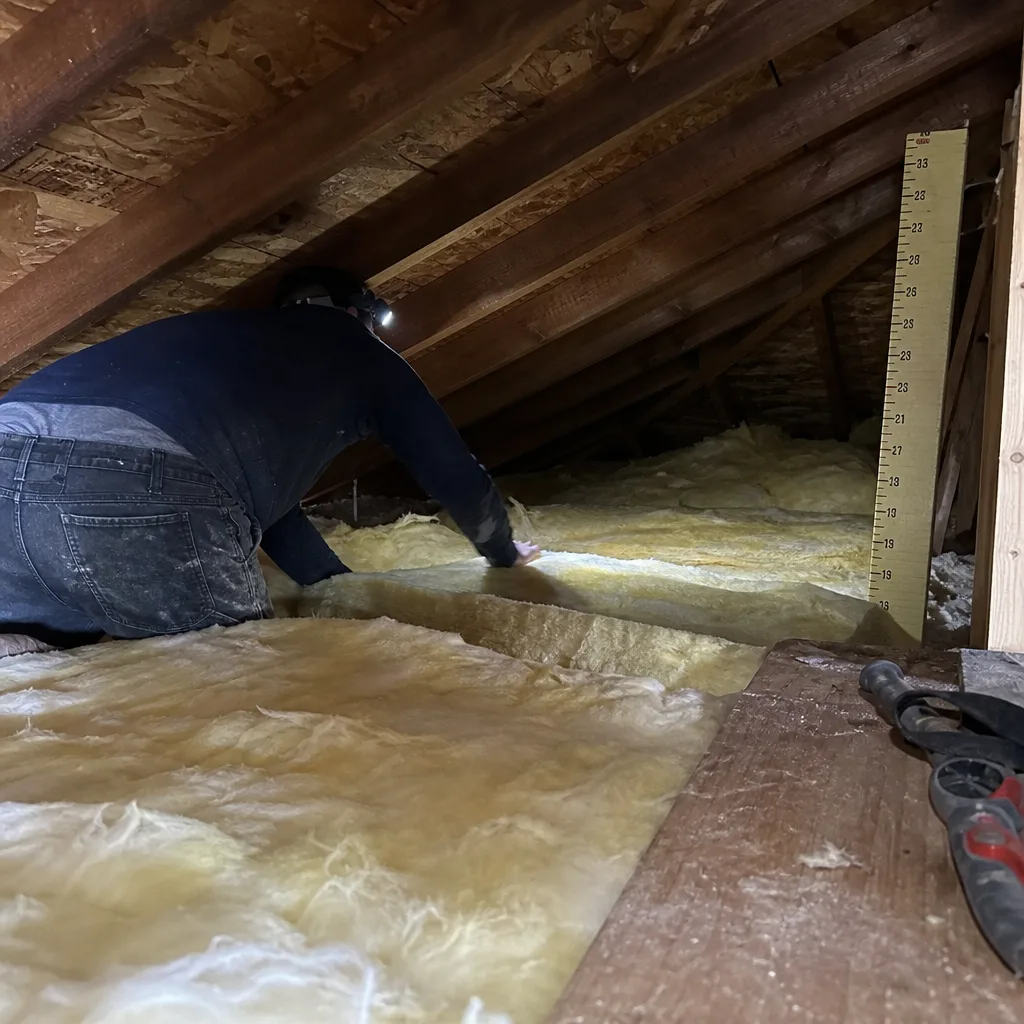
From June through September, Cedar Park attics regularly hit 140°F at the ridge. The surface temperature of your attic floor insulation, measured with an IR thermometer on a 102°F afternoon, tells you whether that heat is being managed or whether it’s cooking the material from below.
Blown cellulose, common in Cedar Park homes built 2005-2015, begins to settle and lose loft when surface temperatures exceed 130°F repeatedly. We’ve opened attics in the Ranch at Brushy Creek where the cellulose had compacted to half its original depth, creating a thermal bridge where the ceiling drywall below hit 95°F and the homeowner’s upstairs bedroom never cooled below 78°F despite a new 16-SEER unit. The fix wasn’t more insulation. It was confirming ventilation first, then replacing what had degraded.
How to Check Attic Ventilation: The NFA Calculation
Ventilation is measured in net free area, or NFA - the actual open space through a vent after accounting for louvers, screens, and framing. Building code requires 1 square foot of NFA per 150 square feet of attic floor, or 1:300 if you have balanced intake and exhaust. Most Cedar Park homes we audit have adequate exhaust vents at the ridge but choked intake at the soffit.
- Measure your attic floor length × width in feet.
- Divide by 150 (or 300 if you have both soffit and ridge vents that aren’t blocked).
- Count your vents: a typical 4×16 soffit vent provides about 26 square inches NFA; a standard ridge vent provides 9 square inches per linear foot.
- If your total NFA is below the calculated requirement, add soffit vents or clear existing ones of paint and insulation overspray before adding any insulation.
We never blow new material over blocked soffits. Under Haven Standard, air sealing and ventilation verification come first. The written scope for every attic insulation job in Cedar Park includes NFA confirmation; the photo record shows the cleared soffit before the blower truck arrives.
What 130°F+ Does to Insulation Over Time
Cellulose treated with borates loses fire resistance when those salts migrate with repeated heat cycling. Fiberglass doesn’t degrade chemically, but it loses effective R-value when compressed by homeowners or technicians walking the joists. Spray foam, whether open-cell Icynene or closed-cell Demilec products we install, is stable to 180°F surface temperature but can pull away from rafters if the substrate wasn’t properly prepared.
Summer inspection task: On the hottest afternoon of August, scan the attic floor with an IR thermometer. Surface readings above 130°F on insulation mean you need more ventilation, not more material. Surface readings above 150°F on sheathing mean your radiant barrier, if present, has failed or was never installed.
Fall: Pest Ingress Season and the Sealing Checklist
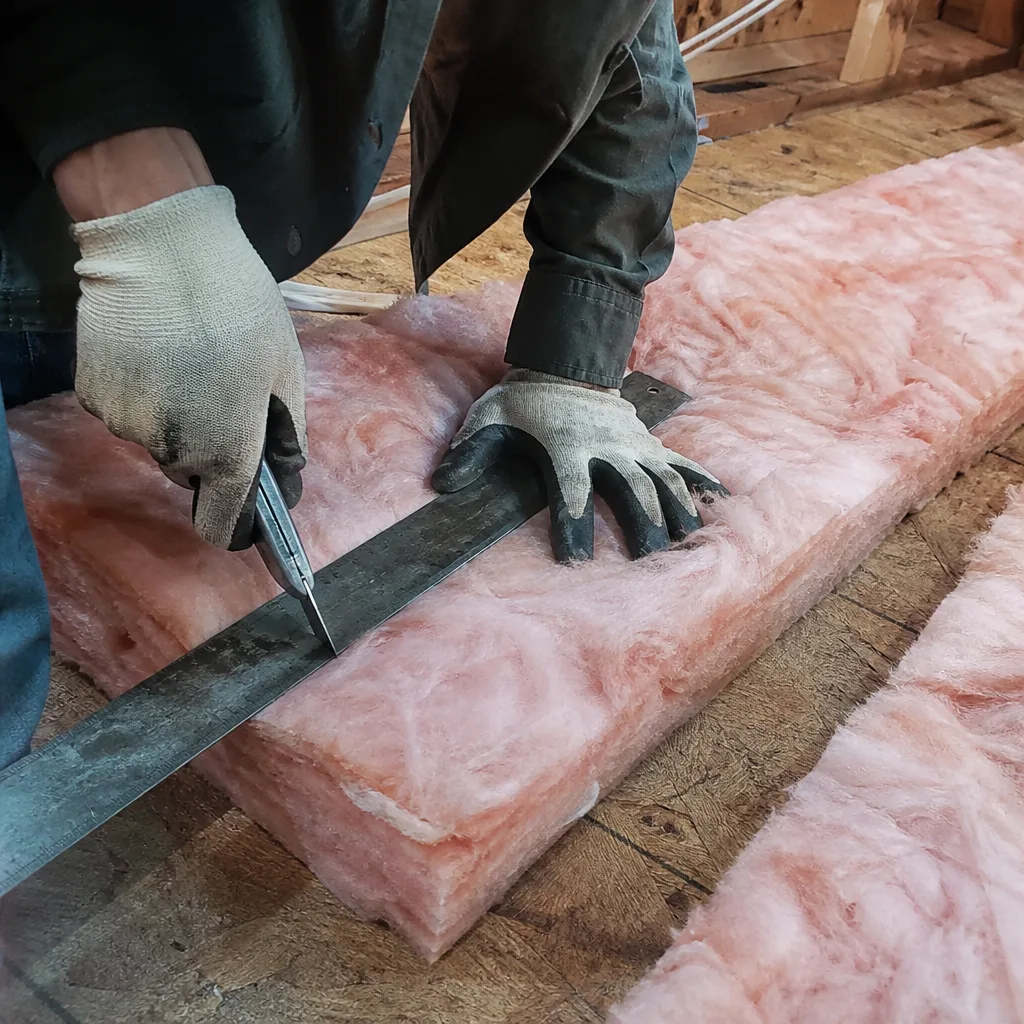
October and November in Cedar Park drive rodents, bats, and wasps into attic spaces as nighttime temperatures drop into the 50s. The entry points are almost always gaps that should have been sealed during air sealing but weren’t. We’ve found active squirrel nests in Anderson Mill attics where a 2-inch gap at a plumbing vent stack was visible from the ground with binoculars.
Fall is the last comfortable window to inspect and seal before winter. Once December hits, roof surfaces are too cold for adhesive sealants to cure properly, and you’re sealing around active pest traffic.
The Fall Pest Ingress Checklist
- Soffit penetrations: Check where electrical service, cable, and HVAC lines pass through soffit panels. Gaps larger than ¼ inch need steel wool plus silicone sealant; rodents pull straight foam out.
- Gable vents: Screen should be ¼-inch hardware cloth, not flimsy fiberglass. In Cedar Park’s limestone-heavy soils, we’ve seen screens rust through in 3 years from alkaline dust.
- Pipe chases: The chase around your furnace vent or water heater flue often has a 1-inch annular gap. Fire-rated caulk is required within 3 inches of any combustion vent; we use Rockwool safing insulation for larger gaps.
- Roof/wall intersections: In homes with complex rooflines common in Cypress Canyon and Twin Creeks, step flashing often leaves a ½-inch channel. Light from inside visible during daytime means air, heat, and pests are moving.
- Garage attic hatches: The least inspected access point. The pull-down stair frame rarely seals; weatherstrip and add latch bolts that pull the frame tight.
Materials matter here. Standard latex caulk fails in attics; we use acoustical sealant or polyurethane for non-combustion applications, and intumescent sealant where code requires fire blocking. The crawl space encapsulation work we do in Cedar Park uses the same discipline: every penetration gets a rated material, documented in the photo record.
Threshold for calling: If you find fresh droppings, gnawed wiring, or gaps you can’t safely reach from a ladder. Pest damage to insulation is almost always accompanied by air leakage; the two problems share a cause.
Winter: Freeze Events and Condensation Damage
The February 2021 freeze in Cedar Park lasted 139 hours below 32°F. But the insulation damage pattern we see most wasn’t from pipes. It was from warm, humid interior air leaking through ceiling penetrations and condensing on sheathing that had dropped to 20°F.
Condensation on the underside of roof decking doesn’t drip dramatically. It absorbs into the paper facing of fiberglass batts, wicks along framing members, and creates a slow moisture front that moves downward through the insulation profile. By May, that batt feels dry to the touch but has lost 30-40% of its R-value from displaced air pockets. By July, the mold smell reaches the living space.
How to Identify Condensation Damage Before It Spreads
- Wait for a hard freeze: In Cedar Park, that’s typically 2-3 nights per year below 28°F. January 2024 delivered four such nights.
- Access the attic at dawn, before sun warms the roof. Use your flashlight at a low angle to scan sheathing for frost crystals or water sheen.
- Check batt condition at top plates and can lights: The paper facing should be uniformly tan. Dark streaks, staining, or crumbling facing indicate past wetting events.
- Press a moisture meter into the batt face if available: Readings above 16% moisture content mean active or recent condensation. Dry wood is 6-8% in winter.
Freeze-Damaged vs. Moisture-Damaged Batts: Know the Difference
A freeze-damaged batt - rare, from actual ice formation in the material - is stiff and brittle, with fractured glass fibers that prick through the facing. A moisture-damaged batt is limp, the facing separates from the core with light pull, and the glass fibers clump rather than loft. Moisture damage is far more common in Cedar Park; freeze damage requires saturated material and sustained sub-20°F temperatures we rarely see.
Winter inspection task: After any freeze event below 25°F, check attic sheathing with an IR thermometer. Surface temperatures below 45°F on the interior side, while your thermostat reads 68°F below, indicate air leakage paths that need sealing before next season. The blower-door test we perform - a pressurization reading that shows, in one number, how much conditioned air your building envelope is losing - quantifies this exactly. We’ve seen pre-sealing readings of 4,200 CFM50 drop to 2,100 after top-plate and can-light sealing in a typical Cedar Park ranch.
Spring: The Moisture Migration Window
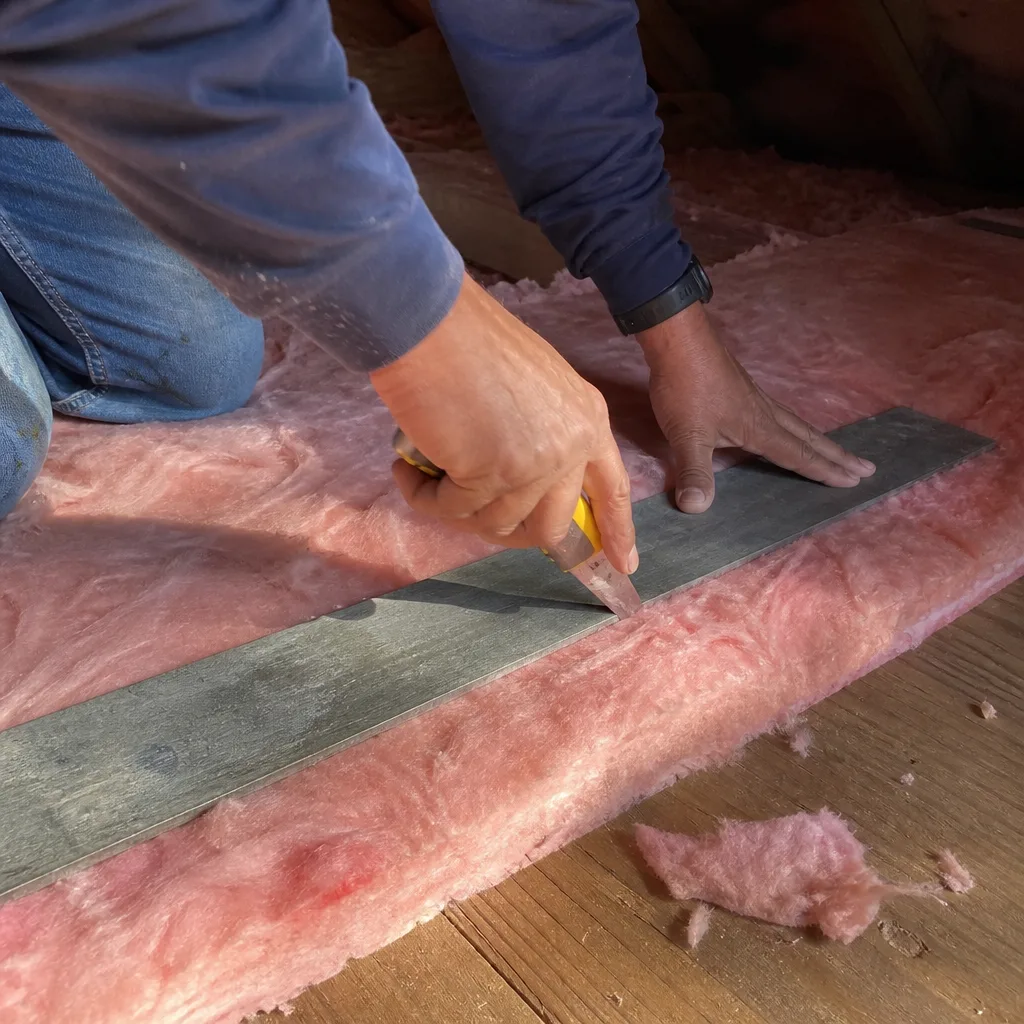
March through May in Cedar Park is when interior humidity rises faster than the attic can dry out. Rainfall averages 3.5 inches in May; outdoor relative humidity climbs from 65% to 80% on many mornings. Meanwhile, homeowners are running humidifiers, cooking with windows closed, and showering without exhaust fans after winter habits.
The moisture migration window is dangerous because it feels benign. Temperatures are moderate. Energy bills are low. But the attic is receiving humidity load it can’t exhaust if ventilation was marginal to begin with.
Reading Your Attic Hygrometer: The Decision Matrix
A $15 digital hygrometer hung from a rafter in the attic’s center, away from the hatch, gives you the critical number. Here’s what we’ve learned from 9,000+ homes sealed and insulated since 2016:
| Attic RH Reading | Condition | Action |
|---|---|---|
| Below 60% | Normal for Cedar Park spring | Monitor monthly |
| 60-70% | Elevated; ventilation or air leakage likely | Check soffit vents, bathroom fan ducting |
| Above 70% | Active moisture risk to insulation | Call for blower-door test and sealing before any top-off |
| Above 80% | Condensation likely on cool nights | Do not add insulation; seal and ventilate first |
The most common spring mistake we correct: a homeowner notices R-19 batts in a 2010 build and wants to “top off” to R-38 before summer. We open the attic and find RH readings of 75%, the existing batts damp at the facing, and no bathroom fan ducted outside. Adding material traps that moisture, accelerating compression and mold. Under Haven Standard, we deliver a written scope that sequences the fix: seal the leaks, verify the ventilation, then add insulation with before-and-after blower-door numbers published so the homeowner sees the performance change. For the full seasonal breakdown, see our Attic Insulation Maintenance Checklist for Cedar Park Homeowners.
Spring inspection task: Hang a hygrometer April 1. Check it weekly. If you hit 70% RH, stop planning insulation additions and start planning air sealing. The spray foam insulation we install in Cedar Park - open-cell Icynene for attic floors, closed-cell Demilec for rim joists - is specified only after moisture conditions are documented.
Your One-Page Seasonal Inspection Calendar
Print this. Tape it to the water heater or the inside of the electrical panel door.
| Season | When | Tool | Task | Threshold / Call Trigger |
|---|---|---|---|---|
| Summer | Mid-August, hottest week | IR thermometer | Scan attic floor insulation surface; check soffit vent clearance | Surface temp >130°F; soffits blocked |
| Fall | Mid-October, before first 50°F night | Flashlight, binoculars from ground | Inspect soffit gaps, gable screens, pipe chases, roof/wall intersections | Any gap >¼ inch; fresh droppings; damaged screens |
| Winter | Day after any freeze <25°F | IR thermometer, flashlight at low angle | Scan sheathing for frost/condensation; check batt facing at top plates and lights | Sheathing <45°F; stained or crumbling facing |
| Spring | April 1-May 15 | Hygrometer | Hang and monitor; check bathroom/kitchen exhaust ducting | RH >70% sustained; any duct disconnected or venting to attic |
Depth ruler check: Add this to any season. Measure insulation depth at three points per attic quadrant. In Cedar Park, R-30 equals about 10 inches of fiberglass or 8 inches of cellulose. Below R-30 in conditioned zones means you’re paying for heating and cooling that leaves through the ceiling. But depth without condition is misleading. We’ve measured 14 inches of compacted, moisture-damaged cellulose that performed like R-15.
Common Mistakes to Avoid
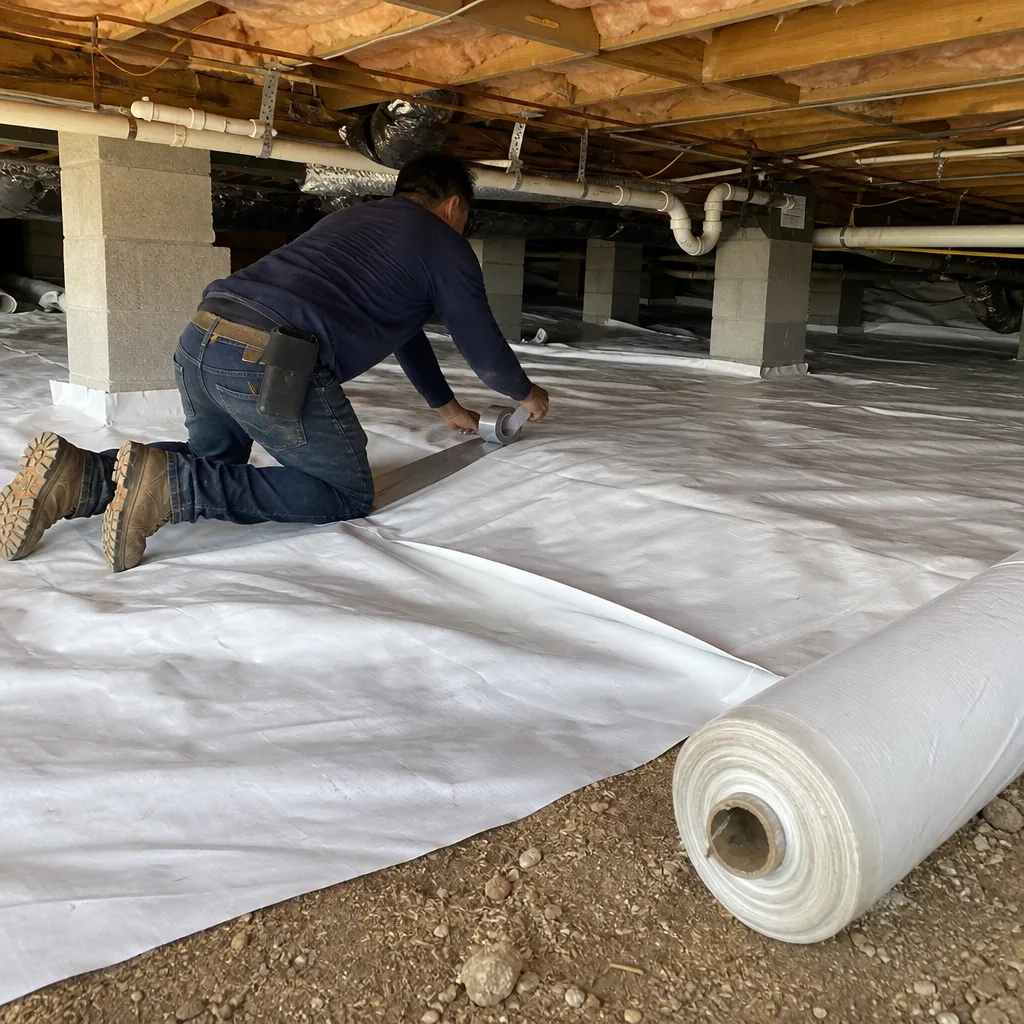
- Blowing insulation over unsealed attic floors. This is the most common error we correct in Cedar Park. New material fills the gaps where air was leaking, but the leak continues, now hidden and harder to fix. The insulation becomes a filter, trapping dust and moisture.
- Adding insulation without checking ventilation first. More R-value with inadequate NFA creates a tighter, wetter attic. We’ve removed moldy batts in Cedar Park Village where R-38 was added over R-19 with 40% of soffit area blocked.
- Ignoring the bathroom fan duct. A disconnected flex duct dumping humid air into the attic destroys insulation performance in one season. Spring inspection should include tracing every exhaust fan to its termination.
- Using the wrong sealant for the application. Latex caulk in an attic fails in 18 months; foam alone at pipe chases is rodent food; non-fire-rated material within 3 inches of a flue is a code violation and liability.
- Assuming new construction was done right. Homes built 2015-2020 in Cedar Park’s rapid expansion often have insulation installed before final air sealing, with trades cutting batts around obstructions rather than sealing and re-covering. The depth looks right; the performance isn’t.
- Waiting for the energy bill to spike. By the time your August bill tells you something’s wrong, the insulation has been degraded for two seasons. The calendar above catches problems at the cause, not the symptom.
When to Call a Professional
Call when your readings cross the thresholds in the calendar, when you find pest activity or moisture damage you can’t fully trace, or when you’re considering adding insulation and haven’t had a blower-door test in the last five years. The test takes 90 minutes, disturbs nothing, and gives you a single number that quantifies what you’ve been guessing at.
Topside Attic Insulation Cedar Park offers free estimates in Cedar Park. Every visit includes a Documented Photo Record, and on applicable jobs, before-and-after blower-door readings so you can verify the air-sealing result. Call (737) 245-6428 to schedule. Under Haven Standard, you’ll receive a written price before any work starts and a written warranty before anyone lifts a tool.
Frequently Asked Questions
Most attic insulation jobs in a Cedar Park home of 1,800-2,400 square feet run between $2,800 and $5,400 for blown fiberglass or cellulose to R-38, including air sealing of top plates, can lights, and penetrations. Spray foam applications range higher depending on open-cell or closed-cell specification and substrate condition. We provide a written price before any work starts, and a Free Second Opinion on any written estimate from another contractor. Call (737) 245-6428 for an exact quote.
A homeowner can safely measure depth, check vents, and seal accessible gaps with proper materials. Blowing insulation, working near combustion vents, or walking attic framing requires training and equipment we don’t recommend renting, a question we explore in our DIY vs Professional Insulation: The Cedar Park Homeowner’s Decision Guide. The bigger risk is adding material over air leaks you haven’t found; we’ve removed homeowner-installed insulation in Cedar Park that trapped moisture for three years. If your hygrometer reads above 70% or your blower-door number is unknown, call for evaluation first.
Check the paper facing of fiberglass batts at top plates and can lights for dark staining or crumbling. Press the batt gently; moisture-damaged material is limp and the facing separates easily. If your attic has never been inspected since February 2021, schedule a professional evaluation; we’ve found active mold in attics where homeowners assumed “it got cold, then it warmed up, so it’s fine.”
Air sealing stops the movement of air through gaps and penetrations; insulation slows heat transfer through solid materials. Insulation does not stop air. A batt with air blowing through it performs like a window screen. Under Haven Standard, we seal first, then insulate, in that order, and we publish the blower-door numbers that prove the seal.
Follow the seasonal calendar in this guide: four focused inspections per year, each taking 20-30 minutes. A full professional evaluation with blower-door test every 5 years, or before any insulation addition, keeps performance documented. Homes in Cedar Park’s wind-exposed areas like Buttercup Creek may need more frequent soffit checks.
Only if the old material is contaminated, moisture-damaged, or compressed below 50% of original depth. We’ve topped off properly installed, dry fiberglass in Cedar Park homes where the original R-19 was performing to spec. We’ve also removed entire attic profiles where rodent contamination or mold made addition inappropriate. The photo record from our evaluation shows you which condition yours is in.
The Bottom Line
Cedar Park’s insulation system faces four distinct seasonal stressors, and the homeowner who only reacts to the August electric bill is repairing damage that started in February. Summer ventilation verification, fall pest sealing, winter condensation monitoring, and spring humidity assessment, each with a specific tool and threshold, prevent the slow degradation that makes insulation replacement expensive. The inspection calendar above takes two hours per year. A professional blower-door test every five years, with before-and-after numbers published, confirms what your own readings suggest. Start with the hygrometer this spring, or call for a free estimate if your thresholds are already crossed, and explore more guides & resources on attic performance.
Written by Wes Okafor, Owner at Topside Attic Insulation Cedar Park, serving Cedar Park since 2016.