
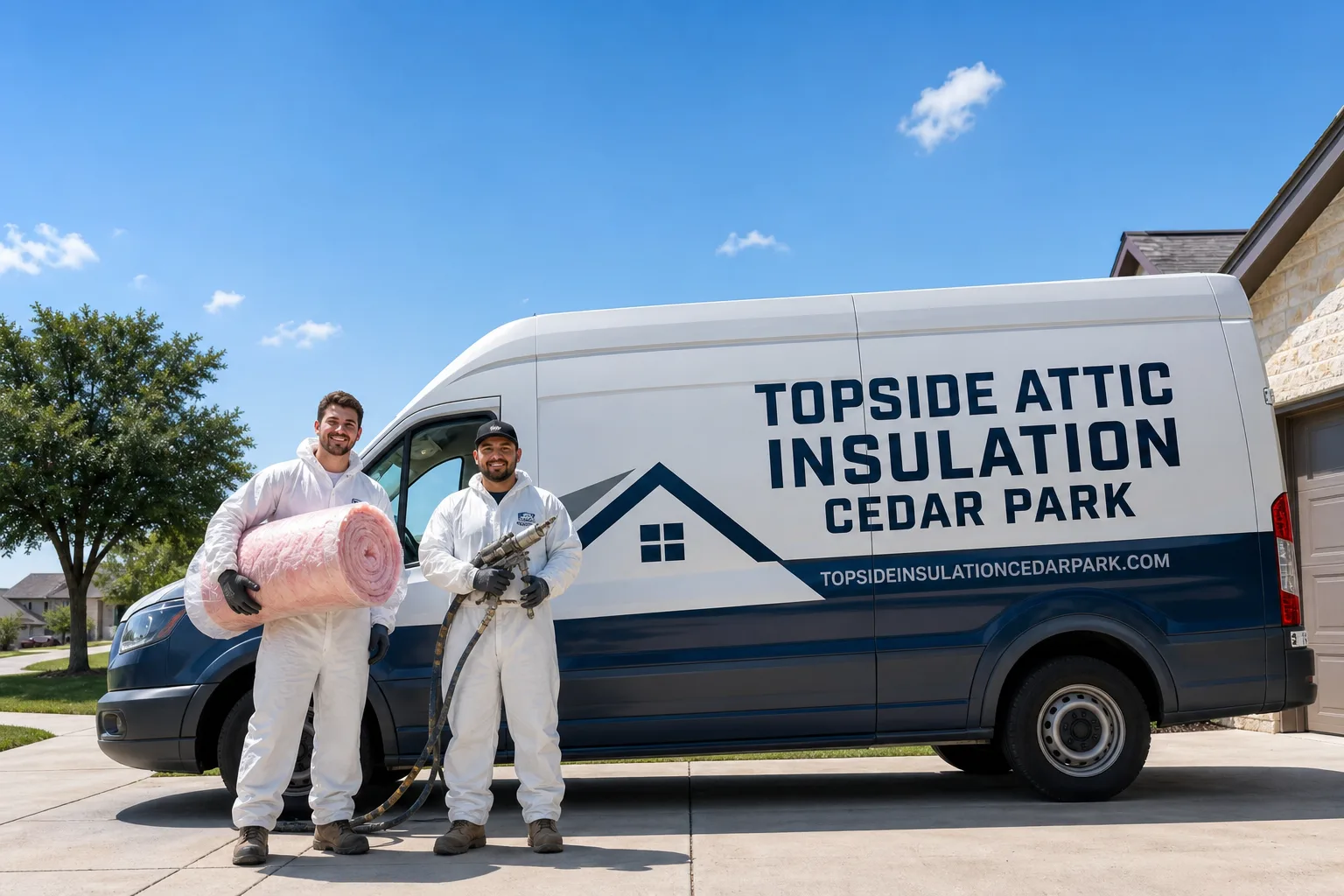
Fast, Reliable Blown-In Insulation Across Cedar Park
Blown-in insulation in Cedar Park typically costs between $1,800 and $4,200 for a full attic upgrade, with most jobs completed in a single day. We dispatch crews to Cedar Park from our Austin office, and most homeowners in Twin Creeks, Forest Oaks, and Cypress Creek see us within 24-48 hours of calling. If your home was built between 2003 and 2015, there’s a strong chance your attic was insulated to the bare code minimum and has since degraded well below its original R-value. Call (737) 245-6428 for a written price before any work starts.
Why Topside Attic Insulation Cedar Park Is Cedar Park’s Preferred Blown-In Insulation Company
We’ve sealed and insulated more than 9,000 homes since 2016, and a disproportionate share of our blower-door records come from Cedar Park’s master-planned neighborhoods. The pattern is consistent: production builders here installed R-22 to R-30 fiberglass batts, skipped the air sealing, and moved to the next slab. We know because we test before we quote.
Our Cedar Park customers leave reviews that mention the same details: the written price that arrived before the crew, the photo record they received at the end, and the blower-door number that proved the attic stopped leaking. We don’t ask for trust; we document the work.
Response time to Cedar Park runs same-day to next-day for standard appointments. Emergency calls during extreme heat events get prioritized. A live person answers the phone 24/7, and you’ll get a text when your technician is en route.
Our crews understand the local housing stock because it’s nearly uniform: slab-on-grade construction, vented attics, compacted batts, and unsealed top plates. That predictability means we can scope jobs accurately and stand behind our written prices.
Our Blown-In Insulation Services in Cedar Park
Blown-In Cellulose
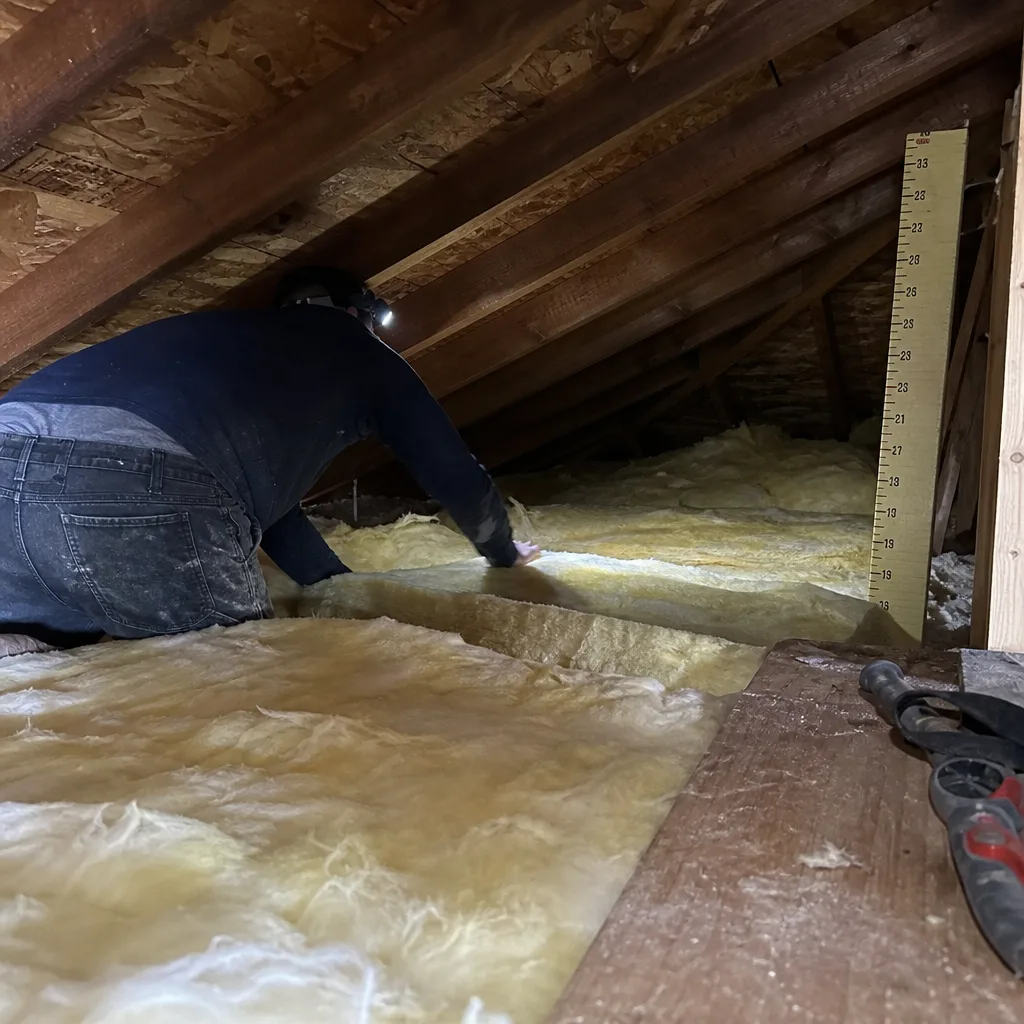
We blow GreenFiber cellulose in most Cedar Park attics, especially in the 2003-2015 production homes where the original fiberglass has collapsed. Cellulose settles less than loose-fill fiberglass and performs better at the temperature extremes Cedar Park sees, from 150°F attic peaks to hard freezes. We install it to R-49 after air-sealing, not over it. The material is treated for fire resistance and pest deterrence, which matters in attics where roof rats have found entry through unsealed gaps.
Blown-In Fiberglass
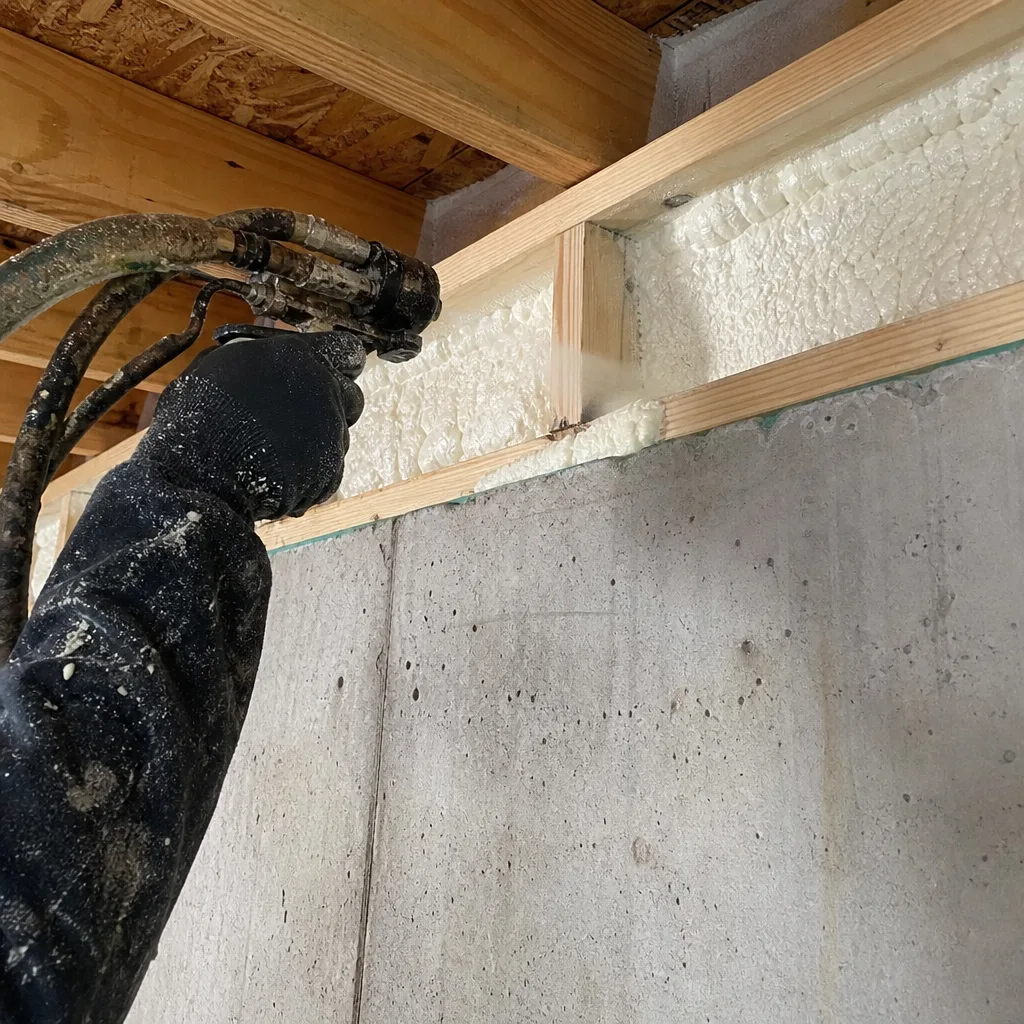
For homeowners who prefer fiberglass, we stock Knauf and Johns Manville loose-fill products. Blown-in fiberglass works well in Cedar Park when the attic floor is already reasonably flat and the primary issue is insufficient depth rather than complete degradation. We typically see this in newer construction or in homes where a previous owner added some insulation but never addressed the air leaks. We still seal first. The fiberglass goes in after.
Dense-Pack Wall Insulation
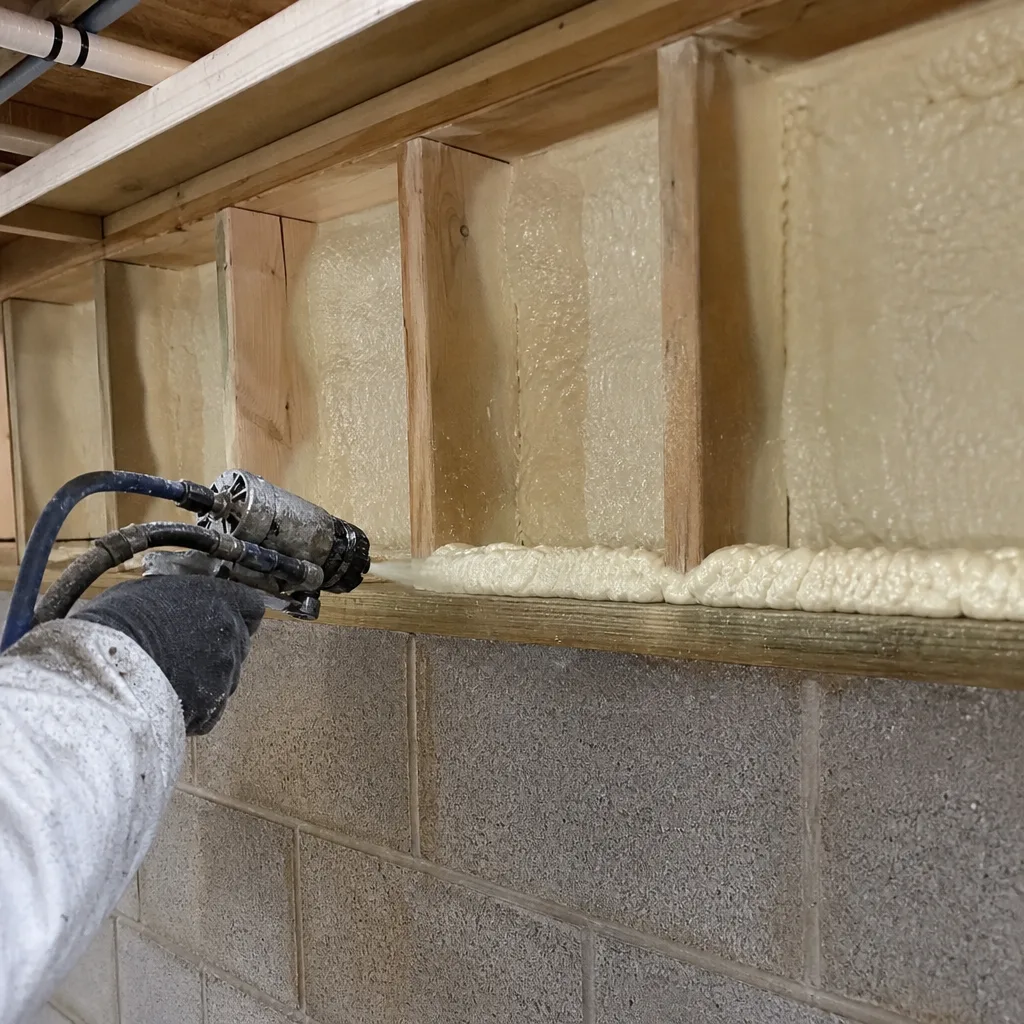
Cedar Park’s production homes were built with empty exterior wall cavities, no insulation at all. Dense-packing fills those 2×4 walls with cellulose at 3.5 pounds per cubic foot, creating an air-impermeable barrier that cuts convection through the stud bays. We access the walls from outside through the siding, or from inside through small patches if the exterior is stucco or brick. A Cypress Creek homeowner we worked with last summer saw his west-facing bedroom wall drop from 92°F surface temperature to 78°F after dense-packing. The blower-door test confirmed the improvement: 3,800 CFM50 before, 2,400 after.
Blown-In Top-Up
Not every Cedar Park home needs a full replacement. If your existing insulation is in decent shape but has settled below R-38, a top-up after targeted air sealing can get you to R-49 for less than half the cost of a full redeck. We see this scenario most often in homes built after 2012, where the original batts haven’t fully collapsed but the builder stopped at R-30. The key is testing first. We don’t guess at R-value; we measure depth, condition, and density, then write a scope that specifies exactly how many bags and where the sealing happens.
What happens when you call
- 1
A real person answersNo phone trees - you reach a local pro.
- 2
You get an upfront price rangeHonest numbers before anyone is dispatched.
- 3
A background-checked tech heads outLicensed & insured, dispatched right away.
- 4
You approve before work beginsNothing starts until you say go.
Trusted Brands We Service in Cedar Park
We source blown-in materials from Knauf, Johns Manville, and Rockwool, among others, and we don’t lock you into a proprietary product. Our Cedar Park warehouse stocks GreenFiber cellulose and Knauf fiberglass in quantity, so most jobs don’t wait on delivery. If you have a preference based on prior research or a neighbor’s recommendation, we’ll spec it in the written scope. The Haven Standard requires that you know what you’re getting before anyone lifts a tool.
Common Blown-In Insulation Problems We See in Cedar Park Homes
- Compacted batts performing at half their rated R-value. The R-22 to R-30 fiberglass installed by volume builders in Twin Creeks and Forest Oaks has sagged and compressed over 10-20 years. By the time we open the hatch, many attics are effectively at R-11 to R-15, right when Central Texas summers are getting longer and hotter.
- Unsealed top plates and recessed cans turning insulation into a filter. Blown-in material installed over an unsealed attic floor acts like a furnace filter: it slows the air but doesn’t stop it. Cedar Park’s 150°F attic air keeps migrating into conditioned space through gaps at the wall top plates, can light housings, and the attic hatch itself. The HVAC runs constantly. The bill climbs. The homeowner blames the insulation depth when the real problem is the air path underneath it.
- Blown fiberglass over unsealed flex duct in attic plenums. We’ve found this repeatedly in Cypress Creek homes where a previous contractor added loose-fill fiberglass around HVAC flex runs without sealing the plenum or the duct connections. The new R-value never shows up on the bill because the 160°F attic air is cooking the flex from the outside while conditioned air leaks from the inside. The insulation is technically present. Functionally, it’s doing almost nothing.
- Attic decking installed directly over uninsulated gaps. Many Cedar Park homeowners added plywood decking for storage without raising it above the insulation plane. The compressed batts beneath those sheets are crushed to R-5 or less, creating thermal bridges that show up clearly on our thermal imaging. We address this with raised storage platforms or by relocating decking to sealed, insulated zones.
Pricing for Blown-In Insulation in Cedar Park, TX
Most full attic upgrades in Cedar Park run between $1,800 and $4,200, depending on square footage, existing conditions, and whether we’re adding a top-up or doing full air sealing plus new blown-in material. Dense-pack wall insulation for a typical 2,000-square-foot home adds $2,400 to $3,800. A blown-in top-up after air sealing, for homes where the existing layer is salvageable, typically falls between $1,200 and $2,400.
What moves the number: attic accessibility, the extent of air sealing required, whether we need to relocate decking, and the target R-value. Every quote includes a written scope, a written warranty, and the 365-Day Done Right Promise. We also offer a Free Second Opinion on any written estimate from another contractor. Bring us their scope; we’ll read it with you. Call (737) 245-6428 for a written price before any work starts.
We Also Serve Cities Near Cedar Park
Our crews work throughout the northern Austin metro, including Blown-In Insulation in Cedar Park as well as Leander, Round Rock, Pflugerville, and Georgetown. Dispatch and scheduling are coordinated from our Austin office, but the technicians serving your neighborhood live and work locally. If you’re in one of these surrounding communities and found this page, the same written-price, documented-record process applies. Our Blown-In Insulation team covers the full metro area with the same Haven Standard requirements.
Serving Cedar Park, TX - Our Local Coverage Area
We’re based in the Cedar Park area and know this community well. Use the map below to see our service coverage - if you’re nearby, we can almost certainly help.
FAQs - Blown-In Insulation in Cedar Park
A 2009 Cedar Park home typically needs air sealing plus a top-up, not full removal, unless the original batts are water-damaged or heavily degraded. Most production homes from that vintage in Twin Creeks or Forest Oaks still have intact fiberglass that’s simply settled below code; we test depth and density before recommending anything. Call (737) 245-6428 and we’ll scope it in writing.
Your 15-year-old Cedar Park home was likely insulated to R-22 or R-30 with no air sealing, and that original material has compacted to roughly half its rated performance while attic temperatures routinely exceed 150°F. The HVAC is fighting a thermal leak it was never designed to overcome. We see this exact scenario weekly in Cypress Creek and Forest Oaks; the fix is sealing first, then blowing to R-49. Call (737) 245-6428 for a blower-door test and written scope.
Not necessarily. We can work around limited decking by raising it on proper supports or relocating it to zones that don’t compromise the insulation plane. If the decking covers most of the attic floor, we may recommend removing it to access and seal the full surface, but we’ll specify that in the written scope before you decide. Every Cedar Park job starts with a documented photo record so you see what we’re working with.
We specify R-49 for Cedar Park attics, which is the current IECC code standard for our climate zone and provides margin for both summer heat gain and winter heat loss. R-38 is the minimum, but it doesn’t account for the degradation we see in 10-20-year-old production homes or the thermal stress of 150°F attic peaks. The Haven Standard requires that we quote to a performance target, not just a code minimum.
Yes. We dense-pack exterior walls through small exterior openings in the siding, or through interior patches if the exterior is stucco or masonry. The holes are 2-3 inches, drilled at stud-bay spacing, and patched to match. Most Cypress Creek homes have empty 2×4 cavities; dense-packing them cuts the thermal bypass that makes west-facing rooms unbearable by 4 p.m. Call (737) 245-6428 for a written price on wall insulation.
Written by Wes Okafor, Owner at Topside Attic Insulation Cedar Park, serving Cedar Park since 2016 under The Haven Standard.