
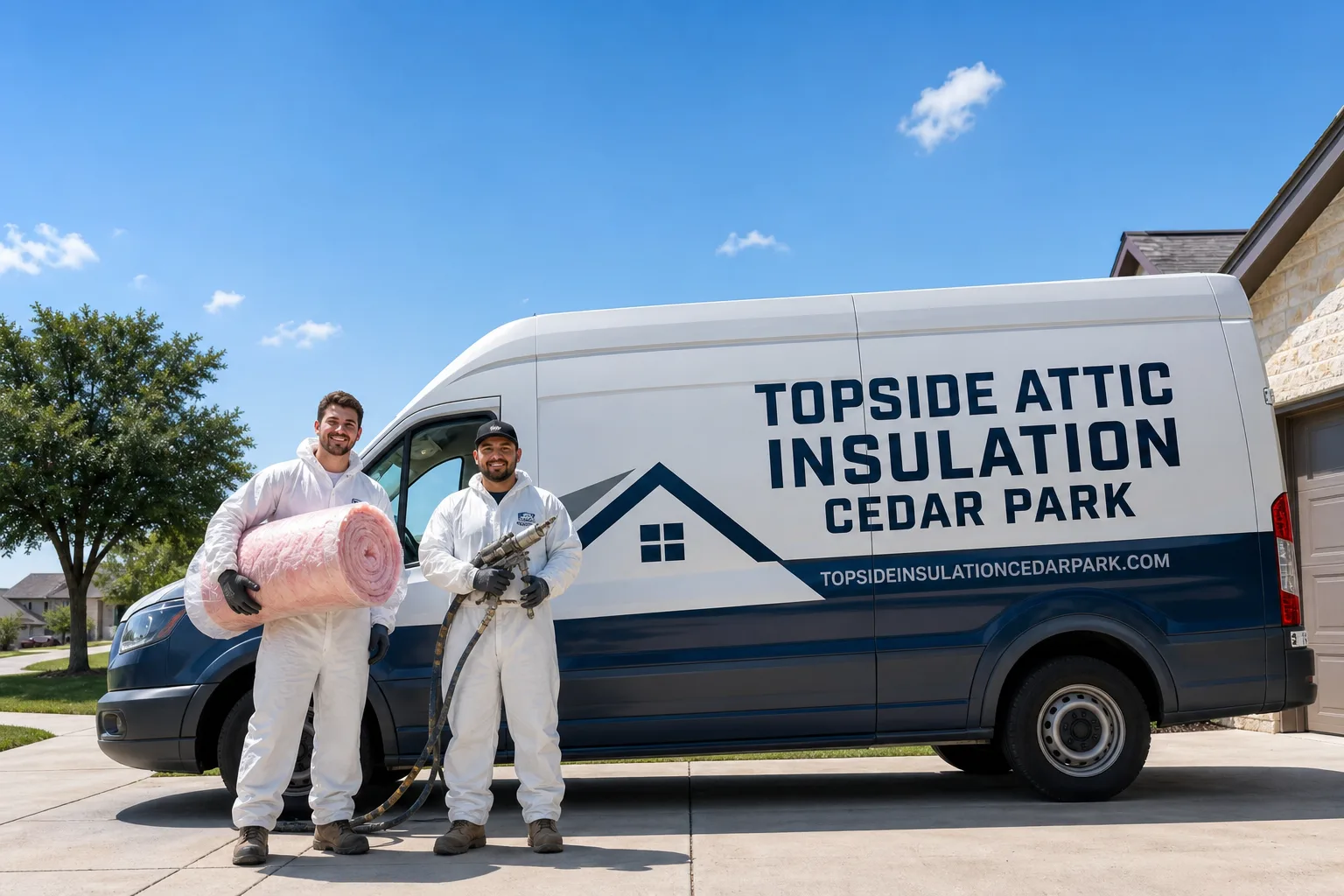
How Much Does Insulation Removal & Replacement Cost in Cedar Park?
Insulation removal and replacement in Cedar Park, TX typically runs between $1,800 and $4,500 for a standard attic, depending on home size, existing insulation type, and whether air sealing is done at the same time. Most Cedar Park homeowners with a 1,500-2,500 sq ft attic pay in the $2,200-$3,400 range when removal, disposal, air sealing, and fresh blown-in insulation are bundled into one project. Under the Haven Standard, you receive a written price before any work starts – not after the crew is already in your attic.
Insulation Removal & Replacement Cost Breakdown (2026)
The table below reflects what Envelope Insulation Co. and comparable Cedar Park contractors are quoting on actual jobs in 2026. These are not national averages pulled from a database – they reflect the labor rates, disposal fees, and material costs specific to the Austin metro’s north corridor, where Cedar Park sits.
| Service Component | Typical Cost Range (Cedar Park, 2026) | Notes |
|---|---|---|
| Blown-in insulation removal (attic, per sq ft) | $0.75 - $1.50 / sq ft | Higher end for wet, compacted, or rodent-contaminated material |
| Batt insulation removal (attic or walls) | $1.00 - $1.75 / sq ft | Labor-intensive; torn or moldy batts cost more to bag and remove |
| Disposal and haul-away | $200 - $600 | Depends on volume and whether material is hazmat (older vermiculite) |
| Attic air sealing (top plates, can lights, penetrations) | $400 - $900 | Completed before any insulation is added – non-optional at Envelope |
| Blown-in cellulose or fiberglass replacement (per sq ft) | $1.00 - $1.80 / sq ft | Cellulose runs slightly less; fiberglass slightly more |
| Spray foam (open-cell, rim joists or penetrations) | $600 - $1,800 | Used in targeted areas alongside blown-in, not typically whole-attic |
| Attic cleaning and sanitizing | $250 - $700 | Recommended when rodent activity or moisture damage is present |
| Full project – 1,200 sq ft attic | $1,800 - $2,800 | Removal + air seal + replacement at R-38 |
| Full project – 1,800 sq ft attic | $2,400 - $3,600 | Includes disposal, air sealing, blown-in to R-38 |
| Full project – 2,500+ sq ft attic | $3,200 - $4,800 | Larger footprint; may require two-crew day |
A few things drive quotes to the higher end of those ranges in Cedar Park specifically. First, many homes built in the Buttercup Creek, Twin Creeks, and Forest Oaks neighborhoods during the late 1990s and early 2000s have original blown-in insulation that has compacted significantly – sometimes from R-30 down to an effective R-14 or R-16 – and has been exposed to decades of summer attic temperatures that routinely hit 140°F to 160°F up here in Central Texas. That heat doesn’t just degrade performance; it bakes insulation into a dense mat that takes longer to vacuum out. Second, if a prior pest control company applied rodenticide in the attic, the contaminated material has to be bagged and disposed of as a regulated waste stream, which adds to disposal cost. Third, Cedar Park’s clay-heavy soil means homes shift seasonally, and that movement can crack duct connections or displace batts in ways that aren’t obvious until someone pulls the old material out.
What keeps quotes at the lower end: newer homes (post-2010 construction in areas like Whitestone Estates or Cypress Creek) where the existing insulation is relatively clean and un-compacted, the attic access is a standard 22×30 pull-down, and the job doesn’t require any attic cleaning beyond a quick vacuum-out before air sealing begins.
What Affects Insulation Removal & Replacement Pricing in Cedar Park
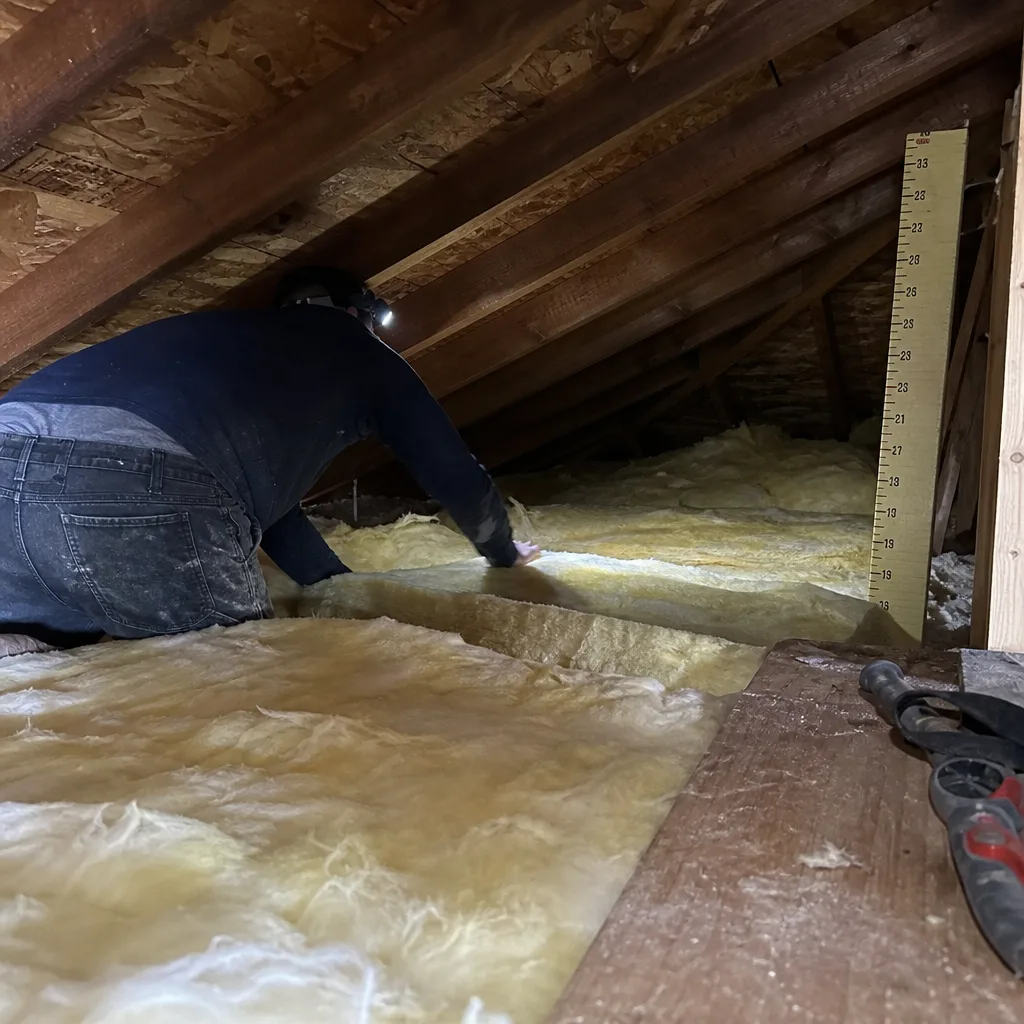
- Attic square footage and layout: A straightforward open attic over a single-story ranch-style home in Brushy Creek is a faster, cheaper job than a two-story with multiple roof lines, knee walls, and split attic sections – even if both homes are listed at the same square footage. Divided attic spaces add labor time and sometimes require a second day.
- Condition of the existing insulation: Dry, intact blown-in fiberglass from a 2008 installation vacuums out in a fraction of the time it takes to remove wet, compressed cellulose that absorbed moisture from a 2022 ice storm or an AC condensate pan that dripped unnoticed for two summers. Contaminated material (rodent droppings, urine, mold) also requires protective bagging and a separate disposal route.
- R-value target for the replacement layer: The Texas Department of Insurance and most Cedar Park energy audit reports recommend R-38 to R-60 for attics in Climate Zone 2B (which covers the Cedar Park area). Blowing to R-49 instead of R-38 adds roughly 2-3 inches of material and cost, but the payback in reduced cooling load during Austin-area summers is typically 3-5 years.
- Air sealing scope before replacement: This is where projects diverge most sharply between contractors. At Envelope Insulation Co., air sealing of top plates, recessed can lights, electrical penetrations, and plumbing chases is completed before any insulation goes in – it’s not optional and it’s not an upsell. Some Cedar Park contractors skip this step entirely, which means the new insulation performs worse than the spec sheet suggests because conditioned air is still bypassing it through gaps in the building envelope. Our before-and-after blower-door test – a pressurization reading that shows, in one number, how much air the building envelope is losing – documents exactly what changed.
- Access difficulty and attic height: Attics in Cedar Park’s older neighborhoods, particularly in homes near 183A and Lakeline Boulevard, often have limited headroom (under 36 inches in sections) and narrow access hatches. Crews working in those conditions work slower, which shows up in the quote. If your attic access is a garage pull-down rather than a house interior hatch, that affects setup time too.
- Material type selected: Blown-in cellulose (GreenFiber) and blown-in fiberglass (Johns Manville or Knauf) are the most common replacement materials in Cedar Park attics and cost about the same per square foot. Open-cell spray foam from Icynene or Demilec costs more per square foot but is sometimes the right call for unvented attic assemblies or for sealing around complex HVAC equipment. Rockwool or CertainTeed batts show up in wall insulation replacements more than attic work. We don’t push any single product because we aren’t locked into any single supplier.
Does Cedar Park’s Climate Affect Insulation Choices?
Yes, in ways that don’t always get mentioned in generic insulation guides written for a national audience. Cedar Park sits in IECC Climate Zone 2A (hot-humid) on the cusp of 2B (hot-dry), which means attic assemblies here face a different stress pattern than homes in Dallas or Houston.
Summers in Cedar Park regularly push attic temperatures above 150°F from June through September. That heat load degrades certain materials faster – loose-fill cellulose can settle more aggressively in extreme heat cycles – and it means the thermal barrier between your living space and the attic is working harder for more months of the year than in northern climates. The practical implication: getting to R-49 rather than stopping at R-30 has a measurable payback in Cedar Park that it might not have in a city that gets three months of real summer.
Cedar Park also gets occasional freeze events – the February 2021 storm is the obvious example, and a lesser event came through in January 2024. Those events exposed a lot of attic penetrations and vapor barrier gaps that had been unremarkable in normal winters. In Brushy Creek communities and Aviara, we regularly see insulation that looks fine from below but has been compromised at the point where HVAC boots penetrate the ceiling drywall, because freeze-thaw cycling works those gaps open over time. That’s exactly the kind of thing a blower-door test finds and air sealing corrects before the new insulation goes in.
Repair vs. Full Replacement: Which Makes Sense in Cedar Park?
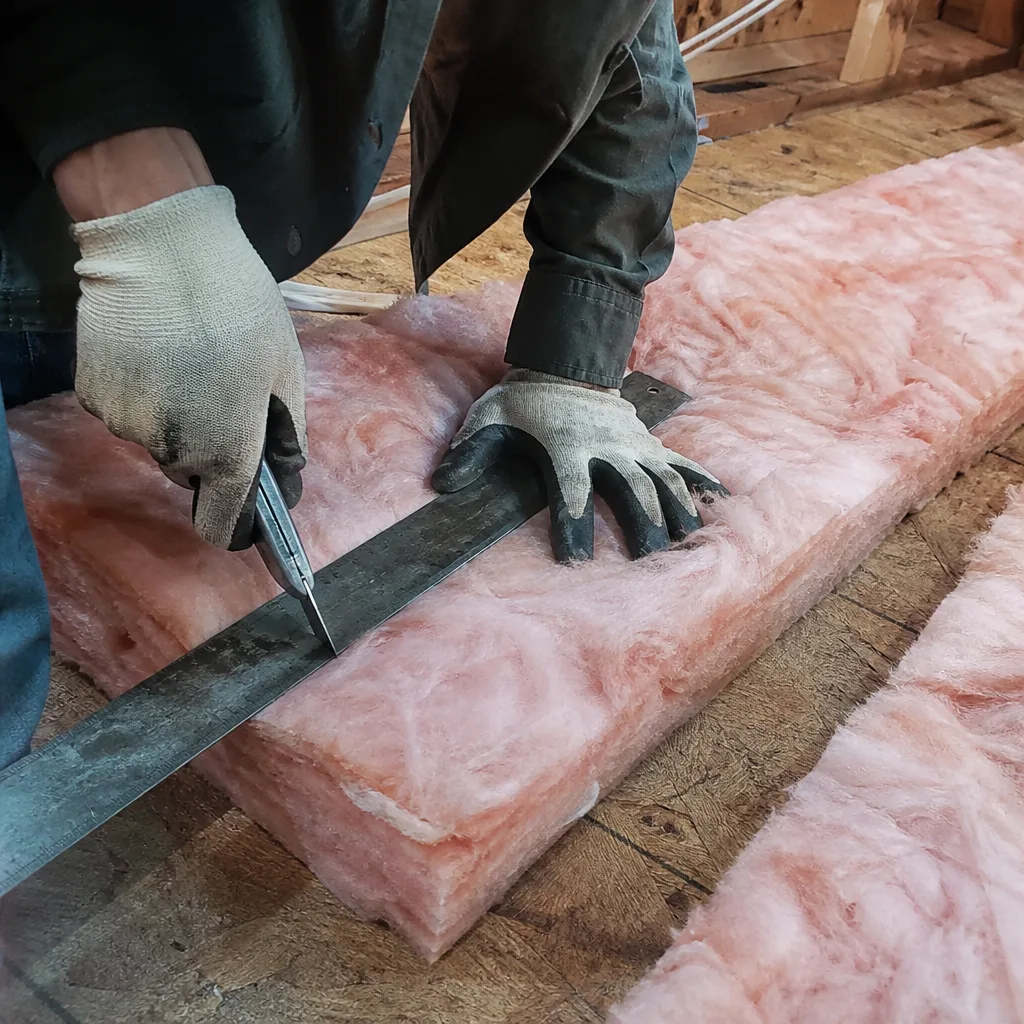
Not every Cedar Park attic needs a full tear-out. Here’s how to think about it:
Partial top-off (add material without removing existing): This makes sense when the existing insulation is clean, dry, and the current effective R-value is above R-19. A blower-door test and a physical inspection – not just a visual look through the hatch – will tell you whether air sealing gaps are accessible without removing the old material first. If they are, and the existing insulation isn’t contaminated, topping off to R-49 can run $800-$1,600 for a typical Cedar Park attic.
Full removal and replacement: Necessary when the insulation is wet or molded, when there’s evidence of pest activity (rodents, insects), when the material contains vermiculite (a possible asbestos indicator in pre-1980 insulation), or when air sealing can’t be done properly with the old material in place. This is the more common scenario in Cedar Park homes that haven’t had attic work since original construction in the 1990s or early 2000s.
We won’t recommend full removal if a top-off is genuinely the right call. The written scope you receive before any work starts reflects what the inspection actually found, not what generates the larger invoice.
How to Save on Insulation Removal & Replacement in Cedar Park
Get a scope-based written quote, not a per-square-foot phone estimate. A verbal “around $1.50 a square foot” means nothing until someone has physically inspected your attic, confirmed the insulation depth and condition, counted the penetrations that need air sealing, and noted the access situation. A written price before any work starts – Haven Standard Clause 1 – protects you from scope creep and after-the-fact add-ons. If a contractor won’t put a flat price in writing before starting, that’s information.
Bundle air sealing with the replacement, not as a separate project. When the attic is already cleared for insulation removal, air sealing costs less because the penetrations are accessible and the crew is already there. Running it as a standalone project later adds a full mobilization cost. In Cedar Park, bundling air sealing with a full insulation replacement typically saves $200-$500 versus two separate visits.
Ask about Oncor or Austin Energy rebates. Cedar Park is served by Oncor Electric Delivery, which has offered rebates for attic insulation upgrades in prior years. Rebate programs change annually, so ask specifically whether the current program is active and what documentation the utility requires – typically an invoice with the R-value installed and square footage. A contractor who has done this before knows exactly what the paperwork needs to say.
Use a free second opinion on any written estimate. If you’ve already received a written quote from another Cedar Park contractor, bring it to Envelope Insulation Co. We’ll read it with you – line by line – and tell you whether the scope covers what your attic actually needs. That’s not a sales pitch; it’s a check on whether the quote you’re holding is priced for what’s actually there. Call (737) 245-6428 to set that up.
Don’t defer if you already know there’s a problem. Cedar Park summers add thermal stress every year to an attic that’s underperforming. A home with R-10 effective insulation in July is running its HVAC system significantly harder than a home at R-49. The energy penalty compounds every month the project is deferred, and in some cases – active moisture or pest intrusion – deferral also allows secondary damage to decking and framing that raises the eventual cost considerably.
What the Job Looks Like, Start to Finish
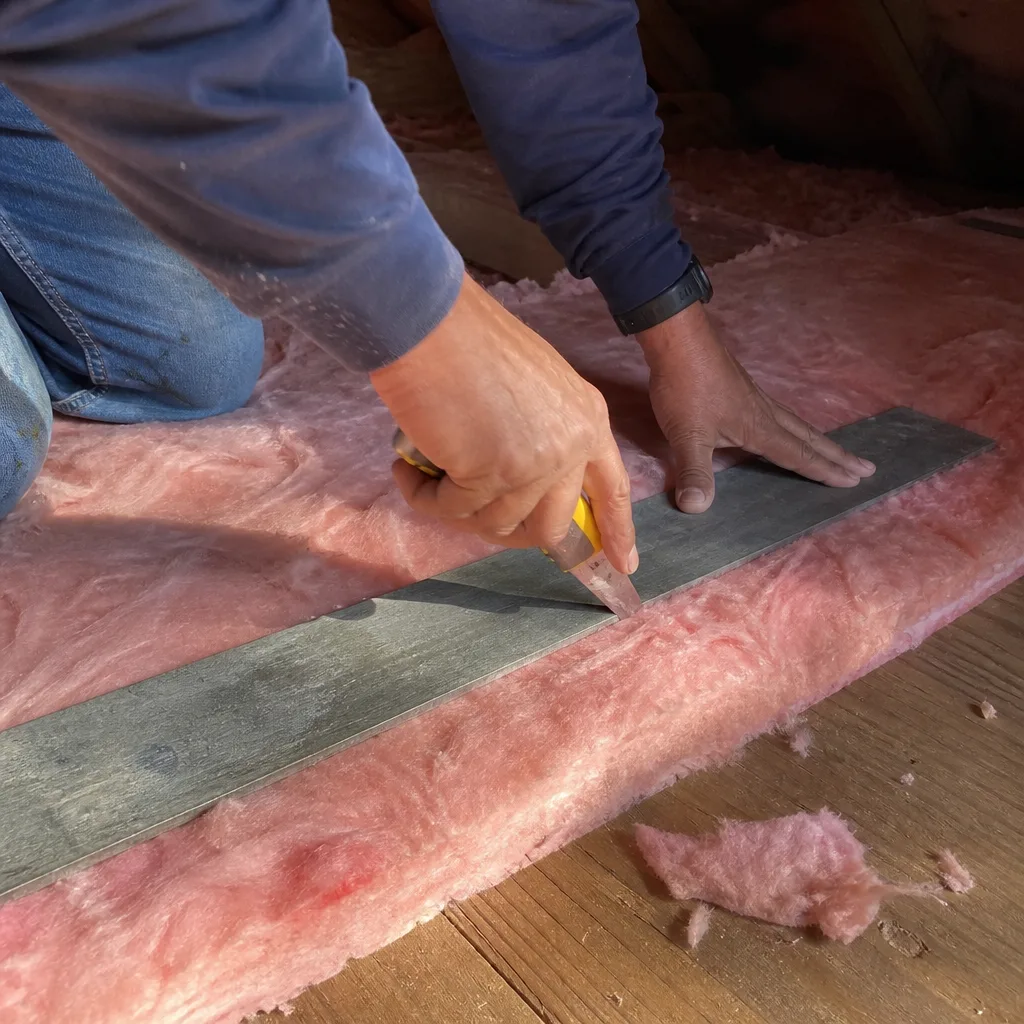
A lot of Cedar Park homeowners have never had attic insulation work done before and aren’t sure what to expect. Here’s what a full removal and replacement project actually involves, in the order it happens.
Pre-job inspection and written price. A technician from Envelope Insulation Co. accesses the attic, takes physical measurements, notes insulation depth and condition, identifies penetrations that need sealing, checks for moisture, pest activity, or HVAC issues, and performs or schedules an initial blower-door test. The written scope and flat price come from that inspection – not from an algorithm, and not from your square footage alone. Nothing starts without your sign-off on the written price.
HVAC and duct protection. Before vacuuming begins, HVAC registers and ductwork connections are protected. The last thing an insulation removal job should do is deposit a season’s worth of fiberglass dust into your living space through an unprotected return.
Vacuum removal. A commercial-grade insulation vacuum pulls the existing material out through a hose that typically runs from the attic hatch to a truck-mounted collection bag outside. This takes one to four hours depending on depth and attic size. For a 2,000 sq ft Cedar Park attic with 12 inches of compacted blown-in, plan on two to three hours of active vacuum time.
Attic cleaning and inspection of decking. After removal, the attic deck is inspected for moisture staining, soft spots, or fastener pops. If rodent activity was present, sanitizing is applied and allowed to dry. Any duct disconnections found at this stage are documented and flagged.
Air sealing – sealed first, then insulated. This is the step most contractors skip and the one that most affects performance. Top plates (the wood framing where interior walls meet the attic floor), recessed can lights, electrical boxes, plumbing penetrations, and HVAC boot connections are all sealed with fire-rated caulk or spray foam before any new insulation is added. On applicable jobs, a mid-job blower-door reading confirms the sealing result before the insulation blower is started.
Insulation installation to target depth. Blown-in material is installed to the depth required to reach the specified R-value – for Cedar Park homes, typically R-38 to R-49. Depth rulers are left in the attic at multiple points so the final depth is verifiable by you or a third-party inspector.
Post-job blower-door test and documentation. The after reading is taken, compared to the before number, and included in your job record. You also receive a Documented Photo Record – before and after photos of the attic, air sealing work, depth rulers, and any conditions found during the job. This is included on every visit, not available on request.
FAQs – Insulation Removal & Replacement Cost in Cedar Park
How much does insulation removal cost in Cedar Park, TX?
Insulation removal in Cedar Park runs $0.75 to $1.75 per square foot depending on material type and condition, plus a disposal fee of $200 to $600. For a 1,800 sq ft attic with standard blown-in fiberglass in fair condition, removal alone typically costs $1,100 to $1,800. Contaminated material (rodent activity, moisture damage) adds to both labor time and disposal cost. Call (737) 245-6428 for a written price based on what’s actually in your attic – estimates are free.
How much does full insulation replacement cost in Cedar Park after removal?
A full removal-and-replacement project in Cedar Park – covering removal, disposal, air sealing, and new blown-in insulation to R-38 or R-49 – typically costs $2,200 to $4,500 for homes between 1,500 and 2,500 square feet. Smaller homes or straightforward attic layouts come in closer to $1,800. Larger homes or those with complex rooflines, multiple attic sections, or significant contamination can reach $5,000 or above. The written price you receive reflects your specific attic, not a national average.
Is it cheaper to just add insulation on top of the old stuff?
Adding insulation on top of existing material costs $800-$1,600 for a typical Cedar Park attic and is the right call when the existing insulation is clean, dry, and at or above R-19. But topping off over wet, molded, pest-contaminated, or severely compacted material doesn’t fix the underlying problem – it buries it. And topping off before air sealing the penetrations leaves the biggest performance gap in place. A proper inspection determines which approach is appropriate; the answer isn’t the same for every Cedar Park home.
How long does insulation removal and replacement take in Cedar Park?
Most Cedar Park attic jobs – removal, air sealing, and new insulation – are completed in one full day, typically 6 to 9 hours. Larger attics over 2,500 square feet or jobs with significant attic cleaning, duct work, or extensive air sealing sometimes run into a second morning. You’ll know the timeline before the job starts because it’s part of the written scope.
Does replacing insulation actually lower energy bills in Cedar Park?
For Cedar Park homes with degraded attic insulation, replacing to R-49 with proper air sealing typically reduces cooling-season energy use by 15% to 30%, with the actual number depending on how far below spec the original insulation was and how many penetrations were unsealed. The blower-door before-and-after reading documents the air tightness change precisely – a reading that dropped from 4,800 CFM50 to 2,400 CFM50, for example, means the home is losing roughly half as much conditioned air as it was before the work. That figure is in your job record when we leave.
What is the best type of insulation for Cedar Park attics?
Blown-in fiberglass or blown-in cellulose at R-38 to R-49 is the most common and cost-effective choice for Cedar Park attics in Climate Zone 2A/2B. Both materials perform well in Central Texas heat cycles. Fiberglass (Johns Manville, Knauf, Owens Corning) is slightly more moisture-resistant; cellulose (GreenFiber) has a slightly higher thermal mass and is made from recycled content. Neither is universally “better” – the right call depends on the existing attic assembly, ventilation, and whether unvented roof assemblies or spray foam are part of the scope. We’ll tell you exactly what we recommend for your attic and why, in writing, before any work starts.
Key Takeaways for Cedar Park Homeowners
- Full removal and replacement in Cedar Park runs $1,800-$4,800 for most homes, with the majority of projects landing in the $2,200-$3,600 range.
- The single biggest performance factor isn’t which insulation you choose – it’s whether the attic floor was air sealed before the new material went in.
- Cedar Park’s climate (140°F+ summer attic temperatures, occasional hard freezes) degrades insulation faster than moderate climates and makes the case for R-49 rather than minimum code.
- Before-and-after blower-door numbers document the air sealing result in a single measurable figure – so you’re not taking anyone’s word for it.
- A written price before any work starts is Haven Standard Clause 1 at Envelope Insulation Co. – no work begins without your sign-off on a flat, written scope.
- The 365-Day Done Right Promise covers all completed work: if it’s not right, we make it right.
Get a Written Price for Your Cedar Park Attic
If you’re considering Insulation Removal & Replacement in Cedar Park, the first step is a free inspection that produces an actual written price – not a ballpark, not a per-square-foot phone estimate, but a flat number with a written scope describing exactly what will be done. Wes Okafor and the Envelope Insulation Co. team have completed this process on more than 9,000 homes since 2016, every one with a written price before work started and a Documented Photo Record when the crew left.
If you already have a written quote from another contractor, bring it. We’ll read it with you and tell you whether the scope covers what your attic actually needs. No obligation and no pressure – that’s what a free second opinion means.
To schedule your free inspection and written estimate, call (737) 245-6428. A live person answers – no voicemail loops, no callback windows measured in business days. Or visit our home page to learn more about the full range of building-envelope services we offer in Cedar Park and the surrounding area.
Written by Wes Okafor, Owner at Envelope Insulation Co. (operating as Topside Attic Insulation Cedar Park), serving Cedar Park, TX since 2016. Pricing reflects the Cedar Park market as of 2026. Topside Attic Insulation Cedar Park offers free estimates – call (737) 245-6428.
What Our Customers Say
"The winter gas bill dropped by about a third. They had estimated a quarter, so they under-promised."
- Genevieve R."Crawl space encapsulation done properly. Photographs of the vapour barrier at every seam, and the damp smell in the hallway is gone."
- Ainsley P."Fixed price, clean work, and they hauled the old material away as agreed."
- Todd M.