
Rockwool Crawl Space Encapsulation: The Cedar Park Owner’s Guide
Rockwool crawl space encapsulation systems in Cedar Park typically run $3,800-$6,200 installed for a standard 1,200-1,800 sq ft crawl space, and we stock the full Rockwool Comfortboard and Comfortbatt vapor-barrier-compatible line for same-day replacement when the existing system has failed. Most homeowners in Cedar Park discover the problem during our humid spring months, when musty odors rise through the floor or their HVAC starts working overtime to pull moisture out of air that’s entering through a compromised crawl space envelope.
We see this most often in homes built between 2005 and 2015 in neighborhoods like Buttercup Creek and Ranch at Brushy Creek, where original vapor barriers were thin 6-mil polyethylene that degrades in our alkaline clay soils. The Rockwool mineral wool insulation itself doesn’t fail - it’s the encapsulation system around it, the sealed vapor barrier and conditioned-air boundary, that lets moisture in and rots the framing the insulation was meant to protect.
Which Rockwool Models This Applies To
Rockwool doesn’t manufacture a single “crawl space encapsulation kit.” What we’re matching is the Rockwool insulation product - typically Comfortboard 80 or Comfortboard 110 for rigid crawl space wall applications, or Comfortbatt for joist-bay installs - paired with a proper encapsulation system: reinforced vapor barrier, sealed seams, and conditioned-air supply if the crawl is being closed.
To identify what you have, look for the black-and-gold Rockwool label on any exposed batt or board. Comfortboard is the gray, rigid, high-density board; Comfortbatt is the semi-rigid batt with the distinctive angled edge for friction fit. The critical compatibility gotcha in Cedar Park: Comfortboard 80 is 2 inches thick and rated for below-grade exposure, but Comfortboard 110 at 1.5 inches is not - we’ve found builders in the Leander ISD boundary who installed 110 on crawl walls to save money, and it compresses and loses R-value within three years against our swelling clay.
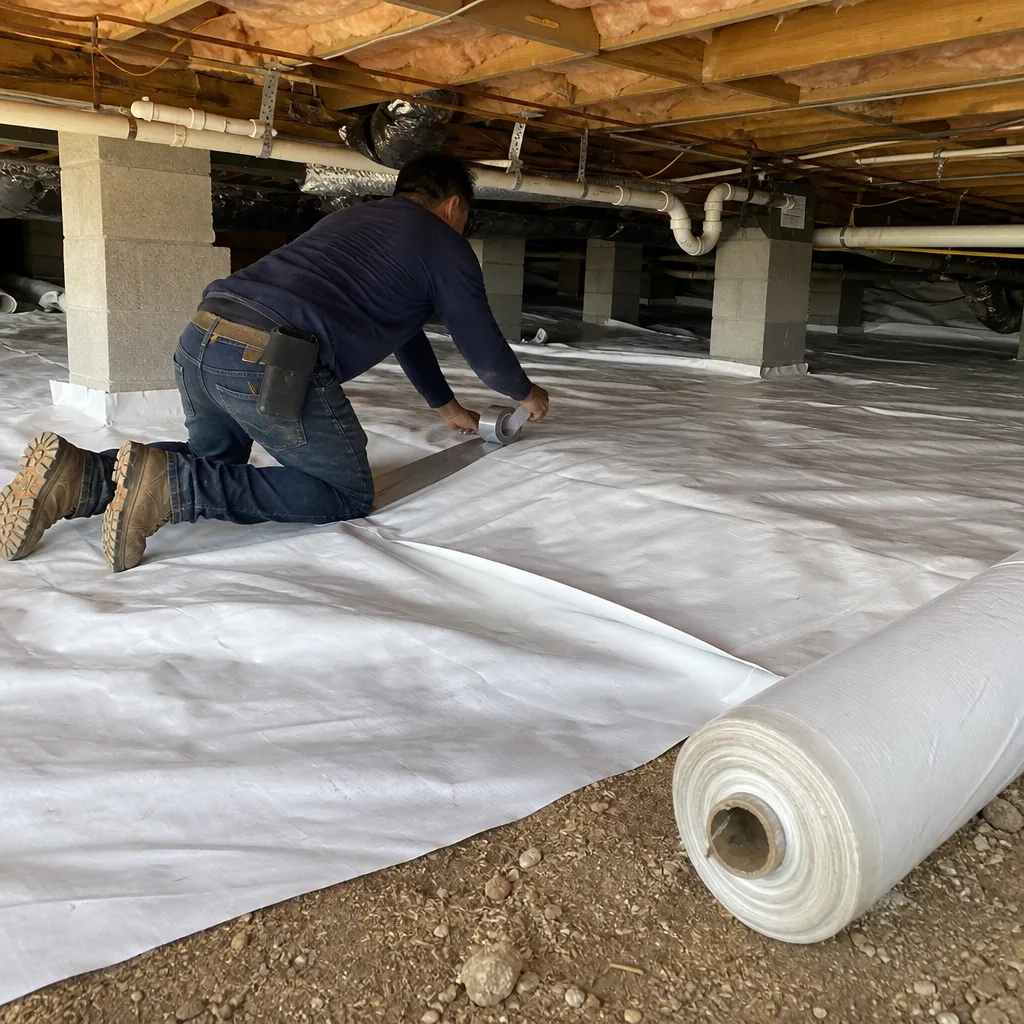
For the encapsulation layer itself, we source 12-20 mil reinforced polyethylene vapor barrier from independent suppliers - not Rockwool OEM, because Rockwool doesn’t make barrier material. We seam-seal with 4-inch waterproof tape and mechanical fasteners at the top of foundation walls. The aftermarket equivalent we stock is identical in spec to what any Rockwool-certified installer would use. Topside Attic Insulation Cedar Park is an independent service provider, not affiliated with Rockwool.
Signs Your Rockwool Crawl Space Encapsulation Is Failing
- Musty or earthy smell rising through floor registers. This means your vapor barrier has torn at seams or pulled away from the walls, letting soil moisture evaporate into the crawl space. In Cedar Park’s black clay, that moisture carries a distinct mineral odor that HVAC ductwork pulls straight into living spaces.
- Floor insulation sagging or fallen from joists. Rockwool Comfortbatt is heavy - about 1.6 pounds per square foot at R-30. When fiberglass-faced vapor retarders fail and humidity hits 70% plus, the binding agents weaken and the batt drops onto the crawl floor. We pulled a dozen fallen batts out of a home on Cypress Creek Road last March.
- HVAC running longer with higher summer electric bills. A failed encapsulation turns your crawl space into a heat sink. Our blower-door tests show homes with compromised crawl envelopes can add 800-1,200 CFM50 of effective leakage - conditioned air is literally being pulled down through floor cracks to feed the moisture load.
- White or gray fuzz on joist ends or sill plates. That’s early-stage mold on wood with moisture content above 20%. Rockwool is mold-resistant - the mineral wool won’t grow anything - but the wood it touches will if the encapsulation isn’t keeping relative humidity below 60%.
- Pools of water on the vapor barrier after rain. Either your exterior grading is sending water against the foundation, or the barrier has punctured and groundwater is weeping up. In Cedar Park’s gumbo clay, hydrostatic pressure can push water through a 10-mil barrier like it’s not there. We upgrade to 20-mil in homes west of Parmer Lane where the water table runs higher.
Replacement Cost & What’s Included
| Component | Cedar Park Price Range |
|---|---|
| Full encapsulation (vapor barrier, seam seal, wall insulation) - 1,200 sq ft crawl | $3,800-$4,800 |
| Full encapsulation - 1,800 sq ft crawl | $5,200-$6,200 |
| Vapor barrier replacement only (existing Rockwool intact) | $1,800-$2,600 |
| Rockwool Comfortboard 80 wall install (per 100 sq ft) | $340-$420 |
| Conditioned-air supply ducting (dehumidifier-ready setup) | $900-$1,400 |
What drives the range: crawl height (less than 18 inches requires our smallest crew member and takes longer), existing debris removal, whether the rim joist needs air sealing before the Rockwool goes in, and whether we’re running a dehumidifier drain line to daylight. Every job gets a written price before any work starts - Haven Standard Clause 1 - and that price includes the Documented Photo Record you’ll receive when we leave. We also publish before-and-after blower-door numbers on encapsulation jobs where we’re sealing the rim joist and subfloor penetrations, so you can see the actual CFM50 reduction your money bought.
Our 365-Day Done Right Promise covers all work. If the humidity in your crawl space doesn’t read below 60% on our follow-up meter, we come back and find the leak we missed.
DIY or Call Us?
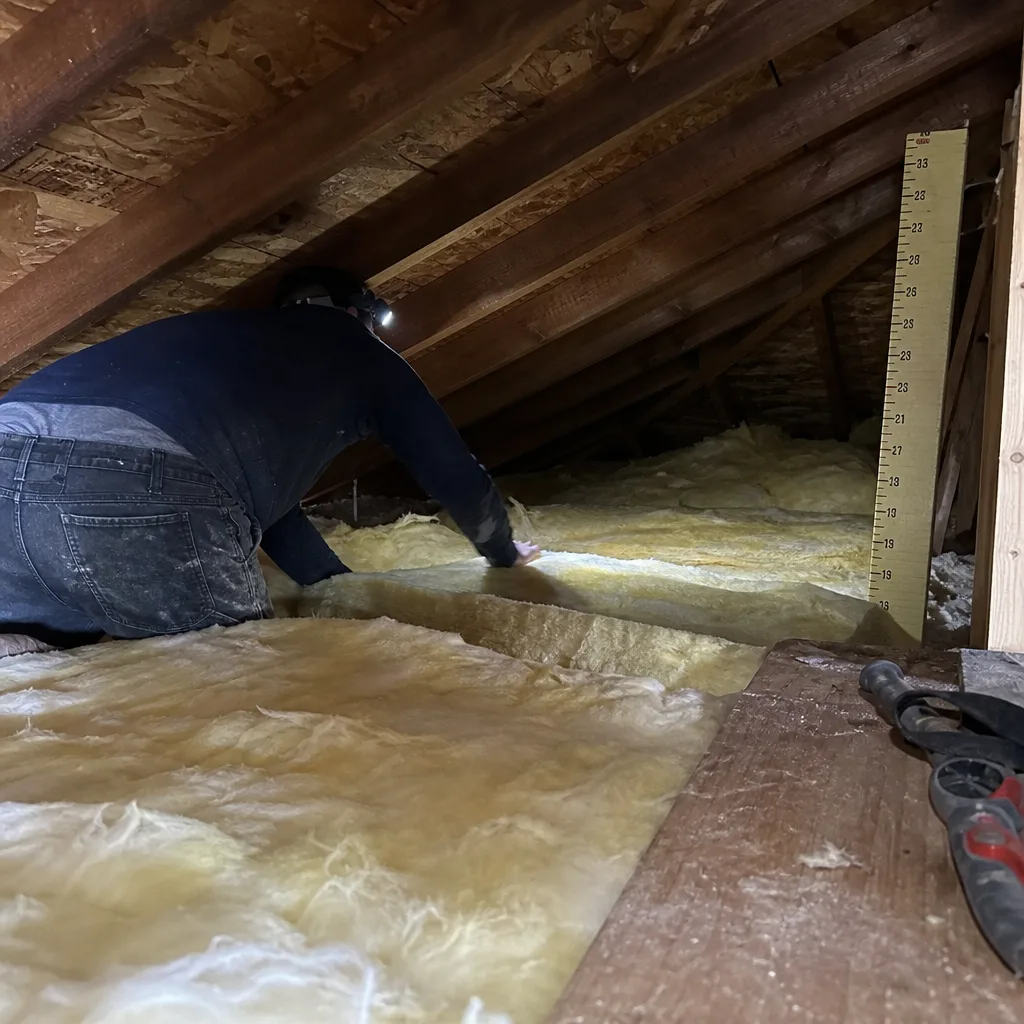
Here’s what you can safely check yourself: walk the crawl perimeter with a flashlight and look for tears in the vapor barrier, gaps where tape has peeled, or batts that have fallen. Note any standing water. That’s useful information, and it’ll speed up our diagnosis when you call.
Here’s where DIY goes wrong: installing a new vapor barrier over wet ground, which traps moisture and accelerates rot. Or using the wrong tape - the silver HVAC tape from Home Depot fails in crawl humidity within a year. Or compressing Rockwool Comfortboard against the wall instead of cutting it to fit the cavity, which drops its R-value by 30% or more. And the safety piece: crawl spaces in Cedar Park homes built before 1990 may have asbestos-containing duct wrap or vermiculite insulation. Disturbing it without testing is a health hazard and a Texas Department of State Health Services violation.
We bring a moisture meter, a thermal camera to find air leaks, and the right materials on the truck. Call (737) 245-6428 for a free estimate - we’ll give you a written price before anyone lifts a tool, and a free second opinion on any competing quote you’ve already received.
FAQs
In our climate, a properly installed 20-mil reinforced vapor barrier with seam-sealed joints lasts 15-20 years, while the Rockwool insulation itself is essentially indefinite - it’s stone wool, it doesn’t degrade. The failure point is almost always the barrier seams or mechanical fasteners pulling out of our expansive clay soil. We see 6-mil DIY barriers fail in 3-5 years in Cedar Park. Call (737) 245-6428 and we’ll assess whether your existing Rockwool can stay or needs replacement too - estimates are free.
Patch repairs work if the failure is localized - a single torn seam, one section of pulled-away barrier. We cut in new material, double-tape the overlap, and verify with a smoke pencil that no air is moving through. But if you’re seeing widespread sagging, multiple fallen batts, or mold on framing, partial repair is throwing good money after bad. The labor to patch often approaches full replacement, and you still have the original thin barrier as a liability. We’ll tell you which category you’re in - call (737) 245-6428 for an honest assessment.
Most Cedar Park crawl spaces run two to three days: half day for prep and air sealing, full day for Rockwool install and vapor barrier placement, half day for final seam seal and blower-door verification. Homes in the Buttercup Creek area with tight 16-inch crawl heights add a day because we’re working on our backs with limited tool swing. We don’t rush the air sealing - seal the leaks first. Then insulate. The order matters more than the product. Call (737) 245-6428 to schedule.
We stock Comfortboard 80 in 2×4 and 2×6 framed-cavity sizes, Comfortbatt in standard joist widths, and full rolls of 12-mil and 20-mil reinforced vapor barrier on every truck. For same-day encapsulation repair, we need to see the crawl first - every failure pattern is different, and we won’t sell you a product without verifying it’ll solve your specific moisture path. Same-day assessment is usually available; call (737) 245-6428.
We also stock parts for Reflectix radiant barrier systems, though Rockwool mineral wool is our preferred crawl space product for Cedar Park’s humidity profile.
Written by Wes Okafor, Owner, Topside Attic Insulation Cedar Park at Topside Attic Insulation Cedar Park, serving Cedar Park and nearby areas.