
Owens Corning Crawl Space Encapsulation: The Cedar Park Owner’s Guide
Owens Corning crawl space encapsulation systems installed in Cedar Park typically run $3,800-$7,200 for a complete vapor barrier, seam sealing, and conditioning setup on a standard 1,200-2,000 square foot footprint. Most Cedar Park homeowners with a failing Owens Corning barrier notice the problem first as a musty smell that returns weeks after cleaning, or as buckling hardwood floors above the crawl space during our humid spring months. We stock Owens Corning-compatible 12-mil and 20-mil reinforced polyethylene barriers, seam tape rated for below-grade adhesion, and closed-cell spray foam for rim joist sealing - same-day installation is available when the crawl space is accessible and dry.
Most failures we see in Cedar Park start at the seams. The original installer ran a bead of caulk instead of pressure-sensitive acrylic tape, or the 6-mil builder-grade liner the developer spec’d has developed micro-tears from UV exposure during the construction phase. By the time a homeowner calls us, the fiberglass batts between joists are often sagging, black at the edges, and holding moisture against the subfloor. That’s not a ventilation problem anymore - it’s an envelope failure, and it shows up on the first floor as cold spots in winter and humidity spikes in summer.
Which Owens Corning Models This Applies To
Owens Corning does not sell crawl space encapsulation as a branded system with model numbers like their roofing or insulation batts. What we encounter in Cedar Park homes - particularly in Ranch at Brushy Creek, Buttercup Creek, and the older sections of Anderson Mill West - is Owens Corning Fiberglas insulation (their spelling) installed between floor joists, paired with a generic 6-mil polyethylene ground cover that the builder or a prior contractor labeled as “encapsulation.” The Owens Corning product you actually need to identify is the insulation type: unfaced R-19 batts, kraft-faced R-30, or their ProPink loose-fill blown over a failed barrier.
To identify what you’re working with, check the paper label on any intact batt for the Owens Corning logo and R-value. Measure your ground cover thickness with a caliper or by folding it until you can compare layers - true encapsulation-grade liner is 12-mil minimum, 20-mil for high-traffic or rocky soils like the limestone shale common in Cedar Park’s western subdivisions. The compatibility gotcha: Owens Corning batts with kraft paper facing will delaminate if the relative humidity in the crawl space stays above 70 percent, which it does in Central Texas from March through October unless the space is actively dehumidified. We remove those and replace with unfaced batts or closed-cell foam only after sealing the envelope.
OEM versus aftermarket: Owens Corning does not manufacture its own vapor barrier film. The 12-mil and 20-mil reinforced polyethylene we install is sourced from the same industrial suppliers that produce for multiple building material brands, including Reflectix. The seam tape matters more than the brand on the roll - we use acrylic pressure-sensitive tape with a 15-pound peel adhesion rating, not the asphaltic tape that turns gummy in our heat. For homeowners who want the Owens Corning name on every component, we can source their Foamular NGX rigid foam boards for rim joist work, but the vapor barrier itself is commodity-grade material selected by mil thickness and reinforcement scrim, not by logo.
Signs Your Owens Corning Crawl Space Encapsulation Is Failing
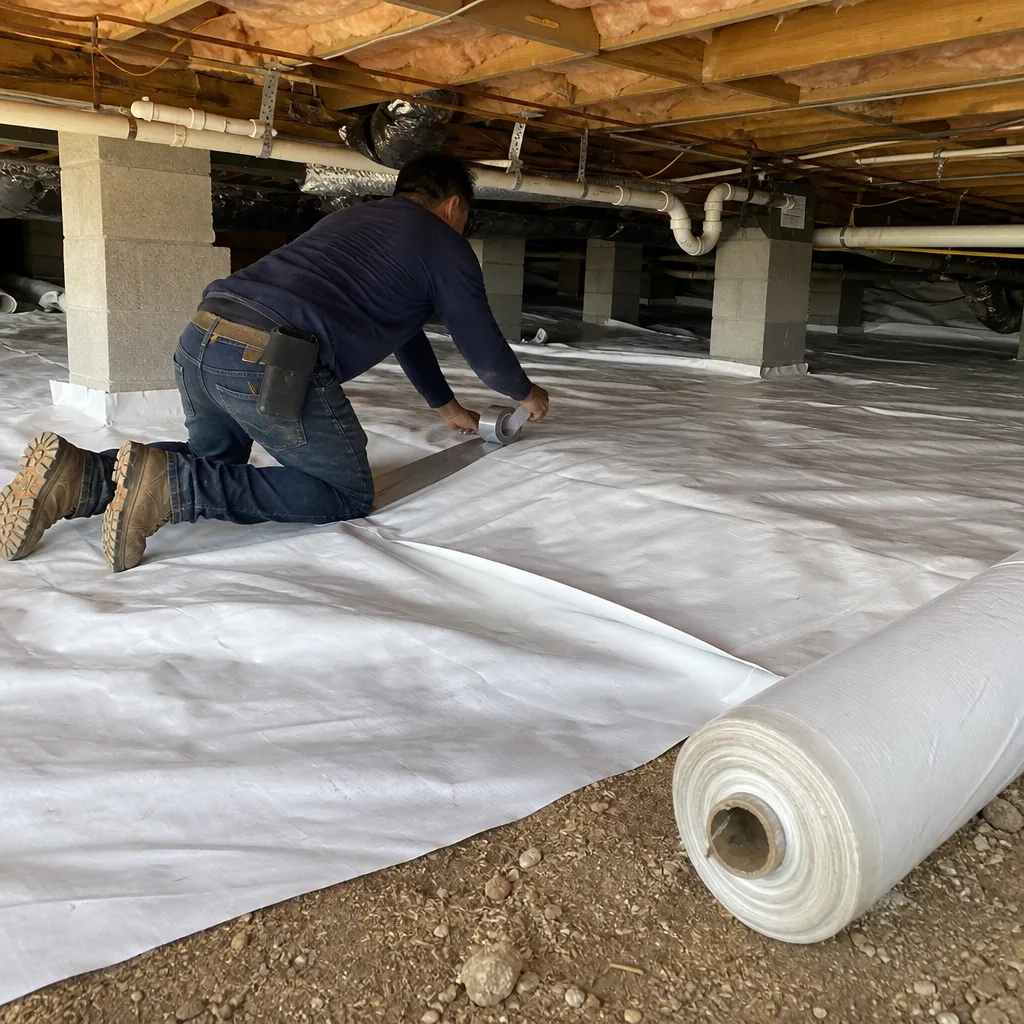
- Musty odor that returns after cleaning. The vapor barrier has torn at seams or around piers, allowing soil moisture - 10-20 gallons per day in some Cedar Park clay soils - to evaporate into the crawl space air. That moisture loads the fiberglass batts, which then off-gas the familiar mildew smell every time your HVAC cycles.
- Buckling or cupping hardwood floors above the crawl space. Moisture migrating upward through an unsealed subfloor causes wood to expand across the grain. We see this most in homes built 2015-2019 in Cedar Park’s newer subdivisions, where engineered hardwood was installed tight to the slab or subfloor without adequate moisture buffering below.
- Cold tile floors in winter despite adequate attic insulation. The crawl space is ventilated with outside air, and that 40°F air in January is washing across uninsulated or wet-insulated joist bays. The Owens Corning batts may look intact from below but have detached from the subfloor, creating a convection loop that strips heat from the floor above.
- Visible condensation on ductwork or plumbing lines in the crawl space. When the dew point of the crawl space air exceeds the surface temperature of cold water pipes or AC ducts, water beads and drips. This is a clear indicator that your encapsulation barrier is no longer isolating the space from soil moisture, and that the relative humidity is staying above 60 percent.
- Pest activity or rodent trails in the insulation. Torn vapor barrier creates entry points, and compressed or moisture-damaged Owens Corning batts lose their resiliency - they become nesting material. In Cedar Park, we find roof rat highways in crawl spaces where the barrier has been compromised at the foundation vents, which were never sealed during original “encapsulation.”
Replacement Cost & What’s Included
For a typical Cedar Park crawl space - 1,500 square feet, 3-4 piers, block foundation walls - complete Owens Corning-compatible encapsulation runs $3,800-$5,400 with 12-mil reinforced barrier, seam taping, pier wrapping, and foundation wall sealing to 6 inches above grade. Stepping up to 20-mil liner for rocky or high-traffic crawl spaces, or adding active dehumidification with a condensate pump, pushes the range to $5,800-$7,200. These are installed prices; we do not quote materials-only.
| Component | Price Range (Cedar Park) |
|---|---|
| 12-mil reinforced vapor barrier, installed | $2.40-$3.10/sq ft |
| 20-mil heavy-duty vapor barrier, installed | $3.20-$4.00/sq ft |
| Rim joist spray foam (closed-cell, 2-inch) | $8.50-$12.00/linear ft |
| Active dehumidifier with condensate pump | $1,200-$1,800 |
| Insulation removal and disposal (wet/damaged) | $1.10-$1.60/sq ft |
What drives the range: crawl space height (less than 18 inches requires rotation work), number of piers and penetrations to seal, existing insulation condition, and whether the foundation walls are block, poured concrete, or stone. Every quote we provide in Cedar Park includes a written scope, a flat price, and our 365-Day Done Right Promise - backed by the Haven Standard, which means you get the warranty in writing before anyone starts. We also publish before-and-after blower-door numbers on encapsulation jobs where we’re sealing the rim joists and any penetrations, so you can verify the air-sealing result in ACH50 - the pressure-to-airflow figure that tells you exactly how leaky the envelope was.
DIY or Call Us?
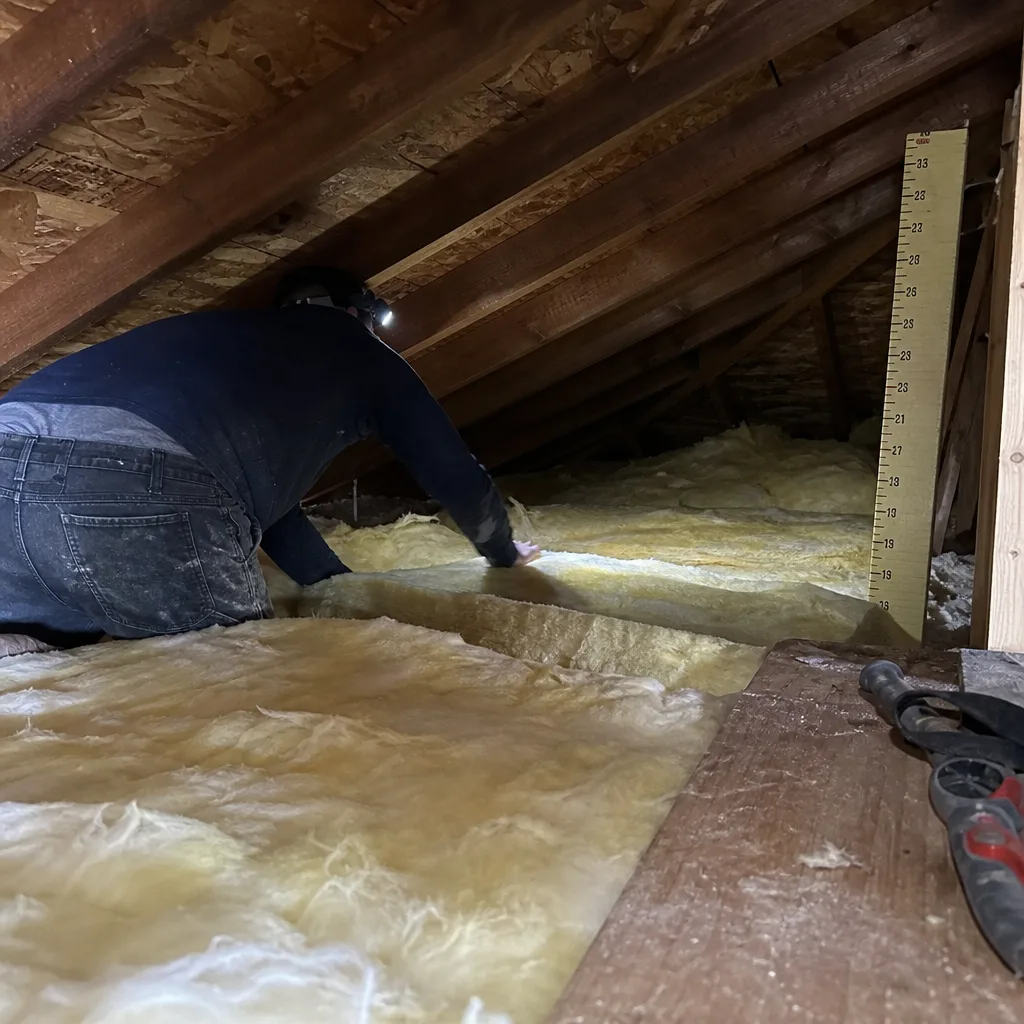
There’s a short list of what a Cedar Park homeowner can safely check without crawling underneath: confirm your crawl space vents are closed (they should be, in any encapsulation), look for standing water or obvious tears in the barrier from the access hatch, and note any musty smell. That’s it. The actual work - removing wet insulation without contaminating your living space, measuring and cutting reinforced polyethylene to fit around piers and plumbing, applying seam tape that will hold at 95°F and 80% humidity, and sealing rim joists with closed-cell foam - requires full PPE, proper ventilation, and experience with the substrate conditions we find in Central Texas.
The safety issue most DIYers miss: disturbed fiberglass and rodent droppings are respiratory hazards in confined airspace, and the limestone shale in Cedar Park’s western soils tears through thin barrier fast. We’ve pulled out homeowner-installed 6-mil sheeting that failed in 18 months because it wasn’t reinforced and wasn’t taped at the seams. If you’re seeing symptoms, call (737) 245-6428 - we’ll read your situation with you, and if you have a competing quote, we offer a Free Second Opinion under Haven Standard Clause 3.
FAQs
A properly installed 12-mil or 20-mil reinforced barrier with sealed seams lasts 15-20 years in Cedar Park’s climate, though the 6-mil builder-grade liner many homes started with often fails in 5-8 years. The limiting factor is usually the dehumidifier, which needs filter changes every 6 months and replacement at 7-10 years. Call (737) 245-6428 - we’ll inspect what you have and tell you honestly whether you’re mid-life or due for replacement.
Small punctures - less than 6 inches, fewer than five per 500 square feet - can be patched with compatible pressure-sensitive tape and a scrap of matching mil-thickness material. Wides seam separation, UV-embrittled film, or barrier installed without overlap at the walls means replacement. We don’t patch over failed material and call it good; that’s not the Haven Standard. Call for an inspection and we’ll show you what we found on the Documented Photo Record.
Most Cedar Park crawl spaces are completed in one to two working days: Day 1 for insulation removal, cleaning, and barrier installation; Day 2 for rim joist sealing, dehumidifier setup, and final inspection with blower-door if applicable. Tight crawl spaces under 24 inches, or those requiring extensive mold remediation, add a day. We text you the technician’s name and ETA the morning of.
We stock 12-mil and 20-mil reinforced polyethylene barrier, acrylic seam tape, closed-cell spray foam, and dehumidifiers on our Cedar Park service vehicles. Owens Corning Foamular NGX board for rim joists is available next-day from our Austin supplier. Same-day installation is possible when the crawl space is dry and accessible - call (737) 245-6428 and we’ll confirm stock for your square footage.
Topside Attic Insulation Cedar Park is an independent service provider; we are not affiliated with Owens Corning. We source materials from Owens Corning, Johns Manville, Knauf, Rockwool, CertainTeed, Icynene, Demilec, GreenFiber, and Reflectix - no proprietary lock-in, no preferred status claimed with any manufacturer. Seal the leaks first. Then insulate. The order matters more than the product.
Ready to fix what’s failing under your floor? Call (737) 245-6428 for a free estimate. A live person answers 24/7. You’ll get a written price before any work starts, a Documented Photo Record when we’re done, and the 365-Day Done Right Promise in writing - that’s Haven Standard Clause 1, and it’s how we’ve operated since 2016.
Written by Wes Okafor, Owner, Topside Attic Insulation Cedar Park at Topside Attic Insulation Cedar Park, serving Cedar Park and nearby areas.