
Knauf Attic Insulation: The Cedar Park Owner’s Guide
Knauf attic insulation installed in Cedar Park homes typically runs between $1.80 and $3.20 per square foot depending on R-value and whether the attic floor needs air sealing first. Most retrofits in the 78613 zip code fall between $2,400 and $4,800 for a complete install, and we stock Knauf EcoFill and Jet Stream series on our trucks for same-day starts. Homeowners usually discover their insulation is failing when upstairs rooms won’t cool below 78°F even with the AC running nonstop, or when they pull down the attic ladder and find batt strips crumbling between the joists.
Which Knauf Models This Applies To
We work with the full Knauf residential line: EcoFill Wx blown-in fiberglass (the white bags with green labeling, R-30 to R-60), Jet Stream Ultra blowing wool (higher density, R-38 and R-49 common in Cedar Park’s 2015+ builds), and Knauf Insulation Atmosphere duct liner when we’re sealing and wrapping HVAC runs in the same job. The critical compatibility gotcha is blown-in density: Jet Stream Ultra requires a specific blowing machine setting (1.2 to 1.4 pounds per cubic foot) or you’ll get settling within two seasons. We’ve corrected three Cedar Park attics in the last year where a previous installer used standard EcoFill settings on Jet Stream material.
To identify what you have, check the paper label stapled to the nearest truss. Knauf prints the series name, manufacture date, and recommended coverage chart. If the label’s gone, measure the settled depth: EcoFill Wx at R-38 should read 12 inches; if you’re seeing 9 inches or less, you’ve got settling or the wrong initial depth. OEM Knauf is what we recommend for density-matched retrofits, though we also carry Johns Manville and Owens Corning equivalents with verified compatible density specs. We do not carry off-brand blowing wool that hasn’t been tested against Knauf’s thermal drift data.
Topside Attic Insulation Cedar Park is an independent service provider with no affiliation to Knauf Insulation GmbH.
Signs Your Knauf Attic Insulation Is Failing
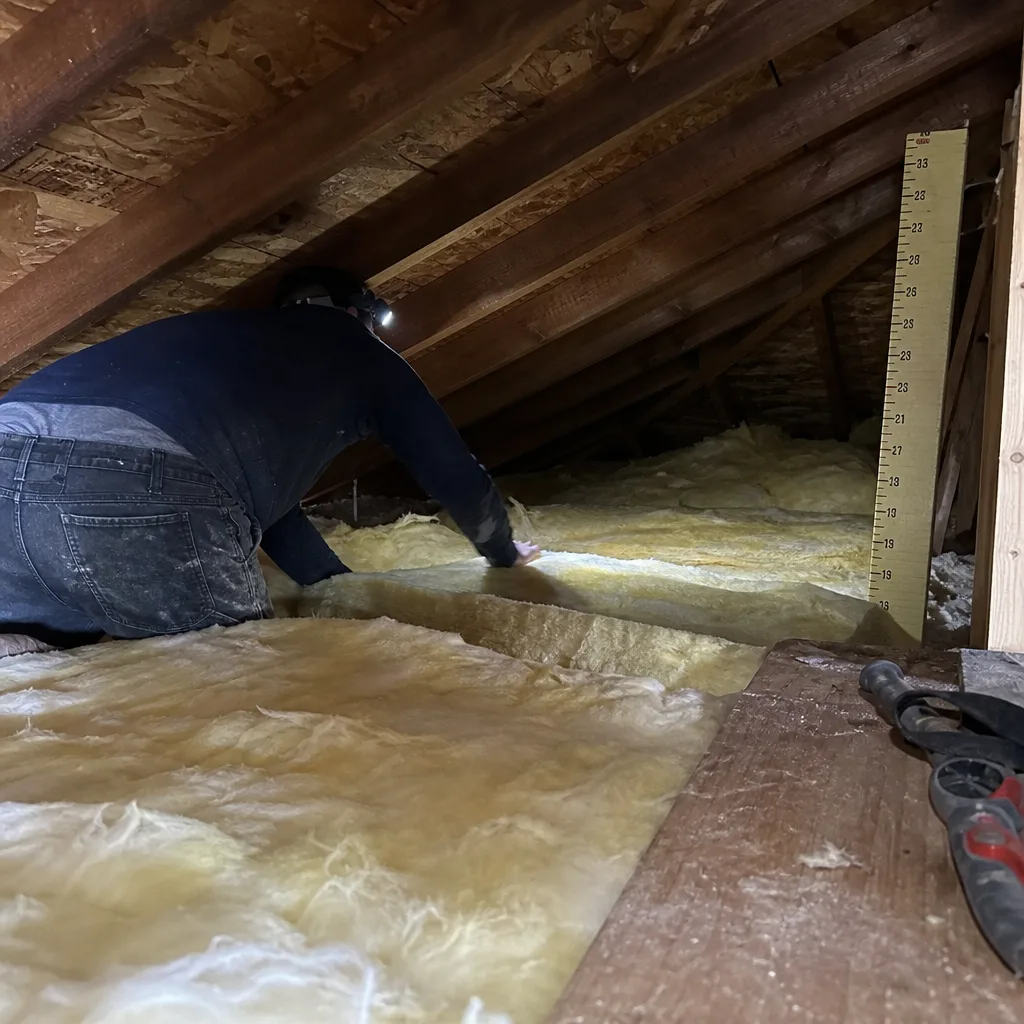
- Uneven temperature floors. The upstairs bedroom reads 6 to 10 degrees warmer than the thermostat setting while downstairs holds fine. This usually means batt compression or blown-in settling has created thin spots over the ceiling, letting Cedar Park’s attic heat (we’ve measured 143°F in Buttercup Creek roofs in August) radiate straight through.
- Dust streaking around ceiling registers. Dark lines on the drywall near supply vents mean your attic is pulling conditioned air up through gaps in the top plates, a problem insulation alone never fixes. The Knauf material is doing its job thermally but the building envelope is leaking past it.
- Visible batt degradation or pest damage. Fiberglass batts that have turned gray, compacted to half their labeled thickness, or show rodent trails are compromised. Knauf’s binder breaks down over 15 to 20 years in Texas heat cycling; we’ve pulled batts from 1990s Cedar Park builds that crumble in your hands.
- Ice dam evidence in winter. Even brief Central Texas freezes can create roof-edge ice when warm attic air melts snow from below, then it refreezes at the eave. This means your R-value is insufficient or uneven, and heat is escaping through the ceiling plane.
- Energy bills climbing year-over-year with no rate change. When your usage pattern is steady but the kWh keeps rising, the insulation’s effective R-value has dropped. Blown fiberglass settles 2 to 5 percent annually in our climate; over a decade that adds up to real money.
Replacement Cost & What’s Included
| Scope | Typical Range in Cedar Park |
|---|---|
| Blown-in removal + disposal (existing degraded material) | $1.20 - $2.00 / sq ft |
| Attic air sealing (top plates, can lights, penetrations) | $800 - $1,600 typical home |
| Knauf EcoFill Wx blown-in, R-38 to R-49 | $1.80 - $2.80 / sq ft installed |
| Knauf Jet Stream Ultra, R-49 to R-60 | $2.40 - $3.20 / sq ft installed |
| Attic floor prep (baffle install, dam construction) | $400 - $800 |
What drives the range: attic square footage is obvious, but the bigger variable is access. A Cedar Park ranch with a 12/12 pitch and a single scuttle hole takes longer than a two-story with a permanent pull-down ladder. We also won’t quote insulation without quoting the air sealing, because seal the leaks first. Then insulate. The order matters more than the product. Every job closes with a Documented Photo Record and, on applicable jobs, before-and-after blower-door numbers so you see the actual CFM50 change. The 365-Day Done Right Promise covers all work, and your written scope and warranty are delivered before anyone starts.
DIY or Call Us?
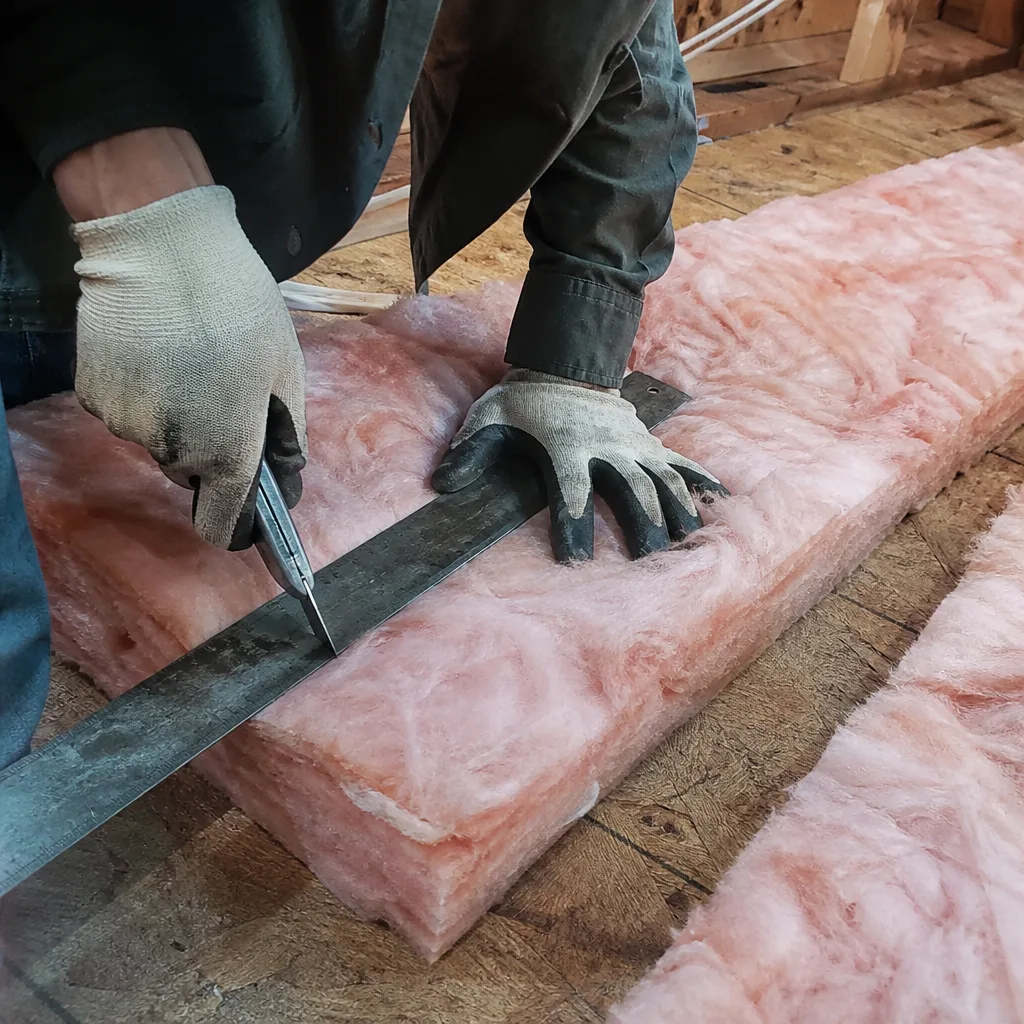
What you can safely check: measure your current insulation depth with a ruler, photograph any labels you find, and look for obvious gaps or compression from stored boxes. What goes wrong fast: fiberglass dust without proper respirator fit (N95 minimum, P100 better), walking through a ceiling between joists, and the biggest mistake we see, blowing new insulation over air leaks you can’t see from the attic floor. Top plates, electrical penetrations, and can-light housings leak conditioned air continuously; covering them with more R-value just hides the problem. We also handle Knauf material with the correct blowing equipment, density-calibrated, which rental units rarely achieve. For a free second opinion on any written estimate you’ve already received, call (737) 245-6428.
FAQs
Blown-in fiberglass lasts 20 to 30 years in theory, but in Central Texas’s heat-cycling attic environment we see meaningful settling and thermal drift after 12 to 15 years. Batts hold shape longer but compress if walked on or stored on. Call (737) 245-6428 and we’ll measure your effective R-value with a thermal camera, no charge.
Localized compression or thin spots can be topped off with matching material, but if the existing layer is below half its labeled thickness, contaminated, or installed before 2010, full removal and replacement is the honest recommendation. Topping degraded material traps moisture and masks air leaks. We give you a written scope for either approach before any work starts.
Most Cedar Park homes complete in one day: half a day for air sealing and prep, half a day for blowing or batt installation. Two-story homes over 3,000 square feet or jobs requiring old material removal may run into a second day. We text you a named technician and arrival window under Haven Standard scheduling.
We stock Knauf EcoFill Wx and Jet Stream Ultra on our trucks for Cedar Park jobs, with R-30 through R-60 available. Specialty orders like Knauf Atmosphere duct liner or higher-density commercial spec take 24 to 48 hours. Same-day starts are common for standard residential retrofits.
Written by Wes Okafor, Owner, Topside Attic Insulation Cedar Park at Topside Attic Insulation Cedar Park, serving Cedar Park and nearby areas.