
GreenFiber Vapor Barrier Installation: The Cedar Park Owner’s Guide
GreenFiber vapor barrier installation in Cedar Park typically runs $1,800-$3,400 for a standard crawl space or attic application, and we stock the 6-mil and 10-mil reinforced polyethylene rolls on our trucks for same-day starts. Most homeowners discover the problem when their crawl space starts smelling musty in July or their hardwood floors cup during Cedar Park’s spring humidity spikes. The vapor barrier isn’t a decorative layer; it’s what keeps ground moisture from becoming indoor moisture, and when it’s torn, poorly overlapped, or missing entirely, the assembly fails fast.
Which GreenFiber Models This Applies To
GreenFiber doesn’t manufacture vapor barriers under its own label. What Cedar Park homeowners call a “GreenFiber vapor barrier” is usually the moisture-control layer installed alongside GreenFiber’s cellulose insulation products, most commonly GreenFiber All Borate-Treated Blow-In Insulation and GreenFiber Sanctuary batts. The vapor barrier itself is typically a 6-mil polyethylene sheeting (sometimes 10-mil in high-moisture zones like the Brushy Creek watershed) installed on the warm-in-winter side of the assembly, or as a ground cover in vented crawl spaces.
To identify what you have, look for the ASTM E1745 Class A, B, or C rating printed on the sheeting edge. Class A is 10-mil, Class C is 6-mil. GreenFiber cellulose is often paired with Class C in Cedar Park’s climate zone (IECC Zone 2A, mixed-humid), but homes near the Balcones Escarpment with higher water tables sometimes need Class A. The compatibility gotcha: GreenFiber cellulose is hydroscopic, meaning it absorbs and releases moisture. If your vapor barrier is undersized or has gaps, the cellulose can hit 30% moisture content and compress, losing its R-value permanently. We’ve pulled GreenFiber batts in Cedar Park’s Buttercup Creek area that were reading 28% moisture because a 4-mil barrier had pinholed at the seams.
We stock OEM-grade 6-mil and 10-mil reinforced poly with taped seams, plus Reflectix radiant barrier for hybrid assemblies. No proprietary lock-in.
Signs Your GreenFiber Vapor Barrier Installation Is Failing
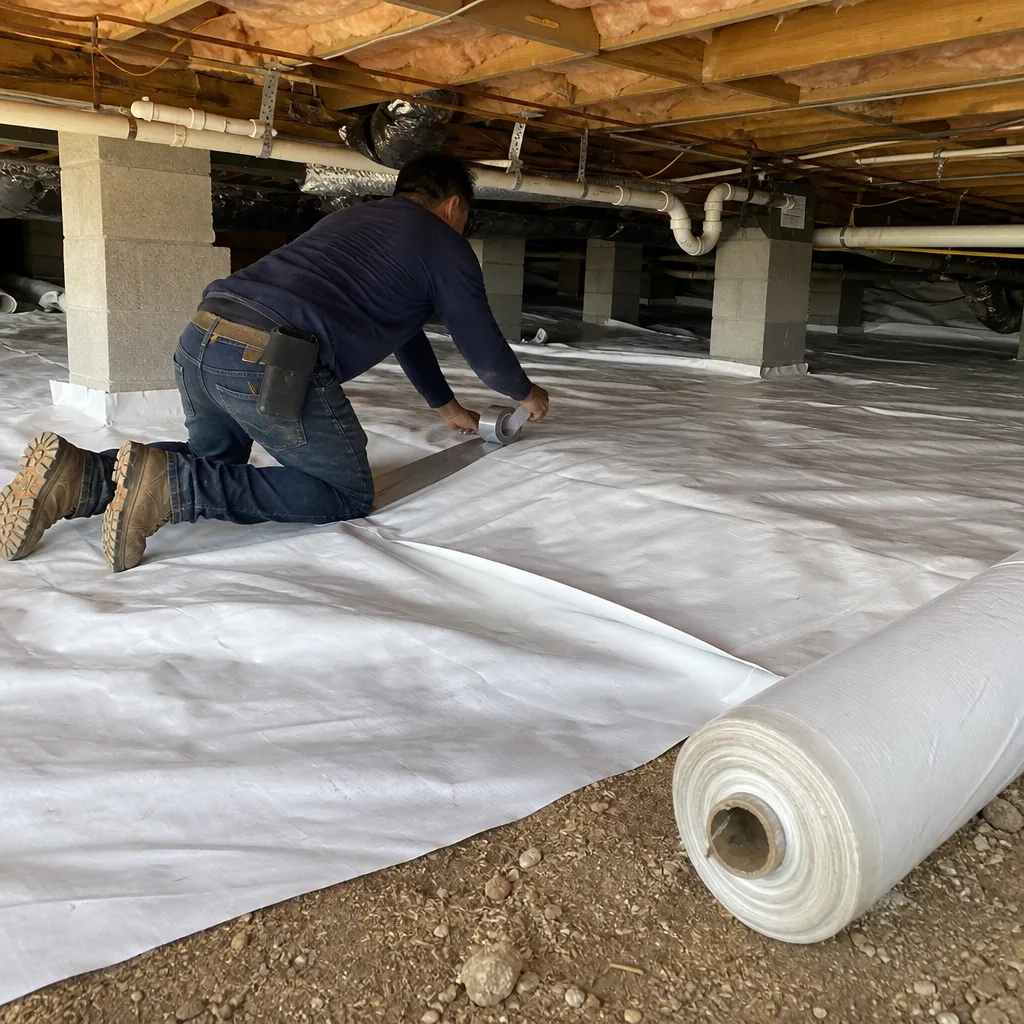
- Musty odors rising from floor registers or crawl space hatches. Cedar Park’s clay-heavy soils hold moisture; a compromised barrier lets that vapor migrate upward. The smell means mold spores are active, not just present.
- Cupping or crowning of hardwood floors, especially in summer. Wood absorbs moisture from below when the barrier fails. We see this most in 1990s-era homes in the Ranch at Brushy Creek where original 4-mil barriers have degraded.
- Insulation that looks dark, clumped, or flattened. GreenFiber cellulose turns gray and dense when it wets. If you can see the vapor barrier through a hatch and it’s torn or pulled away from piers, the insulation above it is likely compromised.
- Condensation on ductwork or plumbing in the crawl space. This happens when the dew point hits inside the crawl space instead of below the barrier. In Cedar Park, that’s any day the outdoor temp hits 95°F with 60% RH and your crawl space is vented without a proper ground seal.
- Increased cooling bills with no equipment change. Wet insulation doesn’t insulate. A blower-door test won’t catch this, but a moisture meter on the cellulose will. We check both.
Replacement Cost & What’s Included
| Scope | Typical Range in Cedar Park |
|---|---|
| 6-mil poly ground cover, standard crawl space (1,200-1,800 sq ft) | $1,800-$2,600 |
| 10-mil reinforced poly, high-moisture or pier-heavy crawl space | $2,400-$3,400 |
| Add full seam taping + mechanical fastening to walls/piers | +$400-$700 |
| Add GreenFiber insulation replacement (wet removal + reinstall) | +$1,200-$2,200 |
What drives the range: crawl space height (less than 18 inches requires different labor), number of piers and penetrations to seal around, whether the old barrier is embedded in sediment, and if we find standing water that needs remediation first. Every job gets a Written Price Before Any Work Starts under Haven Standard Clause 1. The price includes material, labor, seam taping with butyl-backed tape (not duct tape, which fails in 18 months), mechanical fastening to walls, and a Documented Photo Record delivered before we leave. Work is covered by our 365-Day Done Right Promise.
DIY or Call Us?
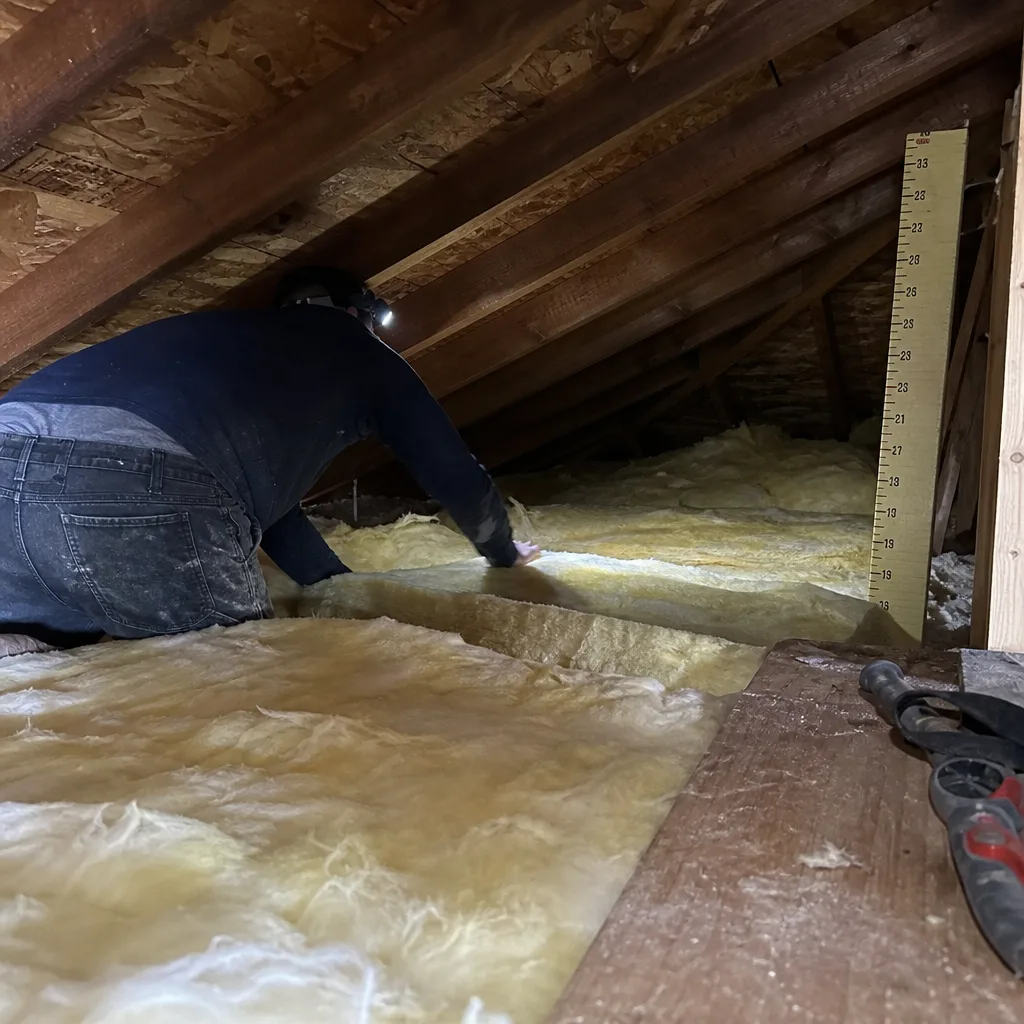
You can safely check what you have. Bring a flashlight to your crawl space hatch, look for the mil rating printed on the poly edge, and photograph any tears or pulled seams. If the barrier is 4-mil or unmarked, it’s undersized for Cedar Park’s climate. If you see standing water, stop there.
Where DIY goes wrong: vapor barrier installation looks like rolling out a tarp, but the seams are the system. Overlaps must be 12 inches minimum, taped with pressure-sensitive tape rated for damp substrates, and terminated to walls or piers so soil gas and moisture can’t bypass. We’ve been called to fix homeowner jobs in Cedar Park’s Leander Road corridor where the poly was laid loose, un-taped, and had become a moisture trap underneath, worse than no barrier at all. The 10-mil rolls are heavy, the crawl space is tight, and the kneeling surface is often rocky clay. For the price of the material and a weekend of misery, most homeowners find the installed price is worth the documented result.
Seal the leaks first. Then insulate. The order matters more than the product.
Call (737) 245-6428 for a free estimate. We’ll bring a moisture meter and a written price to the visit.
FAQs
A properly installed 6-mil poly barrier lasts 15-20 years in Cedar Park’s climate; 10-mil reinforced can go 25. The killer is UV exposure if it’s in an attic, or rodent damage in crawl spaces. We use mechanical fasteners and metal terminations, not just tape, because tape alone releases in our heat cycles. Call (737) 245-6428 for an exact quote on your space.
Patching works for a single puncture smaller than a fist, using the same mil-rated poly and tape on both sides. Multiple tears, seam failures, or any section embedded in soil means full replacement, patches will leak at the edges within two seasons. We assess this on every free estimate and tell you which side of the line you’re on.
Most Cedar Park crawl spaces run one day for a two-person crew. Tight spaces under 18 inches, pier-heavy foundations, or wet insulation removal adds a second day. We give you a written schedule with the price, not a window.
We stock 6-mil and 10-mil reinforced polyethylene rolls, seam tape, and mechanical fasteners on every Cedar Park truck. GreenFiber itself doesn’t label vapor barriers; we match the spec to their cellulose products. Same-day starts are available when the crawl space is dry and accessible.
Written by Wes Okafor, Owner, Topside Attic Insulation Cedar Park at Topside Attic Insulation Cedar Park, serving Cedar Park and nearby areas.