
GreenFiber Attic Air Sealing: The Cedar Park Owner’s Guide
GreenFiber attic air sealing in Cedar Park typically runs $1,800-$3,400 installed for a standard single-story home up to 2,200 square feet, and we stock the cellulose-compatible sealants and baffles needed for same-day starts on most jobs. Most homeowners figure out something’s wrong when their upstairs rooms won’t cool below 78°F in July despite the AC running nonstop, or when they spot cellulose dust settling around recessed can lights that were never properly sealed before the insulation went in. That dust trail is a tell - it means air is moving through the insulation, not staying trapped by it, which is the whole point of a sealed attic floor.
Which GreenFiber Models This Applies To
GreenFiber manufactures loose-fill cellulose insulation, not a dedicated air-sealing system, so “GreenFiber attic air sealing” refers to the sealing work that must happen before or alongside their cellulose product. The critical compatibility question is which GreenFiber cellulose line was installed - Low Dust, Sanctuary, or the standard all-borate formulation - because each has different density requirements that affect how we build the air barrier underneath or around it. Low Dust, common in Cedar Park retrofits from 2018-2023, compacts at 1.6 lbs per cubic foot versus Sanctuary’s looser 1.2 lbs, which changes how we size vent baffles and seal top plates without compressing the cellulose into an ineffective mat.
To identify your installation, check the bag remnants or contractor paperwork for the product code: GF16LD for Low Dust, GF19SAN for Sanctuary. If you can’t find paperwork, measure the settled depth - Low Dust settles roughly 15% less over five years, so a nominal R-38 job reads closer to 13 inches than Sanctuary’s 11 inches. We stock both OEM GreenFiber-compatible baffles (their own AccuVent line, where available) and aftermarket equivalents from Owens Corning that mate correctly with 16-inch and 24-inch on-center framing. The aftermarket baffles cost 20-30% less and carry the same fire rating; we use them unless the homeowner specifically requests GreenFiber-branded accessories. Topside Attic Insulation Cedar Park is an independent service provider - we’re not affiliated with GreenFiber - and we source materials from multiple manufacturers including GreenFiber, Owens Corning, and Johns Manville so we’re never locked into one product line.
Signs Your GreenFiber Attic Air Sealing Is Failing
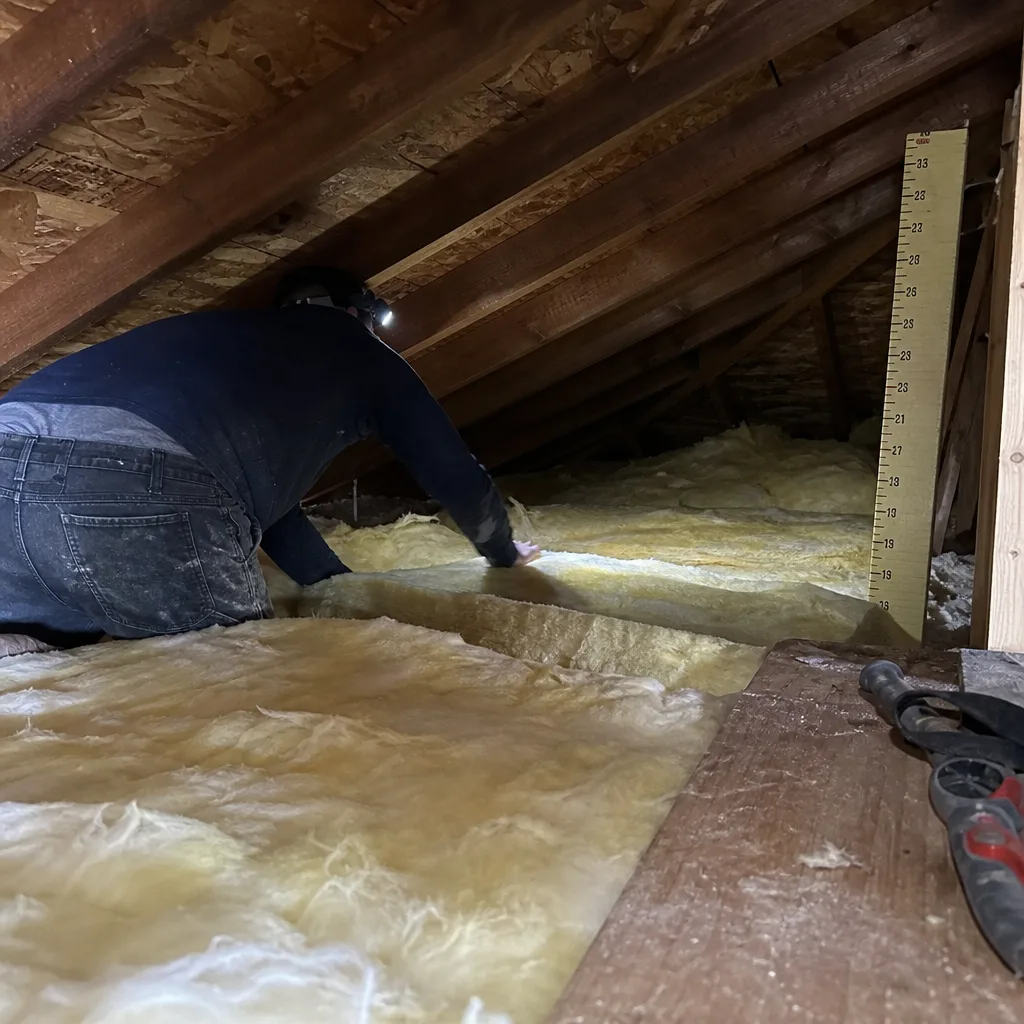
- Cellulose dust around ceiling fixtures. Air moving through unsealed penetrations carries fine cellulose particles with it. In Cedar Park’s clay-heavy soil zones like Ranch at Brushy Creek, that dust often carries a reddish tint from local mineral content that makes the migration pattern obvious on white ceilings.
- Hot rooms directly below the attic despite adequate insulation depth. The cellulose is doing its job - trapping still air - but convective looping through gaps around chases and top plates is bypassing it entirely. We measure this with a thermal camera; the insulation reads uniform, but the drywall above shows stripes of heat.
- Ice damming or heavy frost on roof nails in winter. Warm, moist interior air hits the cold roof deck and condenses. In Cedar Park’s occasional hard freezes, this shows as frost on nail points poking through the sheathing. The air sealing failed; the cellulose can’t stop vapor movement.
- Spikes in summer electric bills with no rate change. A properly sealed attic with GreenFiber cellulose should hold attic temperature within 10-15°F of ambient at the floor. When sealing fails, attic temperatures in Cedar Park’s August routinely hit 140°F - we documented this in a Buttercup Creek retrofit last summer - and that heat radiates straight through the ceiling.
- Musty smell after rain, especially in homes with ridge vents. Wind-driven rain enters the vent, but in a sealed attic it dries quickly. When the floor leaks, humid attic air mixes with conditioned air and the moisture load overwhelms the HVAC’s latent capacity. The smell is mold-friendly conditions, not necessarily mold yet.
Replacement Cost & What’s Included
For a typical Cedar Park home, GreenFiber-compatible attic air sealing runs $1,800-$3,400 installed. The low end covers a single-story, 1,200-square-foot footprint with straightforward access - pull-down stairs, 6/12 pitch or less, standard top plates and electrical penetrations. The high end hits two-story homes with complex rooflines, multiple HVAC chases, and the additional labor of moving existing cellulose to access leakage points without contaminating the living space.
Every quote we write breaks out materials and labor separately: sealant (acrylic latex or polyurethane foam, depending on gap size), fire-rated foam for large penetrations, baffles where needed, and the blower-door test that proves the result. We don’t quote without a site visit - Haven Standard Clause 1 requires a written price before any work starts, and that price has to be based on what we actually find, not a guess over the phone. The work carries our 365-Day Done Right Promise, and on applicable jobs you get before-and-after blower-door numbers showing the actual CFM50 reduction. We’ve sealed and insulated over 9,000 homes since 2016, every one with that written price and documented record.
DIY or Call Us?
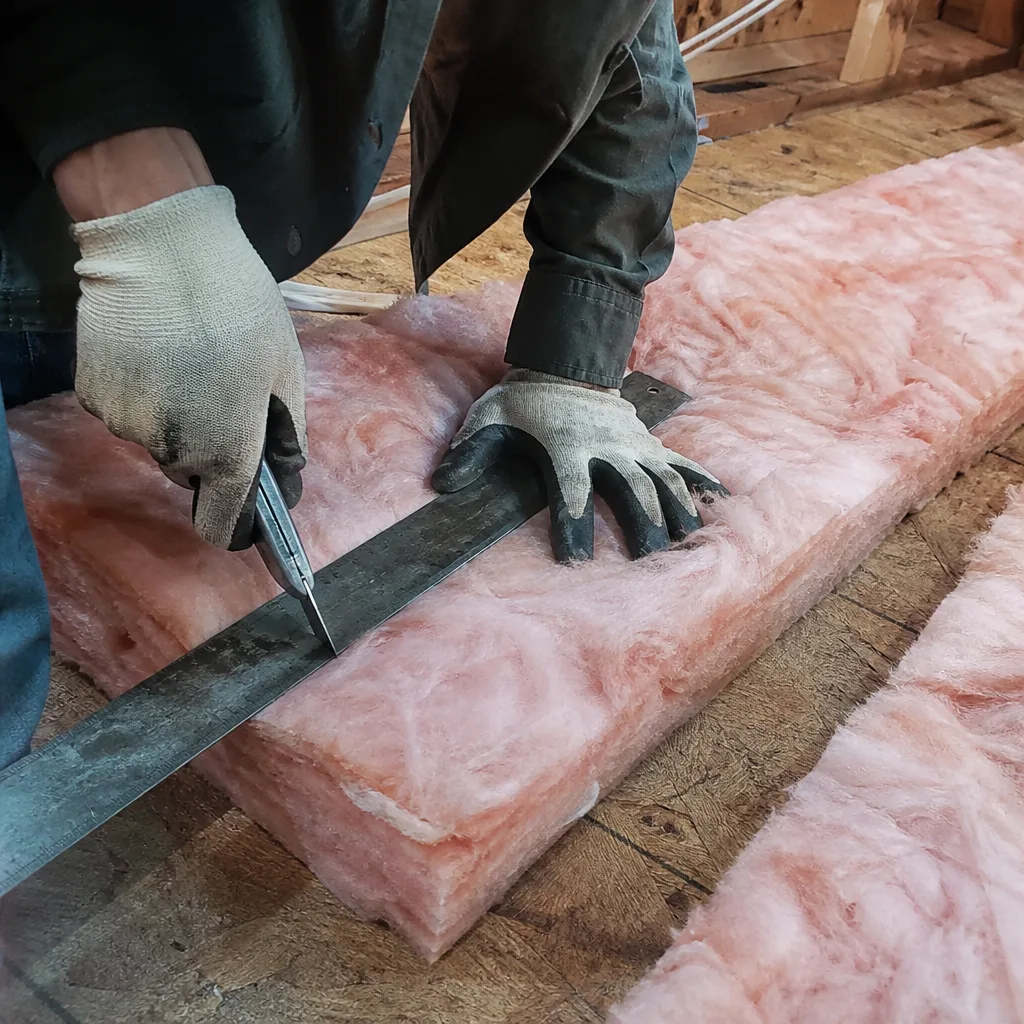
There’s a short list of checks any Cedar Park homeowner can safely make: verify attic access is clear, photograph any dust patterns around fixtures for our review, and confirm the insulation depth with a yardstick. Do not, under any circumstance, attempt to seal around recessed can lights yourself unless you have verified they are IC-rated (insulation contact) and even then, fire-rated enclosures and proper sealing are not amateur work. The penalty for getting it wrong is a house fire - cellulose is treated for fire resistance, but the wiring and housings above it may not be.
DIY foam gun work around top plates and chases looks simple on video and almost always misses the critical junctions where studs meet plates, or uses the wrong foam type that off-gasses into the living space for weeks. We stock the correct sealants for GreenFiber compatibility on every truck, and our crews know how to move cellulose, seal, and replace it without breaking the borate treatment’s continuity. Call (737) 245-6428 for a free estimate - we’ll give you the written price before anyone lifts a tool, and a free second opinion on any competing quote you’ve already collected.
FAQs
In Cedar Park’s climate, properly installed acrylic sealants last 15-20 years, while polyurethane foms can degrade faster under sustained 140°F attic temperatures common in unvented or poorly ventilated spaces. We use high-solids formulations rated for Texas attic conditions and document the product batch on your invoice so you know what was applied where. Call (737) 245-6428 if you’re unsure of your installation age - estimates are free.
Partial repair is possible if the failure is isolated to one chase or a section of top plate, but spot-fixing often misses the systemic leaks that caused the original problem. We recommend a blower-door test - a pressurization reading that shows, in one number, how much air your building envelope is losing - to determine whether localized repair or full resealing is the honest call. Call (737) 245-6428 to schedule; estimates are free.
Most GreenFiber attic air sealing jobs in Cedar Park take one full day for crews of two, or two days if we’re moving significant existing cellulose to access all leakage points. We arrive with the sealants and baffles already on the truck, and you get a text when the crew is en route. The written scope specifies the timeline before anyone starts.
Yes - we carry GreenFiber-compatible baffles, fire-rated sealants, and cellulose-safe acrylics on every Cedar Park truck, plus aftermarket equivalents from Owens Corning and Johns Manville. No waiting on special orders for standard residential jobs. We also stock Reflectix radiant barrier products for homeowners combining air sealing with heat-gain reduction.
Seal the leaks first. Then insulate. The order matters more than the product. That’s the discipline Wes Okafor learned running blower-door audits at Olive-Harvey College on Chicago’s far southeast side, and it’s what we apply to every attic in Cedar Park - including the retrofits in Buttercup Creek where attics routinely read 140°F before we touch them. We don’t blow insulation over an unsealed floor, we publish before-and-after blower-door numbers on every applicable job, and we hand you a written scope, written warranty, and Documented Photo Record before the crew leaves.
Ready to fix what’s actually leaking? Call (737) 245-6428 for a free estimate. A live person answers 24/7, and you’ll get a written price before any work starts - no exceptions.
Written by Wes Okafor, Owner, Topside Attic Insulation Cedar Park at Topside Attic Insulation Cedar Park, serving Cedar Park and nearby areas.