
CertainTeed Radiant Barrier Installation: The Cedar Park Owner’s Guide
Most CertainTeed radiant barrier installations in Cedar Park run between $1,800 and $3,400 for a typical 2,000-2,800 square foot attic, and we can usually inspect and quote same-day. The product itself isn’t a single “part” in the traditional sense - it’s a reflective foil-poly laminate or foil-kraft paper system installed across roof deck or rafter surfaces to block radiant heat transfer from the roof into conditioned space. Homeowners in Cedar Park usually discover theirs isn’t performing when upstairs rooms won’t cool below 78°F despite the AC running nonstop, or when they compare this summer’s electric bill to last year’s and find a 20-30% jump with no rate change.
Which CertainTeed Models This Applies To
CertainTeed brands its radiant barrier products under the CertaWrap and MemBrain lines, with the CertaWrap Reflective line being the most common retrofit we encounter in Cedar Park homes built between 2005 and 2018. The critical compatibility gotcha: CertaWrap comes in two distinct constructions - a perforated version (CertaWrap Reflective P) designed for attics that need vapor permeability, and a non-perforated version (CertaWrap Reflective NP) for assemblies where you want a full vapor barrier. Installing the wrong one over an already-moisture-laden attic in Cedar Park’s humid shoulder seasons traps condensation against the roof deck and rots sheathing within two to three years. We’ve replaced three such installations in the Ranch at Brushy Creek alone.
Identification is straightforward if you can access the attic: the product stamp runs along one edge of the roll, showing “CertaWrap” plus a four-digit date code and either “PERF” or “NP.” Width is 48 inches standard; length per roll is 125 feet for the residential grade, 250 feet for the commercial roll we sometimes see in larger homes near Cypress Creek. For homeowners who can’t locate the stamp, we measure existing material thickness with a caliper - CertaWrap runs 3.5-4.0 mils total, noticeably thinner than competing Reflectix BP-24048 at 5.0 mils, which we also stock when a full CertainTeed replacement isn’t required.
OEM CertainTeed versus quality aftermarket: for radiant barrier, the material specification matters more than the brand name on the roll. We source CertainTeed directly when the homeowner wants matching documentation for a builder warranty or HOA requirement, but we also install Johns Manville and Knauf equivalents that meet the same ASTM C1313 emissivity standard (0.05 or lower) at a lower per-square-foot cost. The difference is usually $0.15-$0.25 per square foot in material, which adds up on a 2,500 square foot roof deck.
Signs Your CertainTeed Radiant Barrier Installation Is Failing
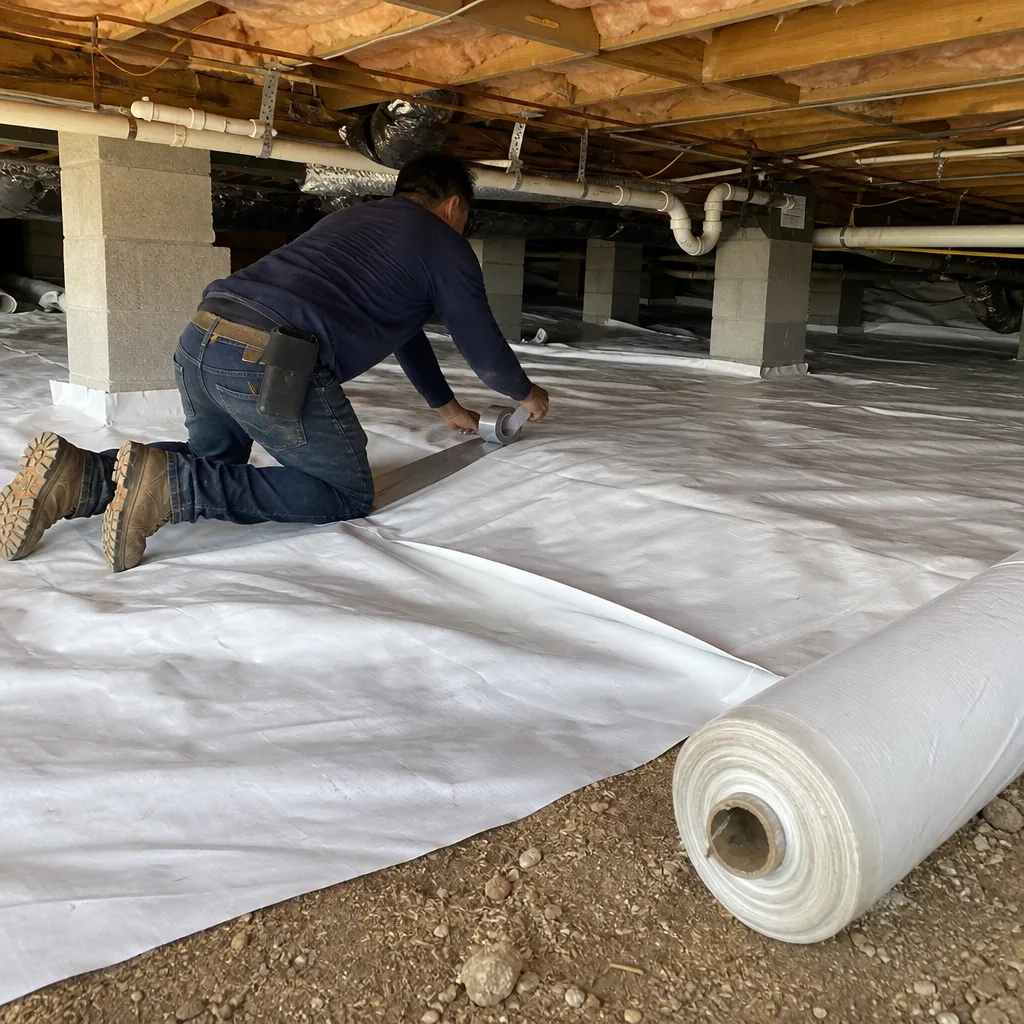
- Upstairs rooms heat up faster than they used to, especially after 2 p.m. The reflective surface degrades from dust accumulation or oxidation, pushing emissivity above 0.10. In Cedar Park, where limestone dust from construction and agriculture coats attic surfaces within 18 months, this is the most common failure mode we diagnose.
- Visible tears, sagging, or sections that have pulled free from rafter staples. CertaWrap’s lightweight construction (under 4 mils) tears easily if installers used standard T50 staples instead of the wider-crown T75s CertainTeed specifies. We find this shortcut most often in tract homes built during the 2010-2014 rush, particularly in the Buttercup Creek and Cedar Park Town Center areas.
- Water staining on the reflective surface or underlying insulation. This indicates the non-perforated barrier was installed where the perforated version was needed, trapping attic moisture against the roof deck. Cedar Park’s spring humidity spikes - March through May, often 75-85% relative humidity - accelerate this failure.
- Hot spots on the ceiling directly below gaps in the barrier coverage. Radiant barrier only works as a continuous plane; a 5% gap can reduce system effectiveness by 30% or more. We measure this with an infrared camera during our pre-install assessment and show the homeowner the image.
- The barrier was installed over unsealed attic floor penetrations. This isn’t a product failure but an installation failure: conditioned air leaks upward through top plates and can lights, carrying moisture that degrades the barrier from below. We find this in roughly 60% of Cedar Park attics we inspect, regardless of the radiant barrier brand.
Replacement Cost & What’s Included
| Component | Price Range (Cedar Park) |
|---|---|
| CertaWrap Reflective P or NP material, 2,000 sq ft attic | $680 - $920 |
| Attic air sealing (top plates, can lights, penetrations) - prerequisite | $450 - $780 |
| Labor: removal of failed barrier, surface prep, new install | $580 - $1,120 |
| Blower-door test: before-and-after | Included |
| Documented Photo Record | Included |
| Typical total installed | $1,800 - $3,400 |
What drives the range: attic square footage is obvious, but accessibility matters more than most homeowners expect. A 12/12 pitch roof in the Highlands at Crystal Falls adds two to three hours of labor versus a 5/12 pitch in Cedar Park’s older core near Main Street. Existing barrier removal is another variable - if the previous installer used adhesive-backed tape instead of mechanical fastening, scraping residue adds $200-$400. We price this during our initial attic inspection and deliver a written scope before any work starts, per Haven Standard Clause 1. The 365-Day Done Right Promise covers all completed work, and we publish before-and-after blower-door numbers on every job so you can verify the air-sealing result in actual CFM50 and ACH50 figures.
DIY or Call Us?
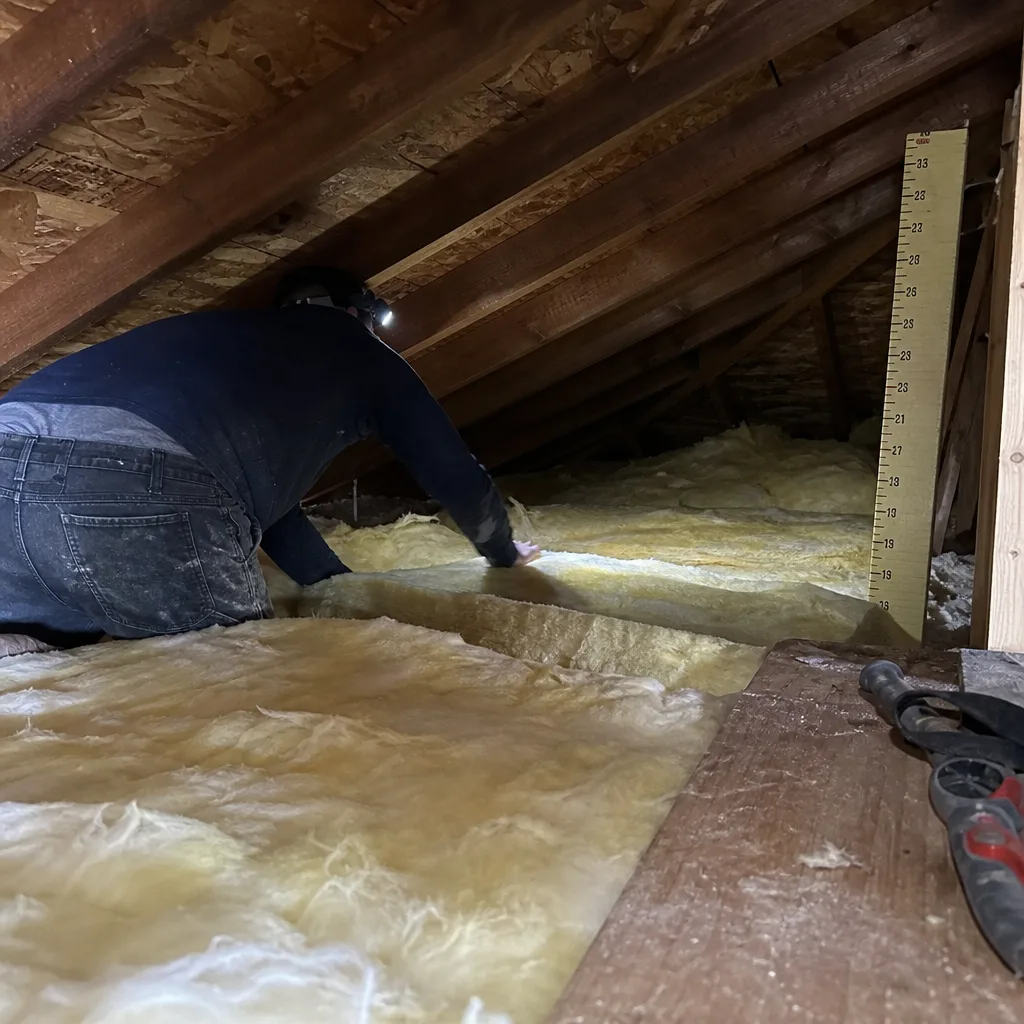
There’s no high-tension spring or electrical hazard in radiant barrier installation, which makes it tempting as a weekend project. What goes wrong: working in a 130°F Cedar Park attic leads to rushed cuts and incomplete coverage; improper staple placement tears the material; and most critically, homeowners install radiant barrier over an unsealed attic floor, which is like putting a windbreaker over a screen door. The barrier blocks radiant heat but does nothing for the convective and conductive losses from air leaks.
What you can safely check yourself: locate the product stamp to confirm which CertaWrap version you have, photograph any tears or sagging for our review, and verify whether your can lights are IC-rated (they’ll say “IC” on the housing) - non-IC cans cannot be covered with insulation or barrier and require replacement before any attic work proceeds. For everything else, we recommend a professional assessment that includes a blower-door test to quantify your envelope leakage before anyone climbs into the attic. Call (737) 245-6428 to schedule - estimates are free, and we deliver a written price before any work starts.
FAQs
In Cedar Park’s climate, a properly installed CertaWrap barrier performs for 15-20 years before emissivity degradation becomes significant. The reflective surface faces the attic air, not the roof deck, which protects it from UV breakdown; the main aging factor is dust accumulation and occasional rodent damage. We inspect barrier condition during our annual maintenance calls and can clean reflective surfaces with compressed air if accessibility allows. For a specific assessment of your installation’s remaining life, call (737) 245-6428 - estimates are free.
Localized tears can be patched with matching foil tape, but sagging, widespread oxidation, or moisture degradation means full replacement. The labor to patch multiple failure points usually exceeds replacement cost, and patched barriers never achieve the continuous plane required for rated performance. We won’t quote patchwork on a barrier that’s past 12 years in service - the homeowner deserves a system that performs to specification. Call (737) 245-6428 for an honest assessment.
A typical Cedar Park attic of 2,000-2,500 square feet takes one full day: morning for air sealing and blower-door verification, afternoon for barrier installation and final testing. Larger homes or attics with extensive existing removal may extend to a second day. We never rush the pre-install sealing - Wes Okafor’s rule, learned at Olive-Harvey College’s building science program and applied across hundreds of Cedar Park jobs: seal the leaks first. Then insulate. The order matters more than the product.
We stock CertaWrap Reflective P and NP on our Cedar Park warehouse shelf, along with Johns Manville and Knauf equivalents and Reflectix for compatibility situations. Same-day installation is available for urgent cases - typically when a failed barrier has been removed by another contractor and the attic is unprotected during peak summer heat. Standard scheduling is 3-5 business days. Call (737) 245-6428 to confirm current availability for your specific model.
Written by Wes Okafor, Owner, Topside Attic Insulation Cedar Park at Topside Attic Insulation Cedar Park, serving Cedar Park and nearby areas.