
CertainTeed Attic Insulation: The Cedar Park Owner’s Guide
Most CertainTeed attic insulation replacements in Cedar Park run between $1.80 and $3.20 per square foot installed, depending on R-value and whether your attic floor needs air sealing first. We stock CertainTeed Optima, InsulSafe SP, and TrueComfort blown-in fiberglass products on our trucks, and we can typically install same-day or next-day across Cedar Park and Leander. Homeowners usually notice the problem when upstairs rooms won’t stay cool in July despite the AC running nonstop, or when they spot thin, settled patches in the attic where the original install has compressed below its labeled R-value.
Wes Okafor, who runs our crew, put it simply after a job in Buttercup Creek last summer: “Seal the leaks first. Then insulate. The order matters more than the product.” That house was losing 3,400 CFM50 through its top plates and can-light penetrations before we touched a bag of insulation.
Which CertainTeed Models This Applies To
CertainTeed manufactures several attic insulation lines, and matching the right product to your existing install matters for both performance and warranty coverage. We work with three primary CertainTeed products in Cedar Park homes:
- Optima - a loose-fill fiberglass with a settled density of 0.5 to 0.6 pounds per cubic foot, designed for open-blow attic applications. Look for the blue-and-white bag with the “Optima” mark and the R-value chart printed on the front. This product requires a specific blowing machine (CertainTeed recommends the Unisul or equivalent) to achieve its stated coverage.
- InsulSafe SP - a spray-applied fiberglass insulation, more common in Cedar Park homes built between 2015 and 2020 where builders used it for its non-combustible rating. The “SP” denotes the sprayable formula; it is not interchangeable with standard loose-fill without the correct adhesive and equipment.
- TrueComfort - a batt product, usually found in knee walls or attic hatches where blown-in would be impractical. Batts are labeled with width and thickness on the facing paper; a 2×6 joist bay takes an R-19 or R-21 batt, not an R-13 compressed to fit.
The compatibility gotcha: CertainTeed Optima and InsulSafe SP use different blowing equipment. If your original installer used InsulSafe SP and you add Optima on top, the density mismatch creates thermal bridging at the layer boundary. We see this in about one in five Cedar Park retrofits where a homeowner or handyman topped off existing insulation without checking the original product spec.
Topside Attic Insulation Cedar Park is an independent service provider, not affiliated with CertainTeed. We source CertainTeed products through standard distribution channels alongside Owens Corning, Johns Manville, Knauf, and others. No proprietary lock-in means we recommend what performs, not what earns a brand rebate.
Signs Your CertainTeed Attic Insulation Is Failing
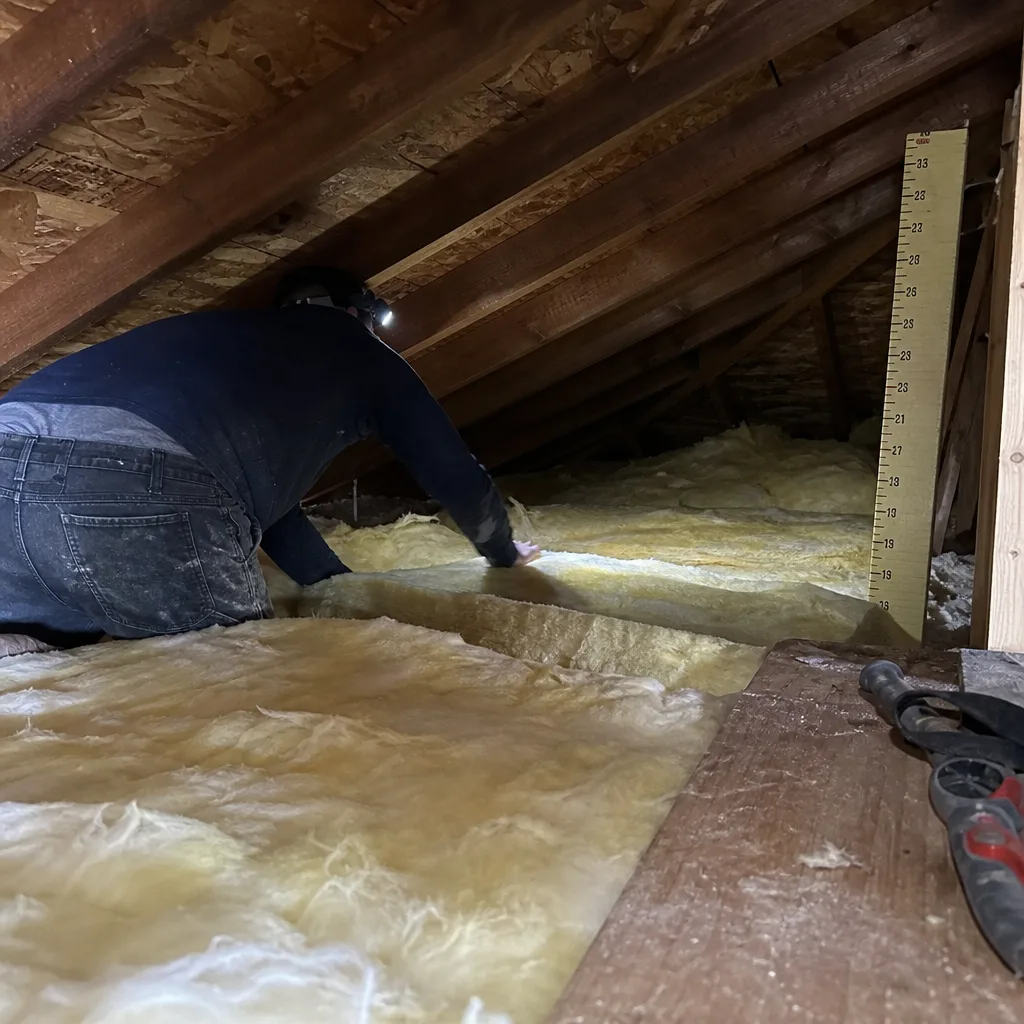
- Hot second-floor rooms in summer, cold ones in winter. Insulation settles over time. Optima, properly installed, should maintain its loft; if it has compressed below the labeled thickness, the R-value drops proportionally. In Cedar Park’s climate, where attic temperatures hit 140°F regularly from May through September, a 20% compression can turn an R-38 into an effective R-30 or lower.
- Ice damming at the eaves in rare freeze events. Even in Central Texas, hard freezes happen. If heat escapes through thin or settled attic insulation, it melts rooftop snow that refreezes at the cold eave, backing water under shingles. We see this in older Cedar Park neighborhoods like Ranch at Deer Creek where original R-19 batts have settled to R-13 equivalent.
- Visible gaps or thin spots when you look across the attic floor. Blown-in fiberglass drifts with air movement and foot traffic. HVAC contractors, cable installers, and homeowners walking joists push material aside. Those bare spots are direct thermal bypasses, and they are almost never random; they cluster near the attic hatch, along the ridge, and above top plates where workers traffic.
- Dust or insulation particles blowing from ceiling registers. This indicates a compromised air barrier, not just insulation failure. Your ductwork likely runs through an unsealed attic, and the pressure differential between conditioned space and attic is pulling loose fiberglass through gaps in the return plenum. The insulation is not the root problem, but it is a symptom that the envelope is leaking badly.
- Energy bills climbing year-over-year with no rate change. A blower-door test quantifies this. We recently tested a home in Cedar Park’s Cypress Canyon area: 4,200 CFM50 before air sealing, 2,100 after. The homeowner’s summer cooling load dropped 23% not because we added insulation, but because we sealed first, then topped off the settled CertainTeed with new material at proper density.
Replacement Cost & What’s Included
For a typical Cedar Park single-story home of 1,800 to 2,400 square feet with attic access via a standard hatch, CertainTeed attic insulation replacement runs between $2,800 and $5,400. The range depends on four factors:
| Factor | Low End | High End |
|---|---|---|
| R-value target (R-30 vs. R-49) | $2,800-$3,600 | $4,200-$5,400 |
| Air sealing required (top plates, can lights, penetrations) | Included in base | + $600-$1,200 for extensive sealing |
| Insulation removal (existing material contaminated or wet) | Not needed | + $1.00-$1.50/sq ft |
| Attic floor decking or storage platform | Standard | + $400-$800 if rebuild needed |
What drives the high end: homes with recessed can lights, multiple HVAC penetrations, or existing insulation that has been disturbed by rodents or water. What keeps it low: a clean attic with accessible joist bays and a straightforward open-blow application.
Every job includes a Written Price Before Any Work Starts, a Documented Photo Record, and on applicable jobs, before-and-after blower-door readings. The 365-Day Done Right Promise covers all completed work. Materials carry the manufacturer’s standard warranty; our labor warranty is written and delivered before anyone lifts a tool.
DIY or Call Us?
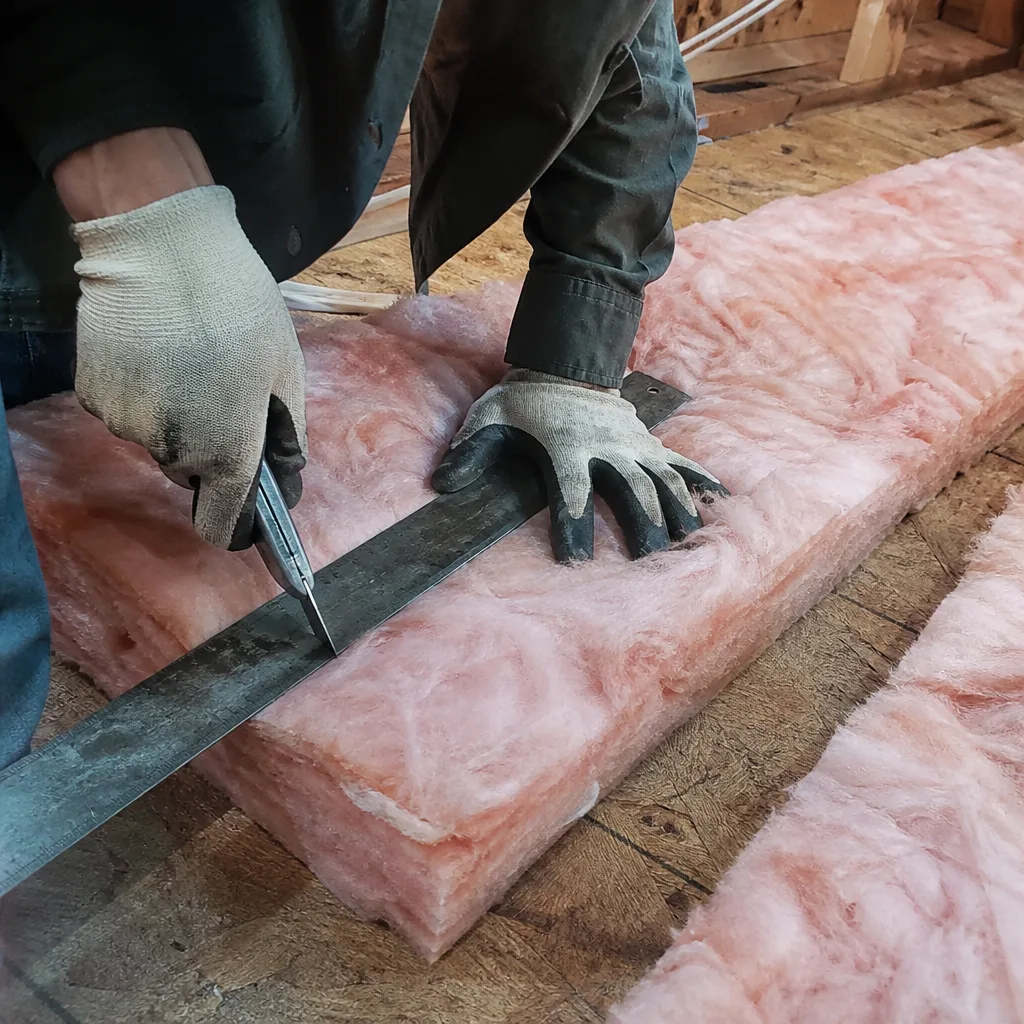
Homeowners can safely check three things: measure existing insulation depth with a ruler (subtract any compression), photograph product labels if visible, and verify attic ventilation is not blocked at the soffits. Do not disturb vermiculite insulation, which may contain asbestos; if your Cedar Park home was built before 1990 and you see a gray-brown granular material, stop and call for testing.
Where DIY goes wrong: blowing fiberglass to the correct density requires a commercial machine and a trained eye for coverage uniformity. Too light, and you get thermal drift; too dense, and you compress the material below its rated R-value. More critically, adding insulation over an unsealed attic floor traps moisture in the envelope and can drive conditioned air into wall cavities through thermal bypasses. We have removed DIY CertainTeed installs in Cedar Park where the homeowner achieved full coverage but increased their humidity problems because the air sealing was skipped.
For a Free Second Opinion on any written estimate, or to get your own written price before any work starts, call (737) 245-6428. A live person answers, 24/7.
FAQs
Properly installed CertainTeed fiberglass insulation does not degrade chemically, but it can settle or shift within 10 to 15 years in Central Texas attics due to thermal cycling, foot traffic, and rodent activity. The 140°F peak attic temperatures in Cedar Park summers accelerate compression in areas near HVAC ducts or poorly ventilated ridges. If your insulation is 12 years old and you are seeing hot rooms, settlement is likely the culprit. Call (737) 245-6428 for a free assessment - estimates include a written price before any work starts.
Localized top-offs work if the existing material is dry, uncontaminated, and identifiable by product line. We add Optima to Optima, matching density and R-value. If the original install is compressed below 50% of labeled thickness, mixed with debris, or wet from a roof leak, removal and replacement is the only sound option. Wet fiberglass loses its thermal resistance and can harbor mold. We will tell you which category your attic falls into after a visual inspection, and we will show you the photos so you can see what we see.
A standard open-blow replacement in a 2,000-square-foot Cedar Park home takes one day: morning for air sealing and prep, afternoon for blowing and cleanup. Jobs requiring removal of existing material add a second day. We arrive with the product on the truck, so there is no delivery delay. Your written scope specifies the timeline before work begins.
We stock CertainTeed Optima, InsulSafe SP, and TrueComfort batts on our trucks for Cedar Park and Leander jobs. For less common R-values or specialty applications, we pull from Austin-area distribution with next-day availability. We do not ask you to wait for a special order on standard residential work. If you have a written estimate from another contractor, bring it in for a Free Second Opinion - we will verify the product spec and coverage calculation with you.
Written by Wes Okafor, Owner, Topside Attic Insulation Cedar Park at Topside Attic Insulation Cedar Park, serving Cedar Park and nearby areas.