
Attic Baffles & Ventilation Prep in Cedar Park, TX
Attic baffles – foam or cardboard channels installed between roof rafters – keep soffit vents clear so outside air can flow up toward the ridge and carry heat and moisture out of the attic. Without them, blown-in or batt insulation piles up against the eaves, blocks that airflow, and turns your attic into a heat trap every Texas summer. At Topside Attic Insulation Cedar Park, ventilation prep is the first thing we do before any insulation goes in – never an afterthought, never skipped. If you’re planning an insulation project, call us at (737) 245-6428 to schedule a free estimate, or read through our full Attic Insulation in Cedar Park page to see how baffles fit into the broader job.
Cedar Park’s climate makes this more than a code checkbox. Summers here regularly push attic temperatures past 140°F when ventilation is restricted. That kind of heat accelerates shingle degradation, stresses roof decking, and forces your HVAC system to fight heat that was never supposed to be there in the first place. We’ve worked in neighborhoods from Buttercup Creek to Walsh Ranch and seen the same pattern: insulation installed years ago with no baffles, soffits choked with settled fill, and utility bills that climb every summer. Getting the ventilation right before attic insulation services go in is the only sequence that actually works.
Wes Okafor leads every job under The Haven Standard – which means a written price before any work starts, and a documented photo record when the crew leaves. Under Haven Standard Clause 1, you’ll see the flat price and written scope in writing before anyone lifts a tool.
When You Need Attic Baffles & Ventilation Prep
- You’re adding blown-in insulation to an existing attic. Any time insulation depth increases, baffles are required to stop the new material from blocking soffit vents. In Cedar Park homes built in the 1990s and early 2000s – common in the Lakeline area and older Brushy Creek subdivisions – original baffles are often absent or collapsed, and no contractor should blow insulation over that condition.
- Your energy bills spike every May through September. If your cooling costs jump disproportionately as temperatures rise, a blocked attic ventilation path is one of the first things worth checking. A restricted soffit-to-ridge airflow channel makes the attic work like a convection oven against your ceiling, and no R-value increase will fully compensate for that.
- You can see daylight through some soffit vents but not others. Inconsistent airflow from one section of soffit to another usually means insulation has migrated or was piled directly against the rafter bays during a previous install. We see this frequently in homes in Twin Creeks and Forest Oaks where prior contractors never installed baffles at all.
- There’s moisture staining or mold on your roof decking near the eaves. Condensation on the underside of the roof deck near soffits is a ventilation problem first and an insulation problem second. Moisture accumulates when humid interior air gets trapped against cold decking with no airflow to dry it out. In Cedar Park’s humid subtropical climate, where summer dew points regularly hit the low 70s, this happens faster than most homeowners expect.
- Your attic has ridge vents but the soffits are blocked. A ridge vent without clear soffit intake is nearly useless – it creates no meaningful air movement. We find this combination in newly flipped homes in the Cedar Park Ranch area: ridge vents installed for appearance or code compliance, soffits packed with insulation from the previous renovation.
- You’re replacing old insulation. Insulation removal is the right moment to inspect every rafter bay and install baffles correctly before the new material goes in. Skipping this step during a replacement job is the single most common mistake we’re called in to correct.
Our Attic Baffles & Ventilation Prep Process
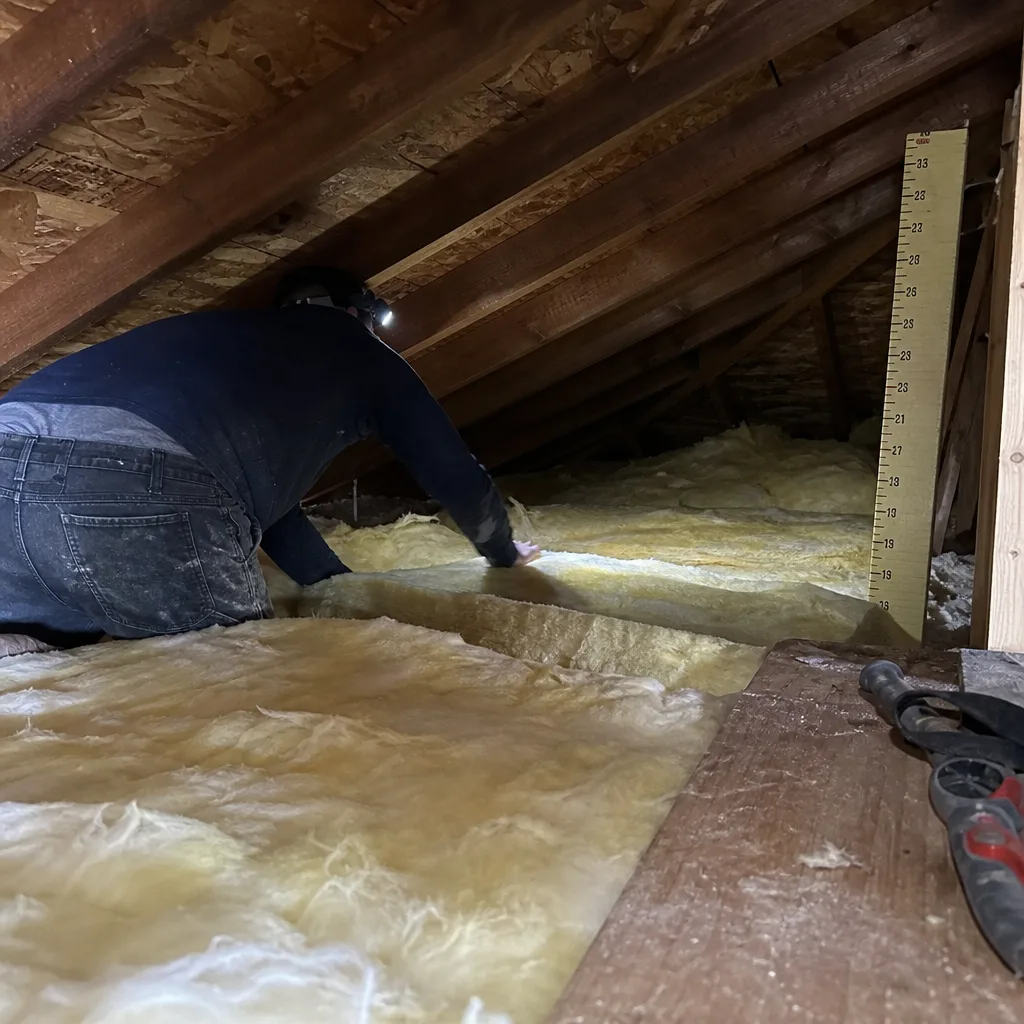
- Written scope and price, delivered before we start. Under the Haven Standard, you receive a flat written price and a scope of work before anyone enters your attic. No surprises discovered mid-job that somehow cost extra. If we identify a condition during inspection that changes the scope – a collapsed rafter bay, deteriorated roof decking – we show you the photo and discuss a revised written price before we proceed. That’s the whole foundation of how we work.
- Full attic inspection and documented photo record. Before any material is touched, a technician walks every section of the attic, photographs existing insulation depth, soffit vent condition, current baffle presence or absence, and any signs of moisture damage or pest intrusion. You receive this photo record regardless of what we find. It’s not available on request – it’s included on every visit. In Cedar Park homes we’ve inspected in Buttercup Creek, we regularly find soffit bays where original baffle tabs have simply rotted away over two or three decades.
- Clear existing soffit channels. Where insulation has migrated into the rafter bays at the eaves, we pull it back to expose the full soffit vent opening. This step alone often restores partial airflow in attics where ventilation has been compromised for years. We document the before condition with photos so you can see exactly what we found.
- Install baffles in every rafter bay along the eave line. We install a baffle channel in every rafter bay – not just the ones that look obviously blocked. Each baffle is secured to the roof decking and extends far enough above the insulation’s target depth to maintain a clear airflow channel from soffit to ridge. On most Cedar Park homes, that means a minimum two-inch clear channel above the finished insulation line. We use materials rated for the R-values and insulation types specified for your job.
- Verify ridge and gable vent condition. Baffles move air from the soffit up toward the ridge, but that air has to exit somewhere. We inspect ridge vents for blockage, confirm gable vents are unobstructed where applicable, and flag any exhaust vent conditions that need attention before insulation is installed. If bathroom or kitchen exhaust fans are venting directly into the attic rather than to the exterior – something we find in a surprising number of Cedar Park homes – we document it and discuss correction options, because blown-in insulation over an unvented exhaust fan is a moisture problem waiting to happen.
- Air sealing of top plates and penetrations, then insulation. This is the sequence that matters. At Topside Attic Insulation Cedar Park, air sealing – closing gaps at top plates, can lights, plumbing penetrations, and electrical boxes – is completed before any insulation is added. We will not blow insulation over an unsealed attic floor. This order is not negotiable because sealing after insulation means moving the insulation to do the work, which defeats the purpose. Once sealing is documented and baffles are confirmed in place, insulation – whether GreenFiber blown-in cellulose or Owens Corning fiberglass batts, depending on your written scope – goes in at the specified depth.
Attic Baffles & Ventilation Prep Pricing in Cedar Park
Baffle installation in Cedar Park typically runs between $300 and $900 as a standalone service, depending on the size of the attic, the number of rafter bays, and the accessibility of the eave line. Most Cedar Park homes in the 1,800-2,800 square foot range fall somewhere between $400 and $700 for a complete baffle installation before attic batt insulation. When baffles are part of a full attic insulation project, the cost is included in the overall written scope rather than priced separately – you’ll see a line item, not a surprise at the end.
Here’s what drives cost on a Cedar Park job:
- Attic size and rafter bay count. A larger footprint means more bays to baffle. Homes in the newer Walsh Ranch and Bryson developments tend to have more complex rooflines with multiple hip sections, each requiring individual attention.
- Existing insulation condition. If insulation has to be pulled back from the eaves, cleared, and repositioned, that’s labor. If the existing material is in good condition, we preserve it – if it’s degraded or contaminated, removal adds to the scope.
- Rafter bay accessibility. Low-pitch rooflines common in some 1990s Cedar Park ranch-style homes can make the eave area difficult to reach. Tight clearance takes more time; that’s reflected honestly in the written price before we start.
- Ridge and gable vent correction. If exhaust vents need to be extended to the exterior, or ridge vent sections are blocked, correcting those conditions is priced as an add-on in the written scope.
A written price for your specific attic – not a range based on someone else’s job – is the only honest starting point. Call (737) 245-6428 and we’ll schedule an inspection, give you the documented photo record, and hand you a flat written price before any work starts. That’s the process, every time.
FAQs – Attic Baffles & Ventilation Prep
What exactly is an attic baffle and why does Cedar Park’s climate make it so important?
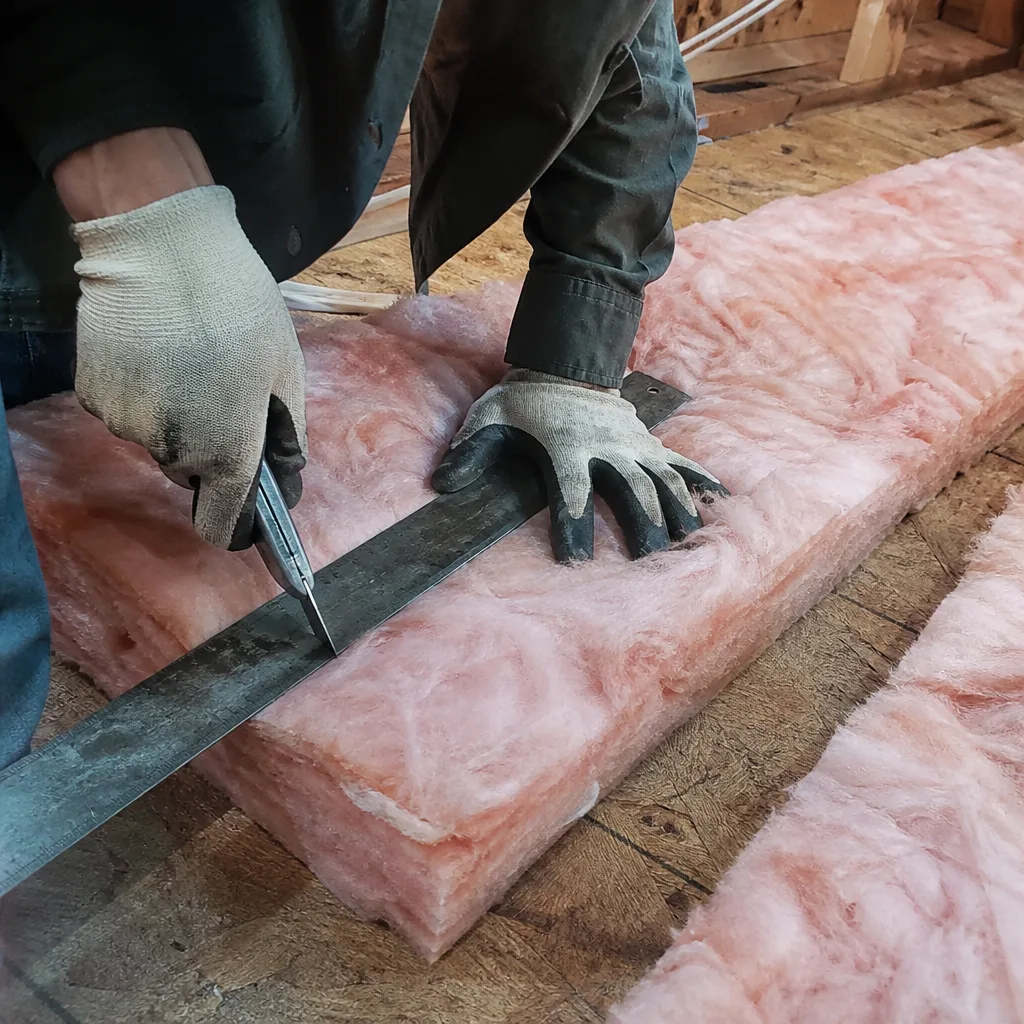
An attic baffle is a rigid channel – typically foam or cardboard – installed in the rafter bay between your roof decking and the top of the insulation, running from the soffit opening up toward the ridge. Its job is to hold a clear air passage so outside air can enter through soffit vents, travel up the rafter bay, and exit at the ridge, removing heat and moisture as it goes. In Cedar Park, where attic temperatures can exceed 140°F in July and August, that airflow is the difference between a ventilated attic that stays manageable and a sealed heat chamber that pushes temperatures into your living space and forces your HVAC to run longer. Without baffles, any blown-in insulation eventually migrates into the eave area and closes off that airflow path entirely. Call (737) 245-6428 for a free estimate and we’ll inspect your current baffle condition at no charge.
Can I skip baffles if my attic already has ridge vents?
No. Ridge vents only work when there’s a clear intake path at the soffit for replacement air to enter. A ridge vent without open soffit ventilation creates almost no meaningful airflow – it’s essentially an opening in a sealed box. We see this regularly in Cedar Park homes where soffits were blocked during a previous insulation job: the ridge vent is there, the soffit vents are there, but insulation has choked the eave channels and the system isn’t moving air at all. Baffles are what connect the two; without them, the ventilation system is in name only. Adding insulation depth over that condition makes it worse, not better.
How much does baffle installation cost for a typical Cedar Park home?
Most Cedar Park homes in the 1,800-2,800 square foot range run between $400 and $700 for baffle installation alone, with the broader range for the service falling between $300 and $900 depending on attic size, rafter bay count, and eave accessibility. When baffles are part of a full attic insulation project, that cost appears as a line item in your written scope rather than a separate invoice. For details on how much attic insulation costs in Cedar Park, TX, the only honest answer is a written price based on an actual inspection – call (737) 245-6428 and we’ll get that scheduled.
Does Topside Attic Insulation Cedar Park always do ventilation prep before adding insulation?
Yes, always. We will not blow insulation over an attic floor that hasn’t been properly prepped – that means baffles installed in every rafter bay and air sealing completed at top plates, can lights, and penetrations. The sequence is sealed first, then insulated, in that order, on every job. This isn’t a premium add-on; it’s the base standard. Any contractor willing to skip ventilation prep to get in and out faster is handing you a future problem: insulation that traps heat, accelerates moisture buildup, and underperforms its rated R-value within a few years. Our full home page documents the service line and how each component fits together if you want the broader picture.
What documentation do I receive after a baffle and ventilation prep job?
You receive a documented photo record of the attic before work starts, during the baffle installation, and after completion – included on every visit, not available on request. On jobs that include air sealing, you also receive before-and-after blower-door readings: a pressurization measurement that shows, in one number, how much conditioned air the home’s envelope was losing before we sealed it versus after. The written scope and warranty are delivered in writing before work begins, and the 365-Day Done Right Promise applies: if something isn’t right, we make it right. You walk away with a paper trail that documents what was done, not just an invoice.
Why Cedar Park Homeowners Choose Topside Attic Insulation
Since 2016, we’ve completed work in more than 9,000 homes – every one of them with a written price before work started and a documented record when the crew left. Wes Okafor built Topside around a straightforward premise: homeowners who research contractors carefully deserve to see the evidence before they decide, not after. That means publishing before-and-after blower-door numbers on applicable jobs, putting the price on the page in actual dollars, and committing to a 365-Day Done Right Promise in writing.
For Cedar Park specifically, that matters because the homes here vary widely. A 2003 build in Buttercup Creek has different attic geometry than a 2019 build in Bryson, and a rafter bay that’s tight against a low-pitch eave in a Twin Creeks ranch behaves differently from a standard 6:12 pitch in Forest Oaks. We’ve worked in all of them. The photo documentation we provide reflects your attic, not a stock photo from a job in a different city.
We source materials from manufacturers including GreenFiber, Owens Corning, and Johns Manville – no proprietary product lock-in, no incentive to spec one material over another based on margin. The right material for your job is what goes in. If you have a written estimate from another contractor, we’ll read it with you under our Free Second Opinion offer and tell you plainly what we see. That’s the Haven Standard, and it’s how every job runs.
For a full picture of what an attic insulation project includes in Cedar Park – baffles, air sealing, blown-in insulation, and radiant barrier options – see our Attic Insulation in Cedar Park page. When you’re ready to get a written price for your specific home, call (737) 245-6428. A live person answers – no voicemail, no callback window measured in business days. We’ll schedule the inspection, document what we find, and give you a flat written price before anyone starts work. That’s the whole process.
Written by Wes Okafor, Owner at Topside Attic Insulation Near Me in Cedar Park, TX, serving Cedar Park.