
Demilec Attic Air Sealing: The Cedar Park Owner’s Guide
Demilec attic air sealing systems in Cedar Park typically run $1,800-$3,400 installed for a complete top-plate and penetration seal on a 2,000-square-foot home, and we stock Demilec-compatible sealants and accessories for same-day starts. Most homeowners discover the system is failing when their summer electric bills spike 20-40% year-over-year despite the AC running constantly, or when a recent insulation contractor noted “gaps in the air barrier” during a routine attic inspection. The telltale sign is often a blower-door test reading above 3,500 CFM50 in a home built between 1995 and 2015, which is the vintage we see most in Cedar Park’s Buttercup Creek and Ranch at Deer Creek subdivisions.
Which Demilec Models This Applies To
Demilec’s attic air sealing line centers on their Heatlok Soya HFO and Heatlok XT series, both closed-cell spray foams used for top-plate sealing, rim joist blocking, and penetration detail work in Central Texas attics. The critical compatibility point is the substrate: Heatlok Soya HFO bonds aggressively to oriented strand board and plywood decking common in Cedar Park’s 2000s-era builds, but struggles with the older gypsum-based sheathing found in 1990s Ranch at Deer Creek homes unless primed with Demilec’s DC-315 intumescent coating first. We see this mismatch cause delamination about 18 months after installation.
To identify your specific Demilec system, check the cured foam color: Heatlok Soya HFO cures to a pale yellow, while Heatlok XT is off-white. The product code is stamped on any exposed drum or, more commonly, on the documentation left by your original installer. If you have no documentation, a core sample taken from an inconspicuous attic corner will show cell structure: Heatlok Soya HFO runs 2.0-2.2 lbs/ft³ density, noticeably lighter than Heatlok XT at 2.4-2.6 lbs/ft³. This density difference matters because retrofit sealing over existing Demilec requires matching or exceeding the original density to prevent thermal drift at the interface.
We stock both OEM Demilec drums and equivalent-density aftermarket closed-cells from Icynene and Johns Manville that meet the same ASTM E84 Class A fire rating. For Cedar Park’s climate zone 2A, we typically recommend staying with OEM for warranty continuity on homes under 10 years old, and switching to aftermarket equivalents on older homes where the original Demilec warranty has already expired and cost efficiency matters more.
Signs Your Demilec Attic Air Sealing Is Failing
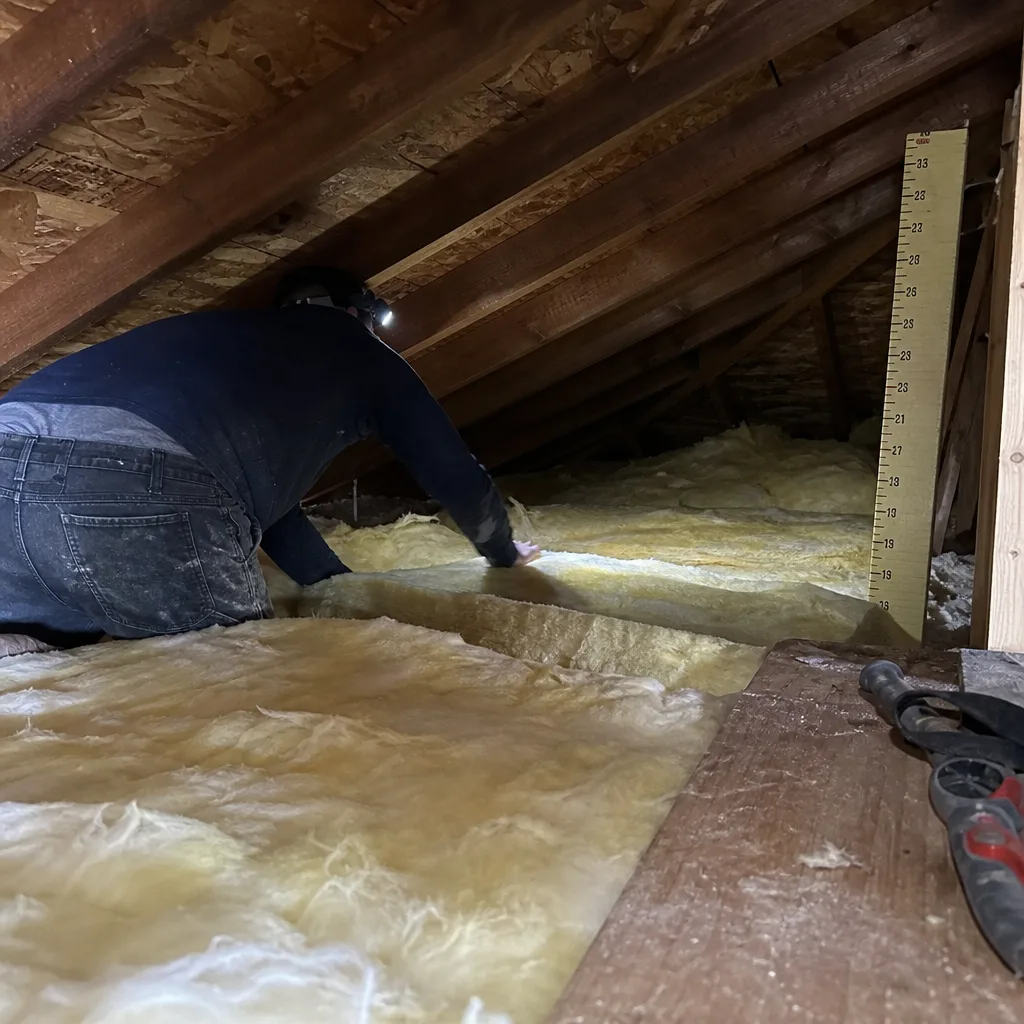
- Hot attic air pushing through recessed can lights. Demilec seals around IC-rated cans are supposed to block the stack effect, but UV degradation from Cedar Park’s 140°F peak attic temperatures can embrittle the foam after 8-12 years. You’ll feel warm air dropping from the trim when the AC cycles off, and your blower-door reading will show elevated leakage at the ceiling plane.
- Dust streaks around electrical penetrations and top plates. This is filtration tracking: conditioned air is escaping through gaps the Demilec was meant to seal, carrying dust that deposits on the cooler drywall surface. In Cedar Park’s caliche-heavy soil zone, that dust often contains fine limestone particulate that’s abrasive to HVAC components over time.
- Uneven room temperatures despite balanced ductwork. When Demilec top-plate seals fail between conditioned and unconditioned attic space, the thermal boundary moves. A bedroom with a failing seal along its top plate can read 4-6°F warmer than an identical room on the same duct run. We’ve measured this exact pattern in Buttercup Creek two-story homes where the second-floor top plates were originally sealed with early-batch Heatlok XT.
- Moisture staining on ceiling drywall near chimney chases or vent stacks. Demilec’s closed-cell foam is vapor-impermeable at 1.5 inches, but thin application at complex geometry, or shrinkage during cure, leaves a path for humid attic air to condense on the cooler framing. Cedar Park’s spring humidity spikes, often 75-85% RH in April, accelerate this failure mode.
- Insulation contractor refusing to add more blown-in without “fixing the air sealing first.” This is the most common way we meet Demilec customers: another contractor has already identified that new insulation over a failed air barrier is just burying the problem. The Demilec system isn’t doing its job, and adding R-value without restoring the air boundary violates basic building science.
Replacement Cost & What’s Included
Most complete Demilec attic air sealing replacements in Cedar Park run $1,800-$3,400 for a single-story home between 1,800 and 2,800 square feet. Two-story homes add $400-$800 because of the additional top-plate linear footage and the safety setup for working over open stairwells. The range depends on three factors: how much existing Demilec must be removed (mechanical scraping adds 2-3 hours), whether the substrate needs DC-315 primer for adhesion, and how many penetrations require custom blocking boxes for code-compliant fire separation.
Our price includes the blower-door pre-test and post-test, the Demilec or equivalent material, all surface prep and primer, installation to a minimum 1.5-inch thickness at top plates and 3-inch thickness at rim joists, and the Documented Photo Record delivered before we leave. Under Haven Standard Clause 1, you get the written price before any work starts, and the 365-Day Done Right Promise covers both material and labor. We don’t charge separately for the blower-door test; it’s part of proving the work performed.
DIY or Call Us?
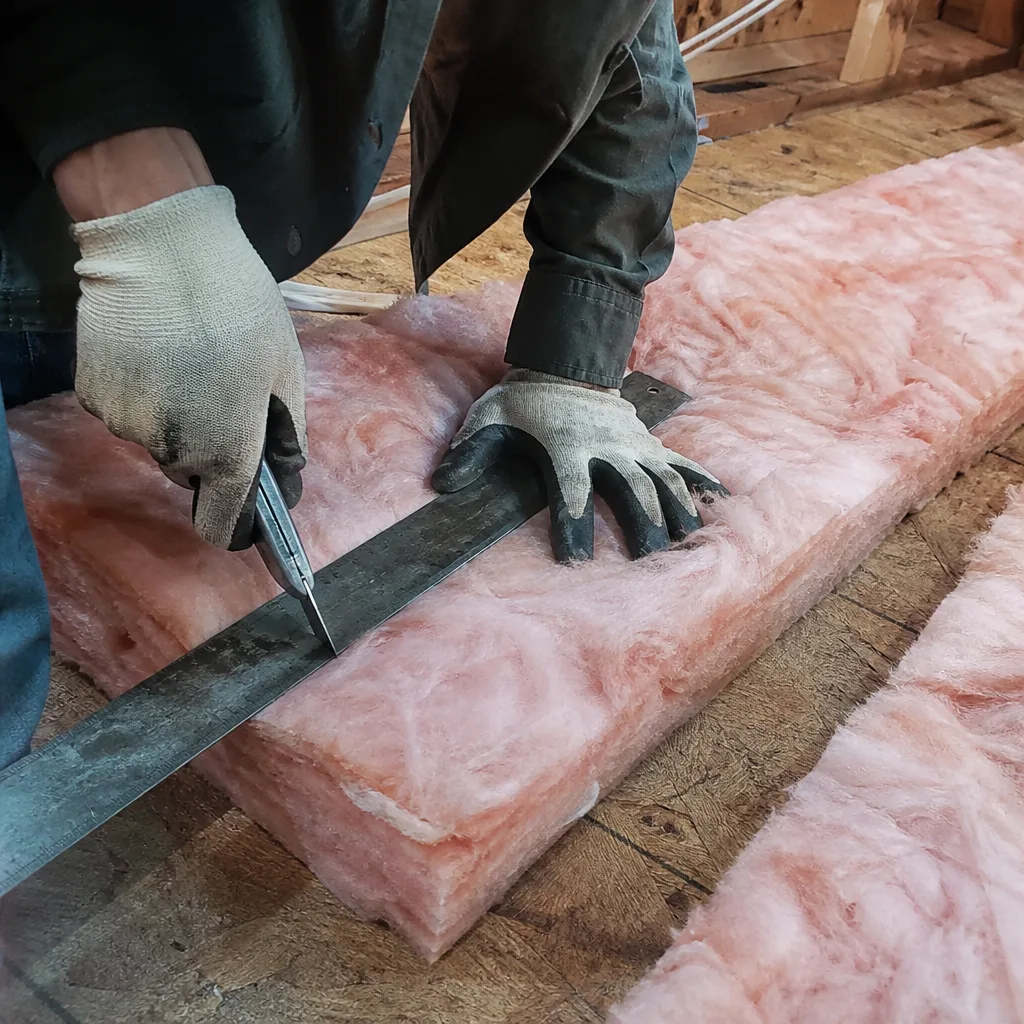
There’s a safe middle ground here, and then there’s where DIY gets expensive. You can safely verify your Demilec system status with a visual attic inspection: look for cracked or powdering foam at top plates, gaps around penetrations wider than a quarter-inch, or any foam that pulls away from the substrate when gently probed with a screwdriver. A smoke pencil or even a stick of incense held near a can light with the AC running will show you if air is moving the wrong direction.
What you should not do is attempt to spray new Demilec or any two-component closed-cell foam yourself. The isocyanate component is a potent respiratory sensitizer, and without supplied-air respirator equipment and proper ventilation engineering, you’re risking chemical asthma. Beyond the health hazard, amateur application almost always results in off-ratio curing, density variation, and voids that won’t show up until your next energy bill. The material also generates significant heat during cure and can ignite surrounding cellulose if not managed. We carry the full PPE and have the ventilation setup; most homeowners don’t. For a system this consequential to your home’s performance and your family’s air quality, the installation belongs to trained technicians.
Seal the leaks first. Then insulate. The order matters more than the product. Call (737) 245-6428 when you’re ready to see what your actual blower-door numbers look like.
FAQs
Properly installed Demilec closed-cell foam should perform 15-20 years, but Cedar Park’s combination of extreme attic heat and spring humidity spikes often compresses that to 10-14 years for early-application top plates that weren’t installed at full design thickness. The 140°F peak temperatures we measure in Buttercup Creek attics accelerate UV and thermal degradation at exposed foam surfaces. Call (737) 245-6428 for a free blower-door assessment that’ll tell you exactly where your system stands.
Localized delamination at individual penetrations can sometimes be repaired with compatible foam injection, but widespread top-plate failure or density-compromised original application almost always requires full removal and reinstallation. Partial repairs over failed substrate create thermal bypasses that show up immediately on the blower-door test. We offer free second opinions on any written estimate that proposes repair-only; bring us the scope and we’ll read it with you.
Most single-story Cedar Park homes are completed in one working day, with the crew arriving at 8 AM and the final blower-door test wrapped by 4 PM. Two-story homes or those requiring extensive substrate prep typically run into a second day. We don’t start work without a written price and a written scope, so you’ll know the timeline before anyone enters your attic.
We stock Demilec Heatlok Soya HFO and Heatlok XT drums, DC-315 primer, and compatible aftermarket closed-cells from Icynene and Johns Manville on our Cedar Park trucks. For standard top-plate and penetration sealing, we can typically start same-day or next-day from your call. Custom color-matched applications or specialty intumescent coatings may require 24-48 hours to pull from our Austin distributor. Call (737) 245-6428 to confirm current stock for your specific Demilec series.
Topside Attic Insulation Cedar Park is an independent service provider and is not affiliated with, endorsed by, or an authorized dealer of Demilec. We also stock parts and materials for Reflectix and other major building envelope brands.
Written by Wes Okafor, Owner, Topside Attic Insulation Cedar Park at Topside Attic Insulation Cedar Park, serving Cedar Park and nearby areas.