
Rockwool Vapor Barrier Installation: The Cedar Park Owner’s Guide
Rockwool vapor barrier installation in Cedar Park typically runs $1,800-$3,400 for a complete attic application, depending on square footage and whether the existing barrier needs full removal. We stock Rockwool-compatible vapor barrier materials on every truck, and most Cedar Park jobs are completed same-day once the written price is approved. Homeowners usually discover the failure when they pull back insulation and find black mold on the drywall, feel persistent humidity in second-floor rooms, or notice their AC runs nonstop through August without ever catching up.
Which Rockwool Models This Applies To
Rockwool doesn’t manufacture a standalone vapor barrier product, but their Comfortbatt, Comfortboard, and AFB (Acoustical Fire Batt) lines are the insulation substrates we most often pair with a properly specified barrier in Cedar Park homes. The critical match is between the batt thickness and the barrier’s permeance rating, measured in perms. Rockwool Comfortbatt in 2×6 wall cavities (5.5-inch R-23) and 2×4 cavities (3.5-inch R-15) both require a barrier with 0.1 perm or lower when installed on the warm-in-winter side of the envelope in our climate zone.
Here’s how to identify what you’ve got: Rockwool batts carry a foil-stamped density mark, usually reading “8 lb/ft³” for Comfortbatt, and the facing, if present, will be labeled “unfaced” or carry a kraft paper that’s actually a vapor retarder, not a full barrier. The OEM approach, using Rockwool’s specified accessories, works but isn’t mandatory. We often install a mechanically fastened polyethylene or reinforced polyiso barrier from Johns Manville or CertainTeed that matches the perm spec at lower material cost. The gotcha in Cedar Park’s 140°F attic summers is that cheap 4-mil poly becomes brittle in 3-4 years; we spec minimum 6-mil reinforced or cross-laminated polyethylene, which holds up against the thermal cycling.
Signs Your Rockwool Vapor Barrier Installation Is Failing
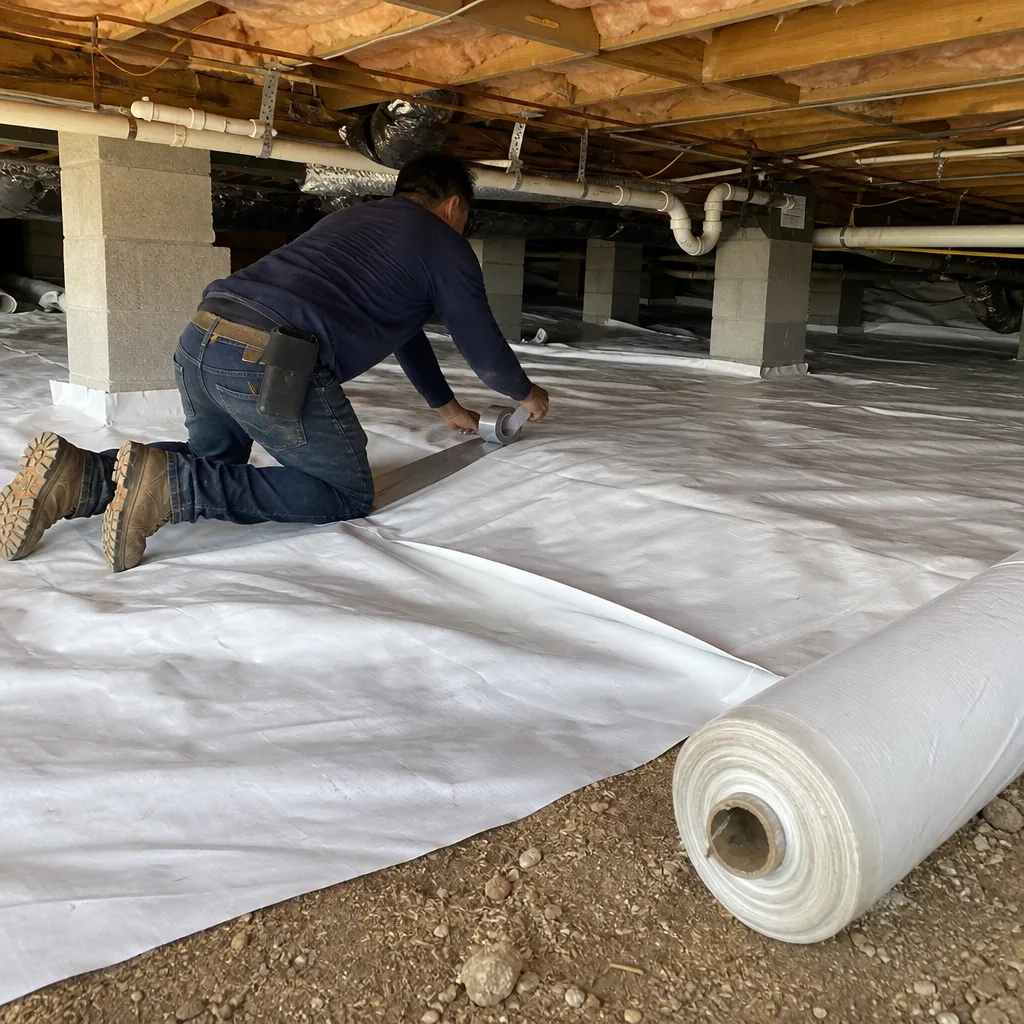
- Black or gray staining on ceiling drywall beneath the insulation. This is moisture that condensed on the cold side of a compromised barrier and fed mold growth. In Cedar Park, we see this most often in homes built 2010-2018 where the original builder-grade poly was stapled loosely and has since pulled away at the seams.
- Insulation batts that feel damp or clump together when probed. Rockwool is hydrophobic and won’t hold moisture like fiberglass, but the air spaces between batts will. If you can squeeze water from the surrounding environment, the barrier has lost its seal somewhere, usually at a penetration or overlap joint.
- Musty odor that intensifies when the HVAC blower cycles on. This means your ductwork is pulling air through the attic, and that air is passing over moldy sheathing or insulation. The barrier failure is creating a pathway for attic air to enter conditioned space, or vice versa.
- Ice dam formation on the roof in rare freeze events, or excessive summer heat gain. A failed barrier lets conditioned air leak upward, carrying moisture that deposits on the underside of the roof deck. In Cedar Park’s climate, this shows as warped or delaminated OSB in the attic come July.
- Blower-door test showing minimal improvement after air sealing alone. If your top plates and can lights are sealed but the CFM50 number won’t drop below 3,000, the attic floor plane itself is leaking through gaps in the vapor barrier. We’ve measured this exact pattern in Buttercup Creek homes where the original poly was never taped at seams.
Replacement Cost & What’s Included
| Scope | Price Range in Cedar Park |
|---|---|
| Partial barrier repair (localized failure, under 200 sq ft) | $450-$780 |
| Full attic vapor barrier replacement, 1,000 sq ft | $1,800-$2,600 |
| Full replacement with air sealing of top plates, can lights, penetrations | $2,400-$3,400 |
| Add blower-door test with written before-and-after report | $280 (included in full replacement) |
The range driver is access. A Cedar Park home with a 12/12 pitch roof, a maze of recessed lighting, and HVAC equipment parked in the attic middle takes longer than a straightforward gable with a single scuttle hole. Every full replacement includes removal of failed material, installation of 6-mil reinforced polyethylene with acoustical sealant at all seams and penetrations, mechanical fastening to withstand our attic wind-washing, and a Documented Photo Record delivered before we leave. Under Haven Standard Clause 1, you get the written price before anyone lifts a tool, and the 365-Day Done Right Promise applies to all work.
DIY or Call Us?
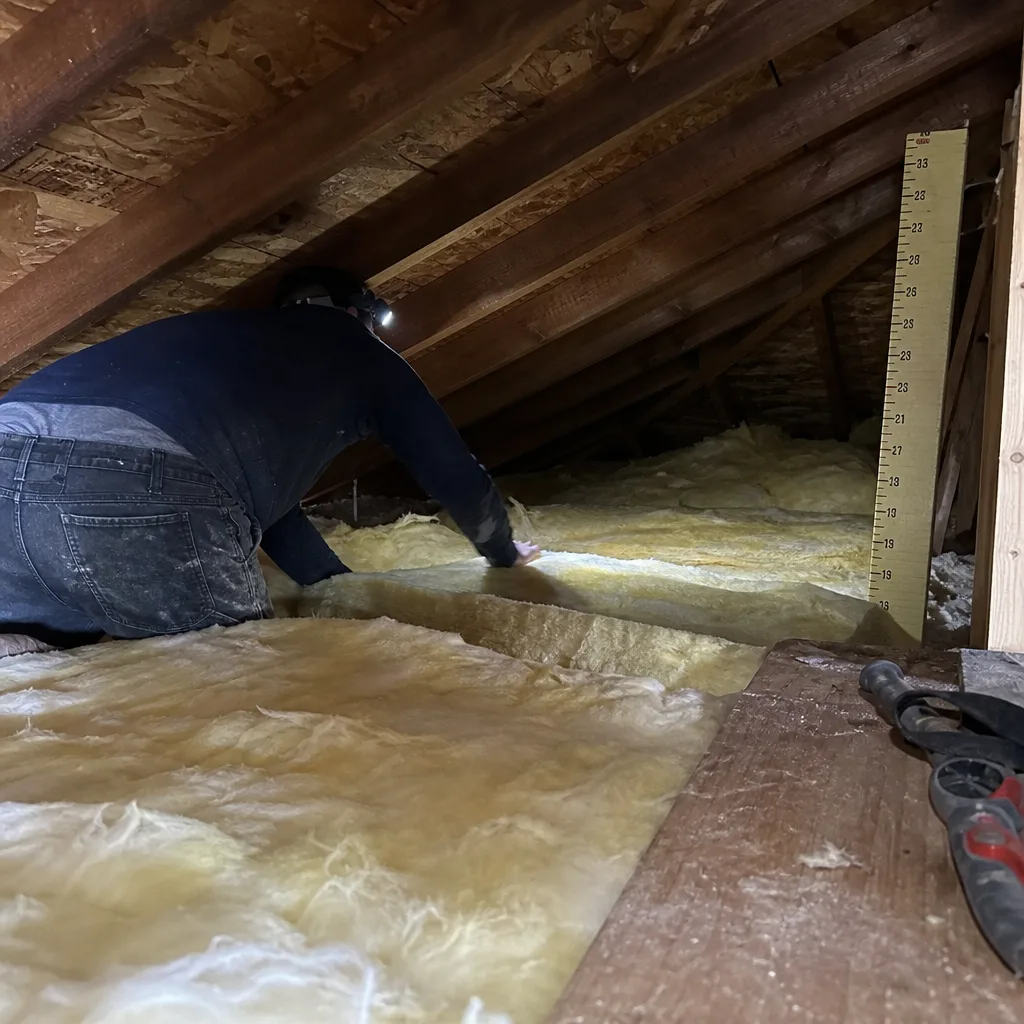
There’s no high-tension danger in vapor barrier work, but there’s a knowledge trap that wastes money. A homeowner can safely check for obvious failures: pulled staples at the attic hatch, gaps around chimney chases, or poly that’s shredded near a squirrel entry. What DIY misses is the thermal bypass, the air path that bypasses the barrier entirely through interior wall cavities or balloon framing. We’ve found Cedar Park homes where the poly looked intact but the blower-door test revealed 1,800 CFM50 of leakage through a single unsealed top plate.
Seal the leaks first. Then insulate. The order matters more than the product.
We also stock Reflectix vapor barrier products for homeowners who need a radiant-barrier hybrid solution. Call (737) 245-6428 for a free estimate, and we’ll bring the blower-door rig to show you exactly what you’re dealing with before you spend a dollar.
FAQs
A properly installed 6-mil reinforced polyethylene barrier should last 15-20 years in our climate, but builder-grade 4-mil poly often fails in 3-5 years due to thermal cycling in 140°F attics. The Rockwool batts themselves are unaffected, it’s the barrier material that degrades. Call (737) 245-6428 if you’re unsure what grade was originally installed, estimates are free.
Localized failures at seams or penetrations can be patched with acoustical sealant and new poly overlapped 12 inches minimum, but widespread embrittlement or mold contamination requires full removal. We won’t patch over mold, it just hides the problem. Call (737) 245-6428 and we’ll show you the photo evidence before recommending either approach.
Most Cedar Park homes under 2,500 square feet are completed in one day, assuming clear attic access. Homes with multiple HVAC zones, extensive recessed lighting, or equipment in the attic path may run into a second day. We give you a written schedule with the price, no surprises.
Yes, we carry 6-mil reinforced polyethylene, cross-laminated poly, and polyiso-faced barriers on every truck, sized for Rockwool Comfortbatt and Comfortboard installations. Topside Attic Insulation Cedar Park is an independent service provider, not affiliated with Rockwool, and we also stock Reflectix products for hybrid radiant-barrier applications. Same-day installation is available once the written price is approved.
Written by Wes Okafor, Owner, Topside Attic Insulation Cedar Park at Topside Attic Insulation Cedar Park, serving Cedar Park and nearby areas.