
Rockwool Attic Insulation: The Cedar Park Owner’s Guide
Most Rockwool attic insulation jobs in Cedar Park run between $2,800 and $5,400 installed, depending on attic square footage and whether your top plates and can lights need sealing first. We stock Rockwool Comfortbatt and AFB (Acoustical Fire Batt) in R-30 through R-38 configurations on our Cedar Park trucks, and we can usually inspect and start work same-day if you call before noon. Homeowners typically realize their insulation is failing when the upstairs bedrooms won’t cool below 78°F even with the AC running nonstop, or when they pull down the attic ladder and see batts compressed to half their labeled thickness, stained from roof leaks, or scattered by rodents that moved in through unsealed gaps.
Which Rockwool Models This Applies To
Rockwool’s residential attic line breaks into two families: Comfortbatt, the semi-rigid batts with the distinctive blue foil backing, and AFB, the softer acoustic/fire-rated batts used in floor assemblies and some conditioned attic applications. For Cedar Park attics, Comfortbatt R-30 (7.25″ nominal) and R-38 (9.25″ nominal) are what we install most - the higher density, about 2.5 pounds per cubic foot, means it doesn’t settle like fiberglass over a decade of 140°F summer peaks.
Here’s the compatibility gotcha: Rockwool labels its batts by “nominal” thickness, but your joist or truss bay might be 10 inches deep with a 2×10, or 14 inches with engineered I-joists. A Comfortbatt R-38 in a 14-inch bay leaves an air gap that kills performance; we either double-layer R-19 or switch to AFB if the assembly calls for full-fill. The model number is printed on the foil facing - look for “CB” followed by the R-value and width (CB338 for 16″ on-center, CB324 for 24″).
We don’t push OEM-only. Rockwool batts are mineral wool, and the spec that matters is density and ASTM C665 compliance, not whose truck delivered it. We source through our regular suppliers - Owens Corning, Johns Manville, Knauf, Rockwool, CertainTeed, Icynene, Demilec, and GreenFiber - and we’ll show you the spec sheet before we unload.
Signs Your Rockwool Attic Insulation Is Failing
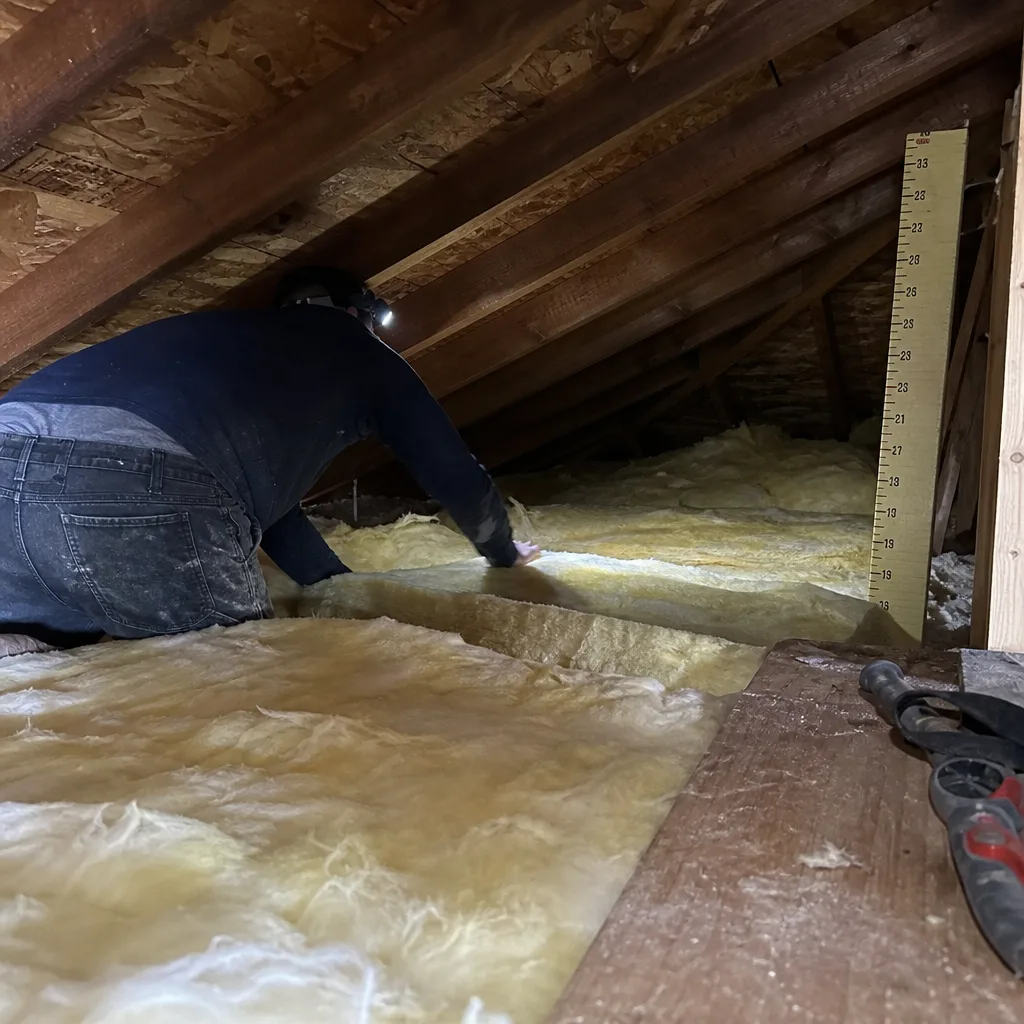
- Upstairs rooms stay hot past 10 p.m. Rockwool doesn’t degrade thermally, but if it was installed over unsealed top plates, conditioned air leaks out faster than the batt can slow heat transfer. The insulation isn’t broken; the envelope around it is.
- Black or gray streaking on the batt face. This is filtered dirt from air moving through the insulation - a clear sign your attic is acting as a return plenum because the drywall-to-top-plate joint was never sealed. The batt becomes an air filter instead of a thermal barrier.
- Compression to 4 inches or less. Comfortbatt installed at R-38 needs its full 9.25″ loft. Homeowners or prior contractors walking through the attic, storing boxes, or laying plywood for storage crush the mineral wool structure permanently. Once compressed, it doesn’t rebound.
- Wet or crumbly batt sections near the eaves. Cedar Park’s spring storms drive water through poorly flashed dormers or missing baffles. Rockwool is water-repellent, not waterproof - saturation ruins the binder and creates a mold substrate. We see this most in the Buttercup Creek and Cedar Park Town Center areas where roof geometries are complex.
- Ice dam staining on interior ceilings in winter. Even Central Texas gets occasional hard freezes. Warm air leaking through poorly insulated attic bypasses melts roof snow; water runs to the cold eave and refreezes. The stain on your ceiling is the symptom; the bypass is the disease.
Replacement Cost & What’s Included
| Scope | Typical Range in Cedar Park |
|---|---|
| Remove failed batts, air seal top plates/can lights/penetrations, install new Rockwool Comfortbatt R-38 | $3,800 - $5,400 |
| Air seal only (no insulation replacement, blower-door verified) | $1,400 - $2,200 |
| Partial replacement (localized water/rodent damage, one zone) | $1,800 - $2,800 |
| Full removal of contaminated insulation + decontaminate + new Rockwool | $4,200 - $6,800 |
What drives the range: attic square footage (most Cedar Park homes built 2015-2025 run 1,200 to 2,400 sq ft of attic floor), accessibility (truss vs. stick-framed, hatch size, whether we can get a 24″ wide batt through the opening), and the condition of what’s coming out. Rodent-soiled insulation requires full PPE removal and HEPA vacuuming before new batts go in. Every job gets a Written Price Before Any Work Starts - Haven Standard Clause 1 - and the price you sign is the price you pay. The 365-Day Done Right Promise covers installation defects; material warranty comes from the manufacturer and varies by product line.
DIY or Call Us?
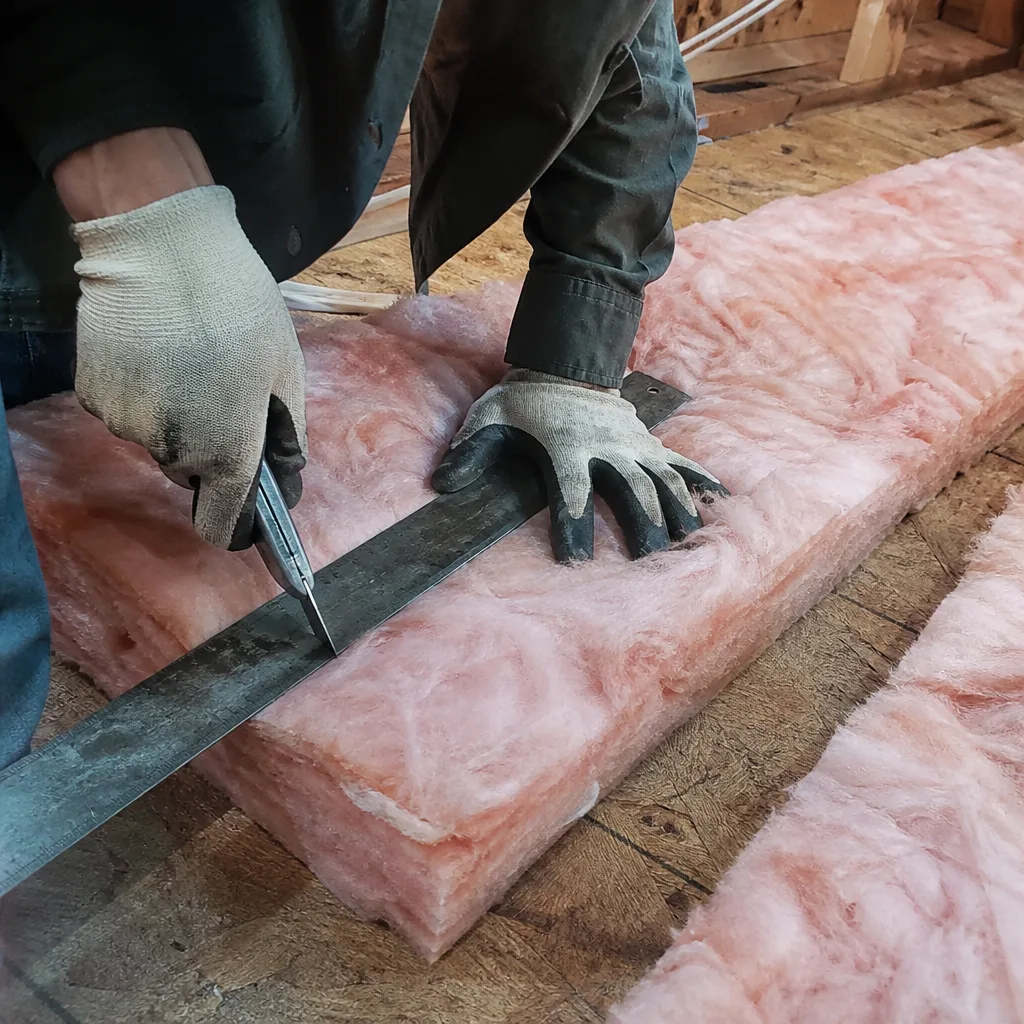
Here’s what you can safely check yourself: measure your attic hatch opening, count the number of can lights or bathroom fans visible from the attic side, and note any compressed or stained batts with your phone. That documentation helps us scope the job before we arrive.
Where DIY goes wrong: Rockwool is itchier than fiberglass and the fibers are sharper - long sleeves, respirator, and eye protection are non-negotiable. More critically, most Cedar Park attics have active knob-and-tube or Romex wiring buried in insulation, and the clearance requirements to combustibles are real. We’ve found live wires resting directly on batts in homes from the 1980s ranch era near Lakeline Mall. The bigger risk is blowing insulation over leaks you can’t see - the top plate behind the drywall, the chimney chase, the plumbing stack - and congratulating yourself on a job that actually made the house leakier. Seal the leaks first. Then insulate. The order matters more than the product.
If you want the blower-door number to prove the sealing worked, that’s what we do. Call (737) 245-6428.
FAQs
Rockwool itself doesn’t settle or degrade thermally for decades - the mineral wool structure is inert. What fails first in Cedar Park is the installation, not the product: compression from foot traffic, displacement from wind washing through unsealed eaves, or contamination from roof leaks. In the Buttercup Creek subdivision, we’ve pulled 12-year-old Rockwool that was still performing at labeled R-value where it hadn’t been disturbed, and 4-year-old batts that were ruined by unsealed can lights cooking the surrounding material. The lifespan question is really an installation quality question. Call (737) 245-6428 and we’ll inspect what you have - estimates are free.
Localized damage from a single roof leak or rodent nest can be cut out and patched with new batts if the surrounding insulation is clean and at full loft. We do this often in newer Cedar Park builds where one dormer flashed poorly. But if the failure mode is compression, dirty streaking from air leaks, or widespread moisture damage, patching is false economy - the thermal bridge at the patch edge and the ongoing air leakage undermine the whole assembly. We’ll tell you which category you’re in after we look. Call (737) 245-6428 for a free second opinion on any written estimate you’ve already received.
Most Cedar Park homes in the 1,800 to 2,400 sq ft range take one full day for removal and air sealing, plus a second day for installation and blower-door verification. Smaller jobs or partial replacements can finish same-day. We don’t rush the sealing phase - the blower-door test after sealing but before insulation goes in is our quality gate, and we publish that number on every applicable job. You’ll get the before-and-after CFM50 readings in your documented photo record. Call (737) 245-6428 to schedule.
Yes - Comfortbatt R-30 and R-38 in 16″ and 24″ widths, plus AFB for special applications. We also carry Owens Corning, Johns Manville, Knauf, and other brands, so if your assembly calls for something Rockwool doesn’t make, we don’t force-fit. We’re an independent service provider, not affiliated with Rockwool, and we choose the product to the spec, not the other way around. Call (737) 245-6428 to confirm availability for your job date.
Written by Wes Okafor, Owner, Topside Attic Insulation Cedar Park at Topside Attic Insulation Cedar Park, serving Cedar Park and nearby areas.