
Knauf Crawl Space Encapsulation: The Cedar Park Owner’s Guide
Knauf crawl space encapsulation systems in Cedar Park typically run $3,800-$6,200 installed for a standard 1,200-1,800 square foot footprint, and we stock the full Knauf-compatible vapor barrier, seam tape, and drainage matting line for same-day or next-morning starts. Most homeowners discover the system has failed when they pull down the access hatch and find standing water, a white mineral crust on the liner surface, or a musty smell that reaches the first floor through the HVAC return plenum. We see this most often in Cedar Park’s older subdivisions - Buttercup Creek, Ranch at Brushy Creek, and the original blocks off Cypress Creek Road - where clay soils hold moisture against the foundation and seasonal expansion cracks the original 6-mil polyethylene that builders slapped down in the 1990s and 2000s.
Which Knauf Models This Applies To
Knauf doesn’t sell a branded “encapsulation kit” the way some manufacturers do. What we call Knauf crawl space encapsulation in Cedar Park refers to assemblies built from Knauf’s engineered insulation and moisture-control components: the Knauf Insulation EcoSeal water-based elastomeric sealant for rim joists and sill plates, Knauf Insulation blowing wool (typically Jet Stream Ultra or ProPink L77) for band joist cavities, and the Knauf-recommended 12-20 mil reinforced polyethylene vapor barrier with polyester cord reinforcement - the same spec Knauf’s building science team publishes for conditioned crawl applications.
To identify what you have, look for the Knauf insulation batts or loose-fill bags still in the joist bays; the vapor barrier itself rarely carries a brand mark after a few years. Measure your existing liner thickness with a caliper or by the “tear test” - unreinforced 6-mil tears like a grocery bag; 12-mil reinforced has a fabric grid you can see when backlit. We source OEM-equivalent reinforced liner from the same mills that supply Knauf’s commercial division, plus we stock Reflectix radiant barrier for rim joist applications where summer heat gain is the bigger problem than winter moisture. Topside Attic Insulation Cedar Park is an independent service provider, not affiliated with Knauf.
Signs Your Knauf Crawl Space Encapsulation Is Failing
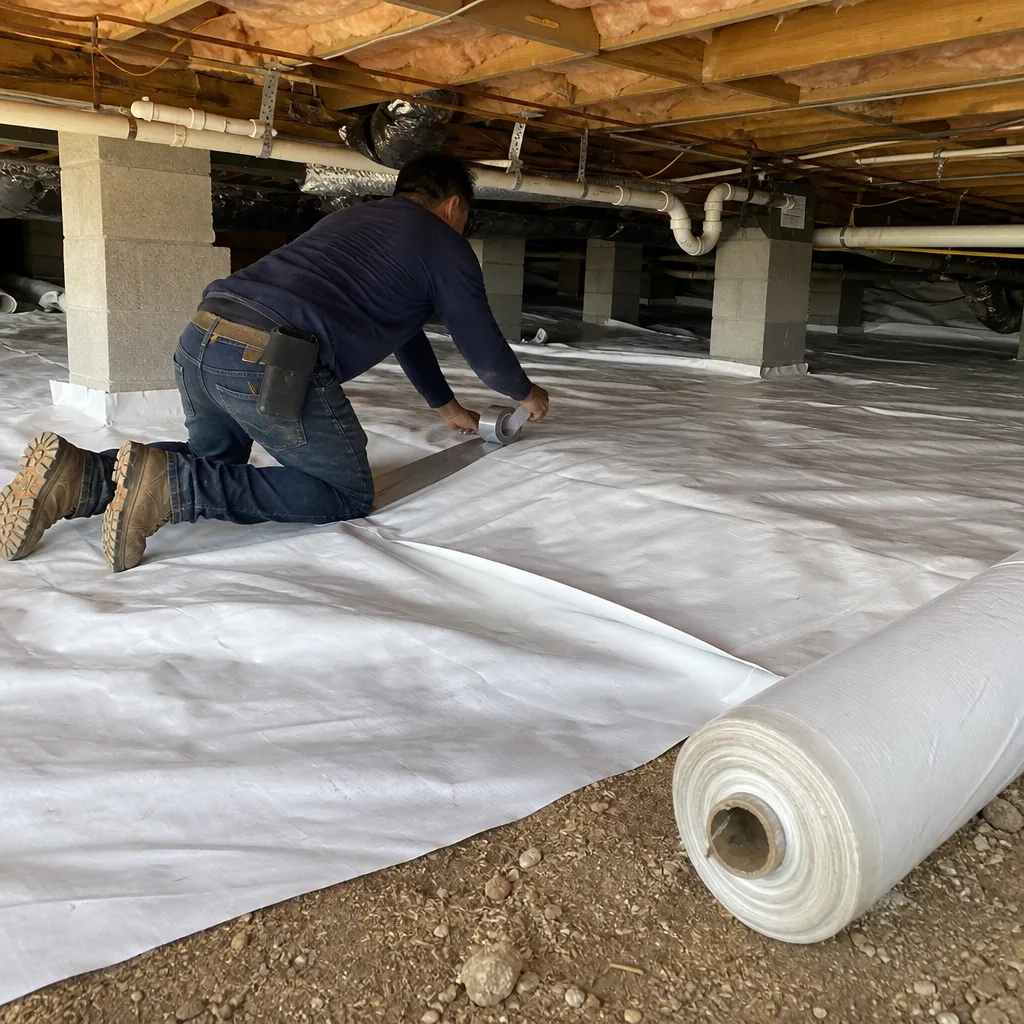
- Standing water or mud on the vapor barrier. This means your drainage plane failed before the liner did - either a clogged perimeter drain, a missing sump, or backpitched grade toward the foundation. The liner can’t fix hydrostatic pressure; it just hides it until the seams blow.
- White powder or crystalline deposits on the liner surface. That’s efflorescence - mineral salts left behind when groundwater evaporates through gaps in the barrier. In Cedar Park’s alkaline clay soils, this shows up fast where the 6-mil original liner has abraded against gravel or where seam tape lost adhesion in summer heat.
- Musty odor that worsens when the AC runs. Your HVAC return is pulling air from the crawl through bypass paths - unsealed duct boots, plumbing penetrations, or the rim joist gap. The encapsulation isn’t airtight anymore, and the stack effect is distributing crawl air through your supply vents.
- Sagging or detached liner at the walls. Cedar Park’s spring clay expansion and fall contraction cycles pull liner fasteners out of block walls. We see this especially on homes built 2005-2015 with Tapcon-style masonry fasteners that weren’t set deep enough into the joint.
- Insulation falling from joist bays. Kn fiberglass batts absorb moisture when the relative humidity in the crawl climbs above 70 percent for sustained periods. Once the facing delaminates, the batt drops onto the liner, compresses, and loses its R-value - usually starting at the perimeter where rim joist air leaks are worst.
Replacement Cost & What’s Included
Most full Knauf-compatible encapsulation replacements in Cedar Park fall between $3,800 and $6,200 for a 1,200-1,800 square foot crawl, with smaller utility crawls (800 square feet or less) starting around $2,900. Here’s how that breaks down:
| Component | Price Range |
|---|---|
| 12-mil reinforced vapor barrier (material + cut/fit) | $1.40-$1.90/sq ft |
| 20-mil heavy-duty with lifetime warranty | $2.10-$2.80/sq ft |
| Perimeter attachment (masonry fasteners, termination bar) | $380-$620 |
| Seam tape and detail sealing | $280-$450 |
| Rim joist air sealing with EcoSeal or closed-cell foam | $680-$1,200 |
| Dehumidifier sizing and installation (if needed) | $1,100-$1,800 |
| Pre/post blower-door test (Haven Standard on applicable jobs) | Included |
What drives the range: crawl height (anything under 18 inches adds labor), existing debris removal, whether the rim joists were ever sealed, and if we need to install a sump or gravity drain. We don’t quote by phone without photos or a site visit - but we do provide a written price before any work starts, with the scope, warranty, and start date in the same document. That’s Haven Standard Clause 1. Every job closes with a Documented Photo Record and, where applicable, before-and-after blower-door numbers so you can verify the air-sealing result.
DIY or Call Us?
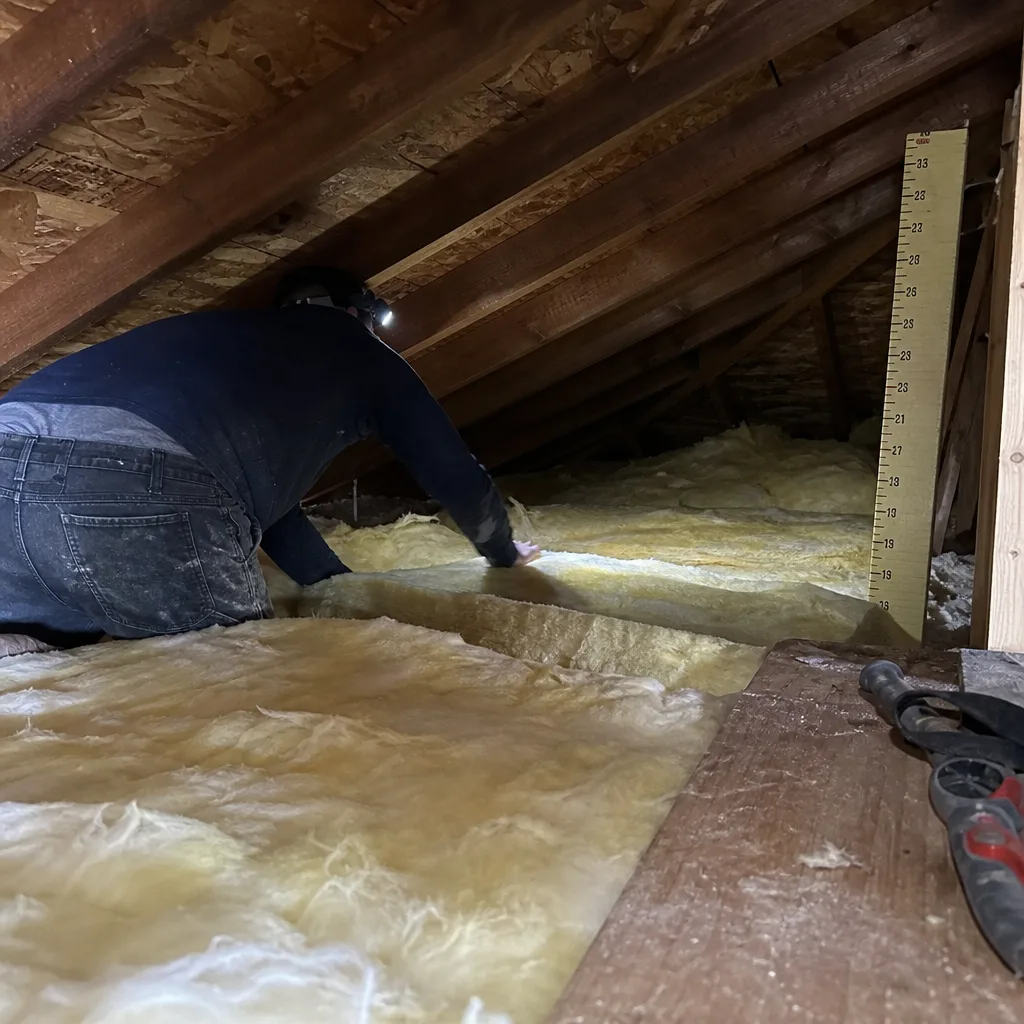
There’s an honest line here. A homeowner can safely check the crawl humidity with a $15 sensor, photograph the liner condition, and verify whether the existing dehumidifier is running and draining. What you shouldn’t do: crawl in with a utility knife and start cutting new liner without addressing the drainage first, or attempt rim joist sealing with canned foam from the big-box store - the expansion pressure can bow band joists, and the fire rating on consumer foam doesn’t meet code for that application.
We carry Knauf-compatible 12-mil and 20-mil reinforced liner, seam tape rated for 180-degree Texas attic temperatures, and the proper masonry fasteners on every truck. Most encapsulation replacements in Cedar Park take one to two days. If you’re seeing standing water, soft spots in the subfloor above, or mold staining, call (737) 245-6428 - we’ll read your situation with you, no charge for the assessment, and give you a written price before anyone lifts a tool.
FAQs
A properly installed 12-mil reinforced system lasts 15-20 years in Cedar Park’s climate; 20-mil systems with proper drainage can go 25-plus. The killer is always water management - liner doesn’t fail from age, it fails from hydrostatic pressure, abrasion, or UV exposure if the access hatch lets in light. We warranty our installation for 10 years, and the 365-Day Done Right Promise covers anything that isn’t right in year one.
Patching works for isolated punctures smaller than a quarter, using the same reinforced polyethylene tape we use on seams. But if you’re seeing multiple tears, efflorescence staining, or detached perimeter fastening, the system is telling you the original install was underspecified - usually 6-mil builder-grade liner with no reinforcement. At that point, patching is throwing good money after bad. Call (737) 245-6428 for a free assessment and we’ll show you exactly what we found.
Most Cedar Park crawls take one to two days: half a day for prep, debris removal, and drainage verification; one day for liner install, rim joist sealing, and dehumidifier commissioning. Tight crawls under 24 inches, or jobs requiring sump installation, may stretch to three days. We don’t charge by the hour - your written price is your price.
We stock 12-mil and 20-mil reinforced liner, Knauf EcoSeal, seam tape, drainage matting, and dehumidifiers on our Cedar Park trucks. For oddball sizes or 16-mil spec requests, we can typically source within 24 hours through our Austin-area supplier. Same-day starts are common for standard footprints; call (737) 245-6428 and we’ll confirm stock against your crawl dimensions.
Seal the leaks first. Then insulate. The order matters more than the product.
We’ve sealed and insulated more than 9,000 homes since 2016, every one with a written price before work started and a documented record when the crew left. Wes Okafor brought his blower-door training from Olive-Harvey College in Chicago to Central Texas, and he’s spent several years running jobs across Cedar Park - including retrofits in Buttercup Creek where attics routinely read 140°F before his crew touches them. He still keeps a worn copy of ASHRAE 62.2 in his truck.
Written by Wes Okafor, Owner, Topside Attic Insulation Cedar Park at Topside Attic Insulation Cedar Park, serving Cedar Park and nearby areas.