
Johns Manville Radiant Barrier Installation: The Cedar Park Owner’s Guide
We install Johns Manville-compatible radiant barrier systems in Cedar Park homes for $1,800 to $3,400 depending on attic square footage and whether your top plates and can lights still need sealing first. Most jobs we can start within 48 hours, and we stock JM-certified barrier rolls and the reinforced foil tape that actually holds up at 140°F attic temps. Homeowners usually figure out something’s wrong when their summer electric bills jump $80 to $140 over the previous year, or when they climb up and find the foil layer has pulled free from the rafters and is hanging in sheets.
Which Johns Manville Models This Applies To
Johns Manville makes two radiant barrier product lines that show up in Cedar Park attics: the AP Foil-Faced polyiso board, typically found in new construction from 2018 to 2023, and the JM Reflective roll barrier used in retrofits and some production builds in Buttercup Creek and Ranch at Brushy Creek. The AP board has a printed lot code on the foil facing; you want the last four digits, which tell you the thickness (1-inch or 2-inch) and whether it’s the R-6 or R-13 variant. The roll barrier is simpler, it’s stamped with a density rating, but the critical spec is the emissivity value printed on the core label, 0.03 or 0.05, which determines how much heat it actually reflects back.
We don’t use generic hardware-store foil as a substitute for JM-specified barrier. The emissivity rating matters, and the adhesive backing on the OEM tape is formulated for the temperature swing a Cedar Park attic sees between January and August. We’ve also seen homeowners try to match AP Foil-Faced with standard rigid foam board, the facing on generic board delaminates in two to three summers here. We stock both JM original and a Knauf-certified equivalent that meets the same ASTM C1289 spec, and we’ll show you the data sheet before we hang anything.
Topside Attic Insulation Cedar Park is an independent service provider, not affiliated with Johns Manville.
Signs Your Johns Manville Radiant Barrier Installation Is Failing
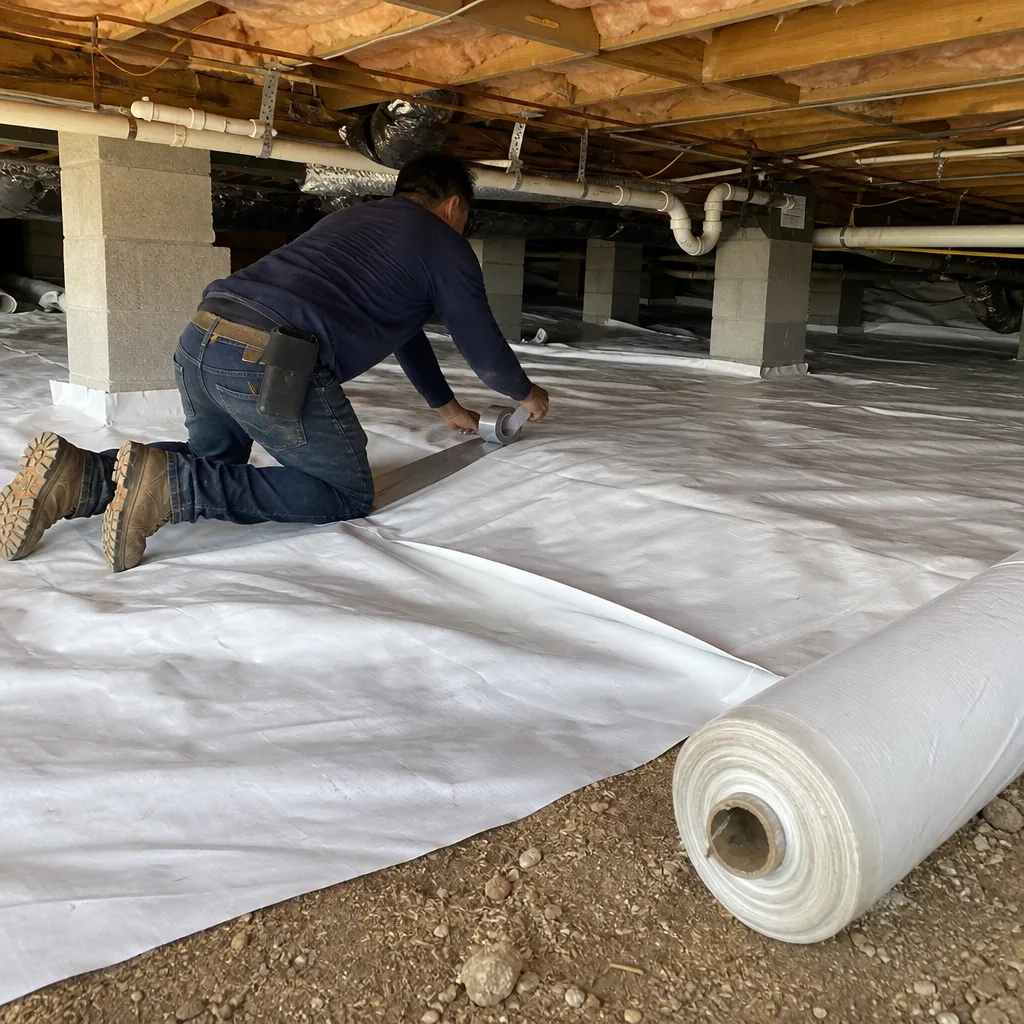
- Summer cooling bills climbing 20% or more year-over-year. The barrier’s emissivity degrades when the foil oxidizes or the facing delaminates, so your attic floor insulation is absorbing radiant heat it was never designed to handle. We see this most in west-facing Cedar Park roofs where attic peak temps hit 150°F.
- Hot spots on your ceiling in late afternoon. This means the barrier has pulled away from the rafters in sections, creating gaps where infrared radiation passes straight through. The drywall underneath those gaps runs 10 to 15 degrees warmer than surrounding areas, you can feel it with your hand.
- Foil facing visible on the attic floor or hanging in strips. JM’s roll barrier uses a reinforced scrim, but the staple pattern matters. Builders who spaced staples 24 inches apart instead of 12 inches get sagging within three to four years, especially after a humid summer.
- Condensation on the foil surface in winter. This is the counterintuitive one. When air sealing was skipped during original install, warm moist air hits the cold foil and condenses. The moisture degrades the scrim adhesive and promotes mold on the rafters. We’ve found this in a dozen Cedar Park homes built 2019 to 2021 where the builder blew insulation over unsealed top plates.
- Your HVAC runs continuously on 95°F days when it didn’t used to. The barrier isn’t doing its job of dropping the radiant heat load on your ductwork. In attics where we measure, a failed barrier can mean duct surface temps 25 degrees higher than with intact barrier.
Replacement Cost & What’s Included
Most Johns Manville radiant barrier replacements in Cedar Park run between $1,800 and $3,400 installed. The low end covers a 1,200-square-foot attic with straightforward rafter access and intact air sealing. The high end hits 2,500 square feet with steep pitches, existing barrier removal, and the top-plate sealing that should have happened the first time. We also handle Reflectix systems if that’s what’s currently in your attic.
That price includes the JM-certified barrier material, reinforced foil tape rated for 200°F continuous exposure, all fasteners spaced to manufacturer spec, and a written scope delivered before anyone climbs a ladder. If we find your top plates, can lights, or duct boots unsealed, we’ll quote that separately, we don’t blow insulation or hang barrier over an unsealed envelope. Every job closes with a Documented Photo Record and, where applicable, before-and-after blower-door numbers so you can verify the air-sealing result in actual CFM50.
Our 365-Day Done Right Promise covers the installation. If tape lifts, staples pull, or you don’t see the temperature difference we documented, we come back.
DIY or Call Us?
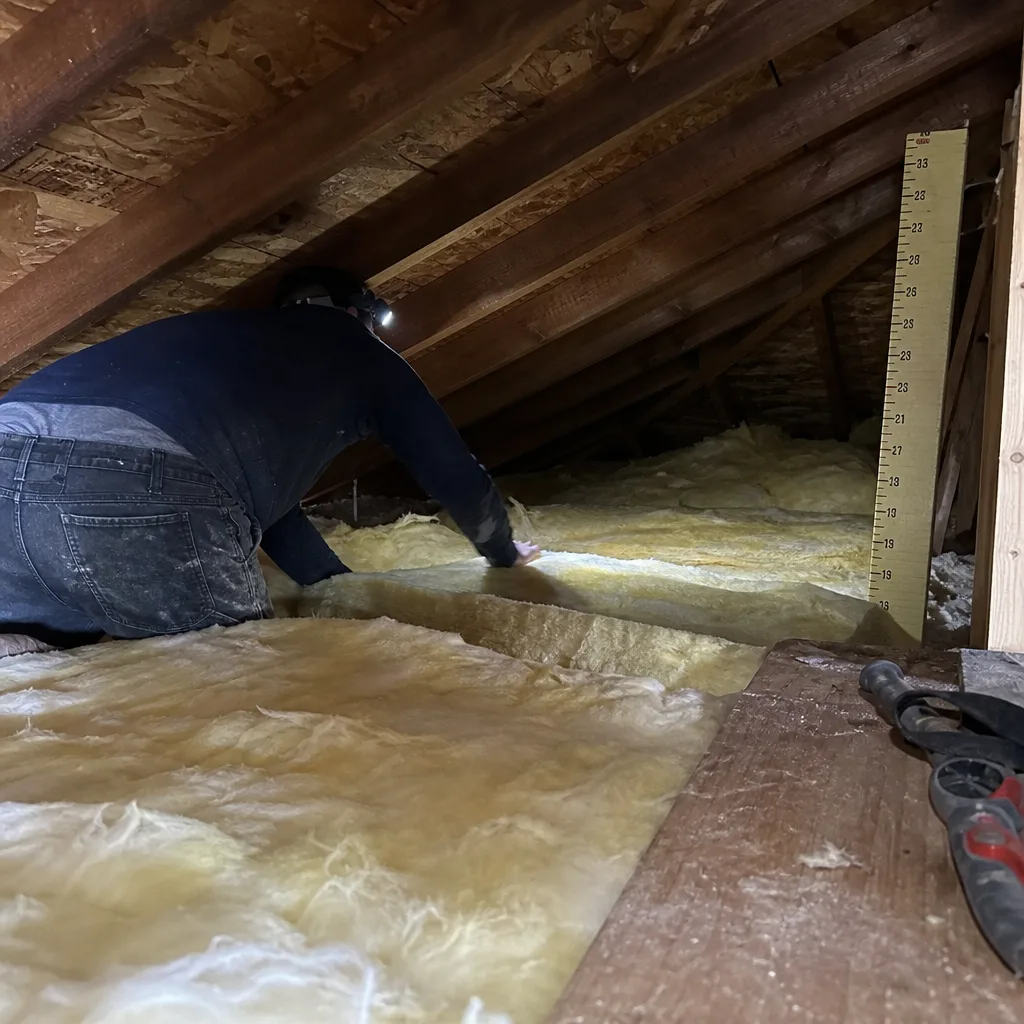
You can safely check whether your barrier is intact. Look for sagging, torn sections, or foil on the attic floor. Note the lot code on any visible labels. But installing radiant barrier is not a weekend project, and not because we’re trying to scare you.
Cedar Park attics in July are 130°F to 150°F, heat exhaustion sets in fast, and working on rafters at that angle with a staple gun is how shoulders and knees get ruined. More importantly, most DIY installs we see fail at the tape joints. Standard foil tape turns to goo in our attic temps within two summers. The JM-specified tape costs more because the adhesive is different. And if you hang barrier over unsealed can lights or top plates, you’ve just built a moisture trap that’ll cost more than our install to fix later.
We carry the right tape, the right fasteners, and we measure your envelope leakage before we start so the barrier actually works. Call (737) 245-6428 for a written price before any work starts.
FAQs
In our climate, a properly installed JM barrier with correct tape and fastening typically performs for 15 to 20 years before emissivity degrades noticeably. We’ve replaced barriers in Buttercup Creek homes that failed in 4 years because the original installer used wrong tape and skipped air sealing. Call (737) 245-6428 and we’ll inspect what you have, estimates are free.
Patching small tears is possible if the surrounding foil is still firmly attached and the scrim backing is intact. But sagging sections, widespread tape failure, or delaminated facing mean replacement, patches in those conditions fail within a season. We don’t quote patch jobs we wouldn’t warranty. Call (737) 245-6428 for an honest assessment.
Most residential replacements in Cedar Park take one to two days. Day one is removal, air sealing if needed, and prep. Day two is hang and tape, with a final walkthrough and photo documentation. Larger homes or steep pitches might run into day three. We give you a written schedule with the price, no surprises.
Yes. We keep JM-certified roll barrier and AP Foil-Faced board in stock, along with the temperature-rated tape that actually survives a Cedar Park summer. For less common JM variants, we can typically source within 48 hours. We also stock Knauf and Reflectix equivalents that meet the same specs if your job calls for them. Call (737) 245-6428 to confirm availability for your specific model.
Wes Okafor picked up his blower-door skills at Olive-Harvey College back when most Texas crews hadn’t heard the term, and he’s run enough jobs in Cedar Park to know that a 140°F attic will expose every shortcut in an install. Seal the leaks first. Then insulate. The order matters more than the product.
Written by Wes Okafor, Owner, Topside Attic Insulation Cedar Park at Topside Attic Insulation Cedar Park, serving Cedar Park and nearby areas.