
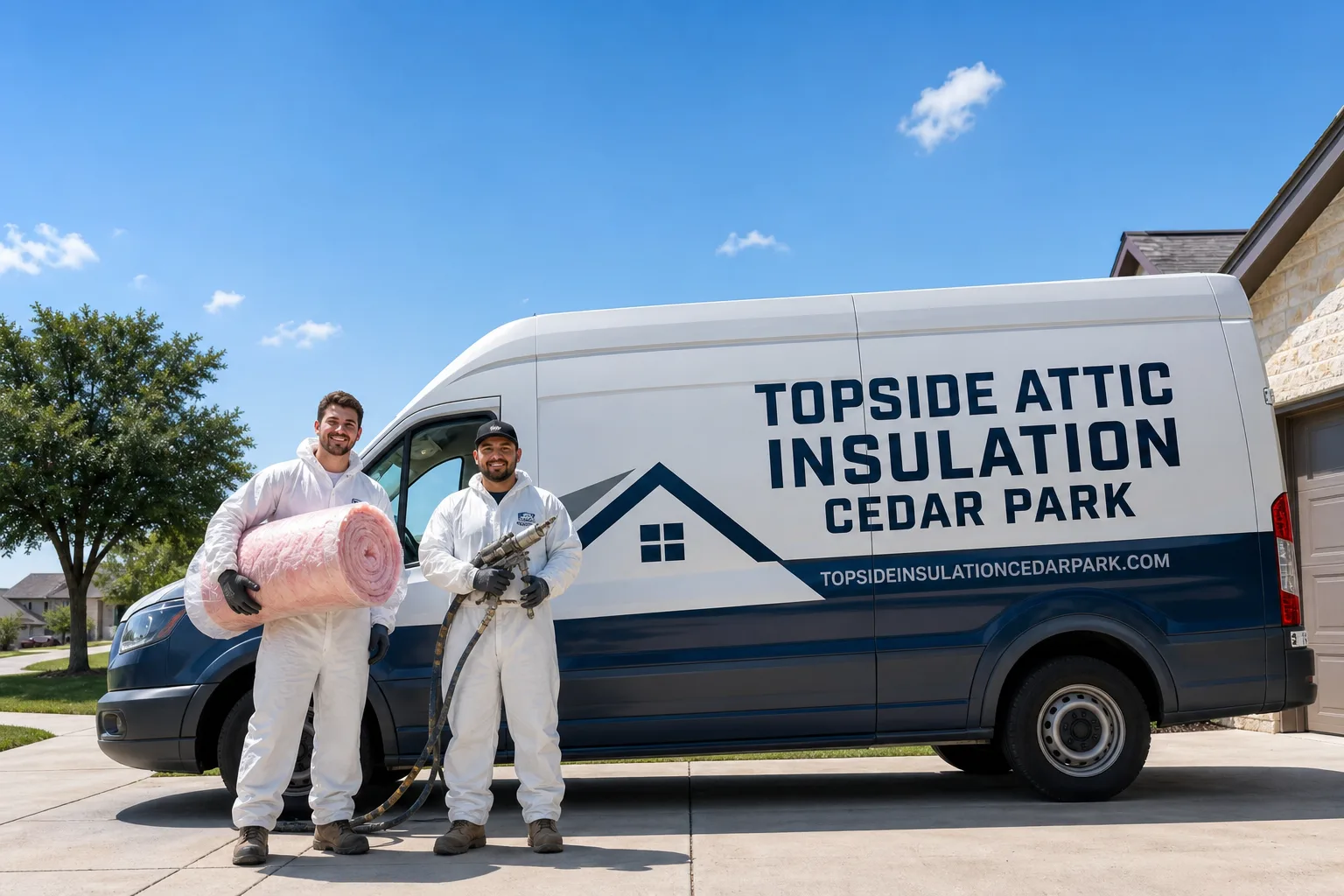
How Much Does Blown-In Insulation Cost in Cedar Park?
Blown-in insulation in Cedar Park, TX typically costs between $1,400 and $3,200 for a standard attic in a home ranging from 1,500 to 3,000 square feet, with most jobs landing around $1.50 to $2.80 per square foot installed. That range covers cellulose and fiberglass blown-in material to R-38 or R-49 – the two depth targets most Cedar Park homes need to meet current energy code and offset the region’s brutal summer cooling load. Air sealing the attic floor first, before any insulation is added, is a hard requirement on every job we do, and it’s included in the written price you receive before anyone shows up.
Blown-In Insulation Cost Breakdown (2026)
The table below reflects actual installed pricing in the Cedar Park market as of 2026. These are not national averages pulled from a database – they’re the ranges we see on jobs across Cedar Park neighborhoods like Buttercup Creek, Twin Creeks, and Forest Oaks, where attic square footage, existing insulation depth, and deck configuration vary enough to move a quote by several hundred dollars in either direction.
| Scope of Work | Typical Price Range (Installed) | Notes |
|---|---|---|
| Attic blown-in insulation only (1,500 sq ft attic, R-38) | $1,100 – $1,600 | Assumes existing insulation at R-11 or better; no removal needed |
| Attic blown-in insulation only (1,500 sq ft attic, R-49) | $1,350 – $1,900 | Deeper fill; common on west-facing roofs in Brushy Creek area |
| Attic air sealing + blown-in to R-38 (1,500 sq ft) | $1,600 – $2,200 | Air sealing completed before insulation – this is the correct sequence |
| Attic air sealing + blown-in to R-49 (1,500 sq ft) | $1,800 – $2,500 | Includes blower-door test on applicable jobs |
| Full attic (2,500 sq ft), air sealing + R-49 blown-in | $2,600 – $3,800 | Larger homes in Twin Creeks and Buttercup Creek typically fall here |
| Old insulation removal + air sealing + R-49 re-insulation | $3,200 – $5,500 | Removal adds cost; necessary when rodent contamination or moisture damage is present |
| Dense-pack blown-in for exterior walls (per 100 sq ft) | $350 – $600 | Requires drilling and patching; common retrofit on 1990s-2000s Cedar Park builds |
| Cellulose vs. fiberglass material upgrade differential | $100 – $300 per job | Cellulose carries a slight premium; performs slightly better in high-humidity conditions |
A few things shift these numbers in Cedar Park specifically. First, attic access: homes built in the mid-1990s through early 2000s in Forest Oaks and Anderson Mill adjacent areas frequently have low-slope decks with only 18 to 24 inches of clearance at the peak, which slows crew movement and adds labor time. Second, the Texas summer heat means insulation installed in July or August involves attic temperatures above 130 degrees – jobs that require longer on-site time for crew rotation. That’s a real cost factor, and a contractor who doesn’t mention it is not accounting for it in their quote.
Every quote from us is a flat written price covering the full scope – materials, labor, air sealing where applicable, cleanup, and the Documented Photo Record. There are no line items added after the job is done.
What Affects Blown-In Insulation Pricing in Cedar Park
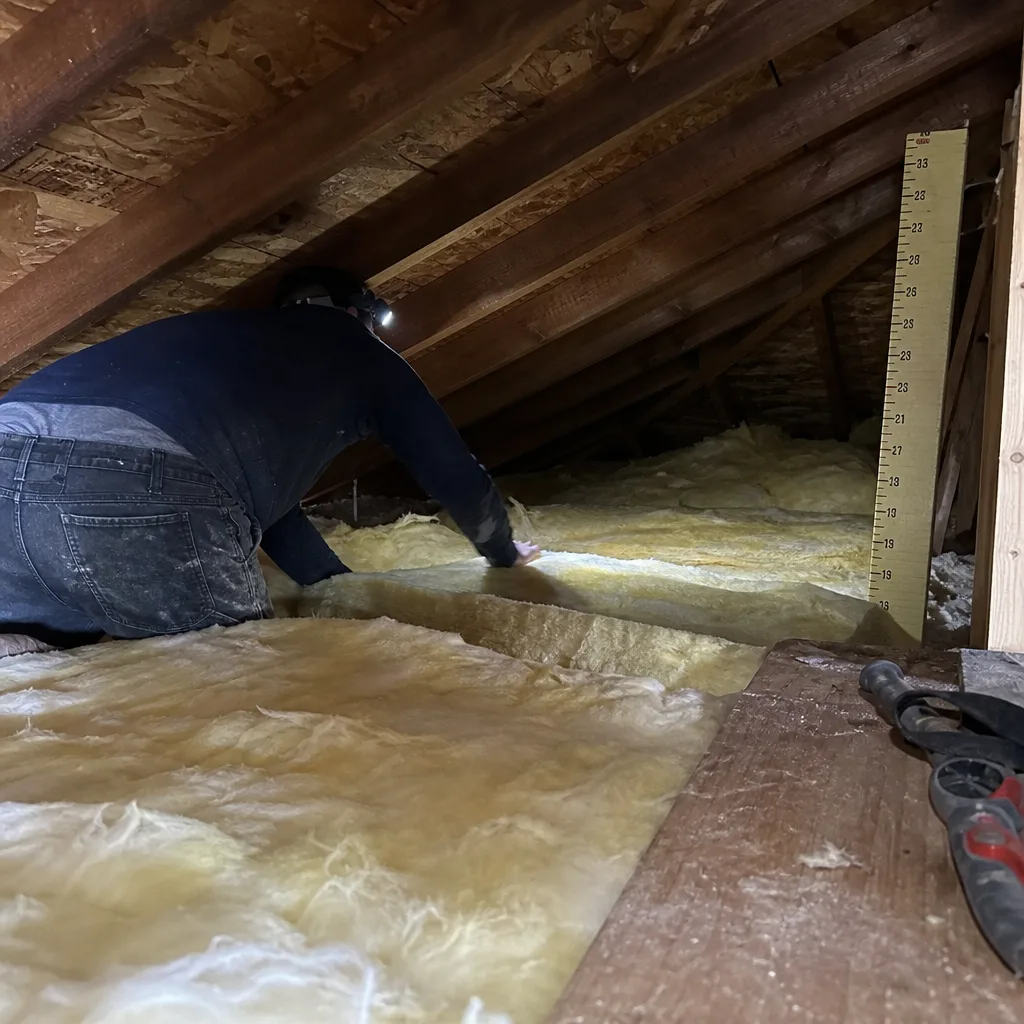
- Attic square footage and configuration: This is the primary driver. A 1,200 sq ft attic in a single-story home on Brushy Creek Road and a 2,800 sq ft attic in a two-story in Twin Creeks are priced differently for obvious reasons, but configuration matters nearly as much as raw size. Low-slope areas, framed knee walls, and HVAC ductwork running through the attic floor all slow the blowing process and add labor cost.
- Target R-value: The current Texas residential energy code (IECC 2021, adopted by Cedar Park’s jurisdiction) calls for R-38 minimum in Climate Zone 2B, but R-49 is widely recommended for Cedar Park homes because of the cooling load – this area regularly sees 100+ degree days from June through September. The difference between an R-38 and an R-49 install is roughly 3 to 5 additional inches of blown material, which adds cost but typically recovers in reduced cooling bills within two to three summers.
- Existing insulation condition: If your home already has 3 to 4 inches of fiberglass batts from the original build, we can often blow over them after air sealing, which reduces cost. If the existing material is contaminated – rodent droppings are common in older Cedar Park neighborhoods near the Brushy Creek greenbelt – or compressed to near zero R-value, removal is necessary before we can do the job right. Removal and disposal adds $800 to $1,800 to the project depending on volume and contamination level.
- Air sealing requirements: We will not blow insulation over an unsealed attic floor. That’s not an upsell – it’s the correct installation sequence, and skipping it means the insulation you pay for works at a fraction of its rated performance. The air sealing phase covers top plates, can lights, plumbing and electrical penetrations, and the attic hatch perimeter. In Cedar Park homes built before 2005, we consistently find can lights that are open to the attic with no air barrier at all – each one is a direct conditioned-air leak. Sealing them before blowing adds time but changes the outcome measurably. On applicable jobs, the before-and-after blower-door numbers document exactly how much it changed.
- Material choice – cellulose vs. fiberglass blown-in: Both are available and both perform well. Cellulose is made from recycled paper treated with borate for fire and pest resistance; fiberglass is the familiar pink or white loose-fill product. Cellulose settles slightly more after installation and carries a modest price premium, but in Cedar Park’s humidity profile – particularly in homes backing up to Brushy Creek or near Lake Travis’s eastern arm – it holds R-value a bit better when relative humidity climbs. We stock both and will tell you which we’d use in your specific attic rather than defaulting to whichever has the better margin for us.
- Access difficulty and deck clearance: Cedar Park has a large inventory of homes built between 1992 and 2008 with complex rooflines – hip roofs, multiple dormers, vaulted sections that eat into attic volume. Jobs with limited clearance or multiple disconnected attic sections require more time and often more crew members, which moves the price toward the upper end of the range. We assess this during the estimate walk – you’ll see it in the written scope before the job starts.
How to Save on Blown-In Insulation in Cedar Park
The most direct way to save money on a blown-in insulation job in Cedar Park is to request a written, itemized estimate from at least two contractors and compare them line by line – not total-to-total. A low total that omits air sealing is not a competitive price; it’s an incomplete scope that will produce a partial result. Under Haven Standard Clause 1, every estimate we provide is a flat written price with a written scope attached. If you have a competing quote in hand, bring it to us and we’ll read it with you – that’s the Free Second Opinion offer, and it’s not a sales tactic, it’s an acknowledgment that you’re making a significant purchase and deserve to understand what you’re actually comparing.
A few other practical points for Cedar Park homeowners:
- Check for utility rebates before you book: Oncor and Pedernales Electric Cooperative both offer residential insulation rebates in certain service areas overlapping Williamson County. The rebate amounts change year to year, but $150 to $400 is a realistic range for an attic re-insulation that meets their efficiency criteria. Ask your provider directly – the qualification requirements involve documented R-value improvements, which our Documented Photo Record and written scope support.
- Combine with related work when possible: If you’re already planning an attic air sealing job, a radiant barrier installation, or an insulation removal and replacement, scheduling those together reduces mobilization cost. A crew already on-site for attic air sealing can transition to blowing insulation the same day – that’s more efficient than two separate visits.
- Don’t defer air sealing to save money upfront: We hear this occasionally: “Can you just blow the insulation and skip the air sealing for now?” The short answer is no – we won’t do that. The longer answer is that insulation without air sealing in a Texas climate produces real but limited savings. A home with a tight envelope and properly staged insulation depth can reduce cooling loads by 20 to 35 percent; insulation alone over an unsealed attic might deliver 8 to 12 percent. The math over three years of Cedar Park summers almost always favors doing it correctly once.
- Get the estimate during cooler months if schedule allows: Attic work booked in October through February tends to have shorter lead times, which sometimes reflects in scheduling flexibility. We don’t manufacture artificial urgency, but it’s a real operational fact that late spring and early summer are our busiest window in Cedar Park.
- Understand what your current insulation depth is before calling: If you can safely look into your attic access hatch and measure the existing insulation depth, that information makes your initial quote faster and more accurate. Most Cedar Park homes built in the 1990s have 4 to 6 inches of original fiberglass, which puts them around R-13 to R-19 – well below current recommendations. Knowing your starting point helps us confirm the scope over the phone before scheduling a site visit.
For a straight answer on what your specific job will cost, call (737) 245-6428. We’ll give you a written price – not a ballpark and not a “we’ll know more when we’re up there” response. That’s how every estimate works here.
Why Air Sealing Has to Come First – and What It Means for Your Quote
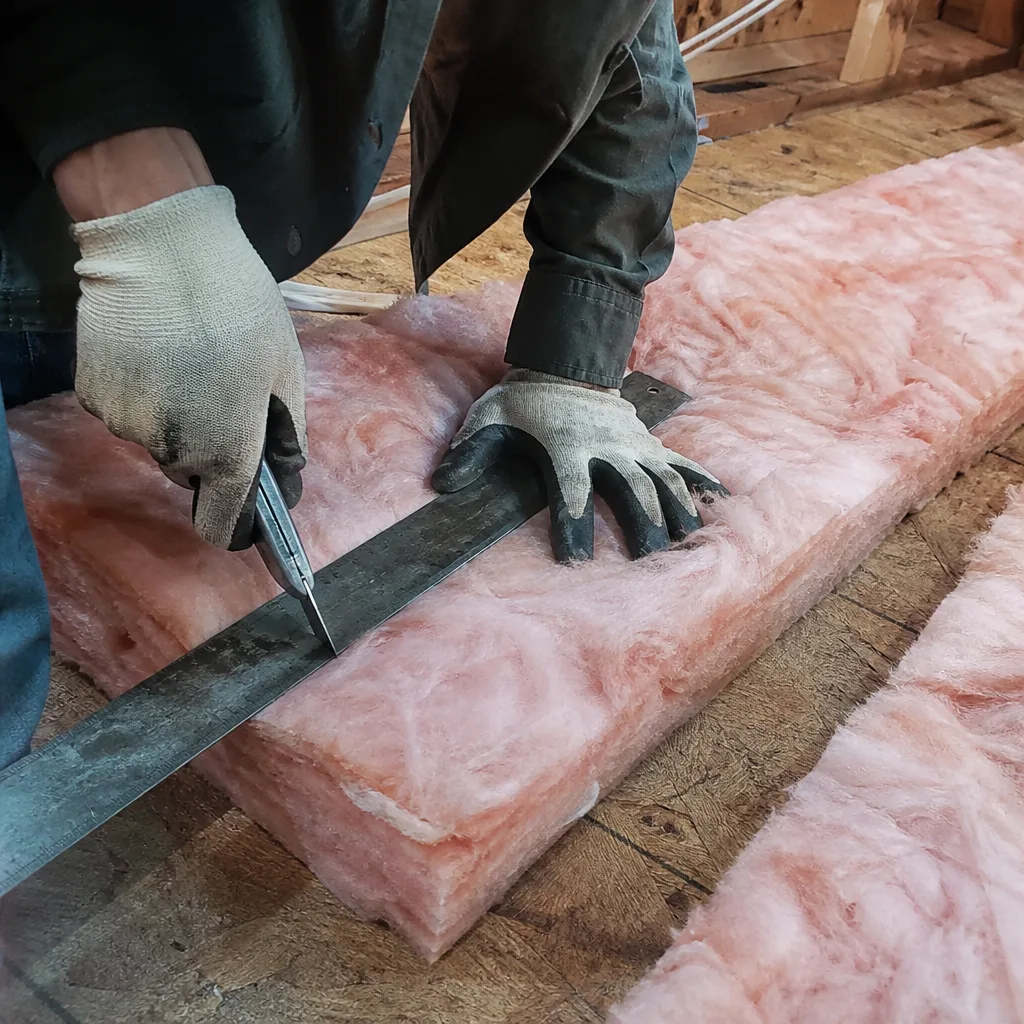
This section exists because a lot of Cedar Park homeowners get quotes that separate air sealing and insulation into two optional line items, one of which can be declined. We want to be direct about why we don’t do that.
Blown-in insulation works by slowing conductive heat transfer – the heat that moves through material. But in a hot climate like Cedar Park’s, a significant portion of attic heat gain enters the living space through air infiltration: hot attic air finding its way through gaps around top plates, around recessed lighting, through plumbing penetrations, and around the attic hatch. Insulation does not stop air movement. It slows conducted heat, but blown-in cellulose or fiberglass sitting over an attic floor with dozens of unsealed penetrations is working against itself from day one.
The blower-door test – a pressurization reading that quantifies, in a single number called CFM50, how much conditioned air a home’s envelope is losing per minute at a standardized pressure differential – makes this visible in a way that descriptions can’t. On a Cedar Park home we serviced in 2024 in the Buttercup Creek area, the pre-work blower-door reading was 4,800 CFM50. After air sealing the attic floor (top plates, 14 recessed light fixtures, HVAC penetrations, and the hatch perimeter) and before we blew a single bag of insulation, the reading dropped to 2,600 CFM50. The insulation job came after that – and the homeowner has both numbers in writing.
That’s what the before-and-after blower-door documentation looks like. It’s not a marketing claim; it’s a measured figure. On applicable jobs in Cedar Park, every customer we work with gets those numbers. You can verify the work you paid for, not just trust that it happened.
Cellulose vs. Fiberglass Blown-In: Which One for Cedar Park?
Both are legitimate materials with real-world track records. The choice rarely makes or breaks a job, but it does have some nuance in the Cedar Park climate worth understanding.
Fiberglass blown-in is lighter, does not absorb moisture, and maintains its R-value well even if the attic sees intermittent humidity spikes. It’s a common choice on jobs where we’re topping off existing fiberglass batts, because the material compatibility is straightforward. We source fiberglass blown-in from Johns Manville and Owens Corning.
Cellulose blown-in is denser – roughly 1.5 to 2 pounds per cubic foot compared to fiberglass’s 0.5 to 1 pound – which gives it better resistance to wind-washing (the phenomenon where air movement inside an attic redistributes loose-fill insulation over time). In Cedar Park attics with large open spans and ridge venting, wind-washing is a real issue, and cellulose holds position better. It also has slightly better performance per inch of thickness at the R-value levels we’re targeting. The trade-off is that it’s heavier on the attic deck and absorbs some moisture in very high humidity before releasing it – not a problem in most Cedar Park attics, but worth noting in homes with known ventilation deficiencies. We source cellulose from GreenFiber and CertainTeed depending on availability and job requirements.
Neither material is our “preferred” product in a financial sense. We’ll tell you which we’d recommend for your specific attic configuration and why, and that recommendation is in the written scope you receive before any work starts.
What the Done-Right Job Looks Like When We Leave
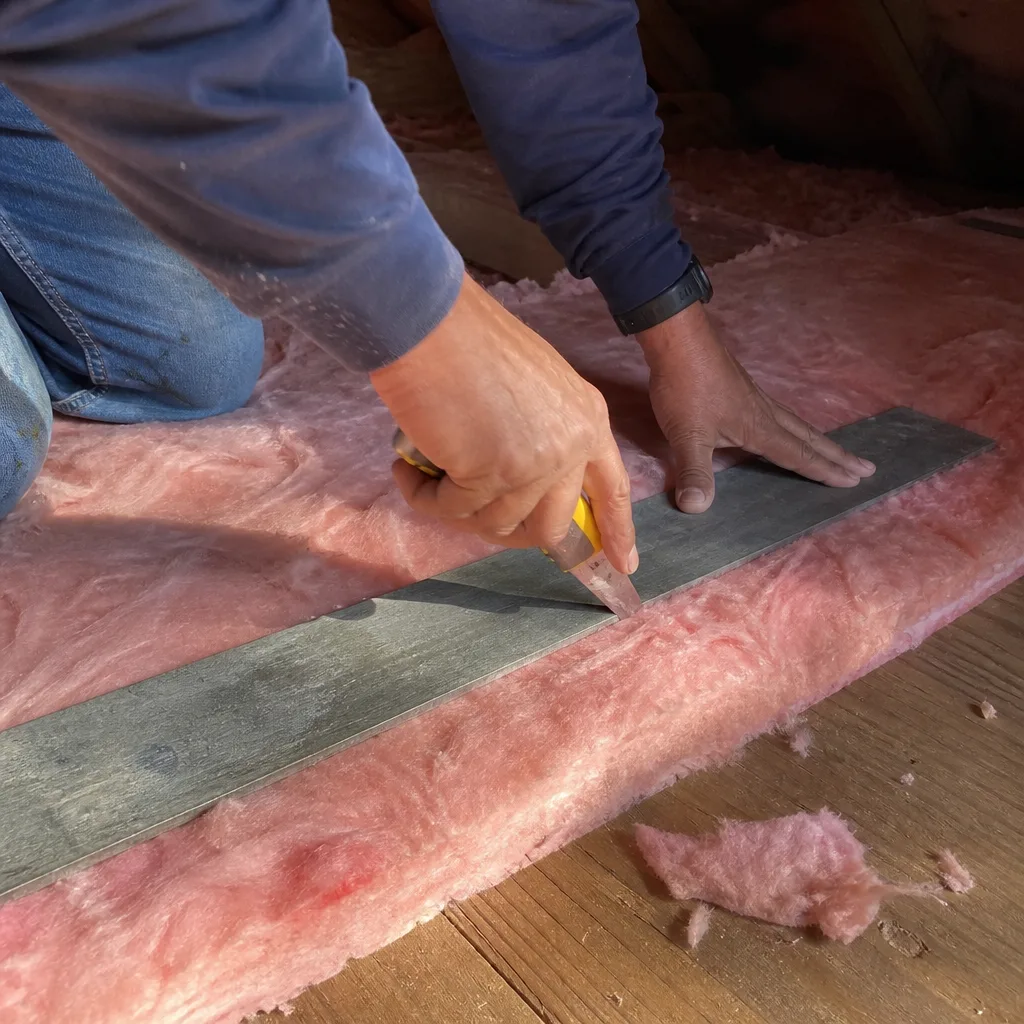
This is worth describing concretely because “quality insulation job” means different things to different contractors.
When a job is complete on a Cedar Park home, here’s what you have in hand before we pull out of the driveway:
- A Documented Photo Record of the attic floor before air sealing, during air sealing (showing sealed penetrations), and after blowing – with depth measurements visible in the photos to confirm R-value target was reached.
- A written scope of work showing exactly what was done, what materials were used, and at what depth.
- On applicable jobs, before-and-after blower-door readings – the CFM50 figures before we started and after the air sealing phase was complete.
- The written warranty documentation covering the 365-Day Done Right Promise: if anything about the completed work is not right, we make it right. That’s not a verbal commitment – it’s in writing before anyone starts.
What you don’t get is a verbal assurance and a handshake. Every part of the job is documented. That’s not because we distrust our customers – it’s because documentation is how you verify that what was promised is what was delivered.
Cedar Park Neighborhoods We Service Regularly
Our crews work across Cedar Park on a regular basis, including Buttercup Creek, Twin Creeks, Forest Oaks, Brushy Creek, Anderson Mill (where Cedar Park addresses overlap with the Travis County line), Lakeline, Cypress Mill area homes, and the neighborhoods east of US-183 toward Leander’s border. If your address is in Cedar Park proper or in one of the Williamson County ETJ areas that carry a Cedar Park mailing address, we service your area.
Homes in the older sections of Cedar Park – particularly those built between 1992 and 2002 along the Brushy Creek corridor – tend to have the highest air leakage readings we see in this market. Original construction during that era in Williamson County used minimal caulking around top plates and frequently installed recessed can lights that are open to the attic cavity with no air barrier. If your home falls in that vintage range, expect the air sealing phase to be more involved – and the before-and-after numbers to show a larger improvement.
For a full picture of our attic insulation work in the area, see our Blown-In Insulation in Cedar Park service page, or visit our home page for the full range of services we cover, including spray foam insulation, radiant barrier installation, crawl space encapsulation, and home energy audits.
FAQs – Blown-In Insulation Cost in Cedar Park
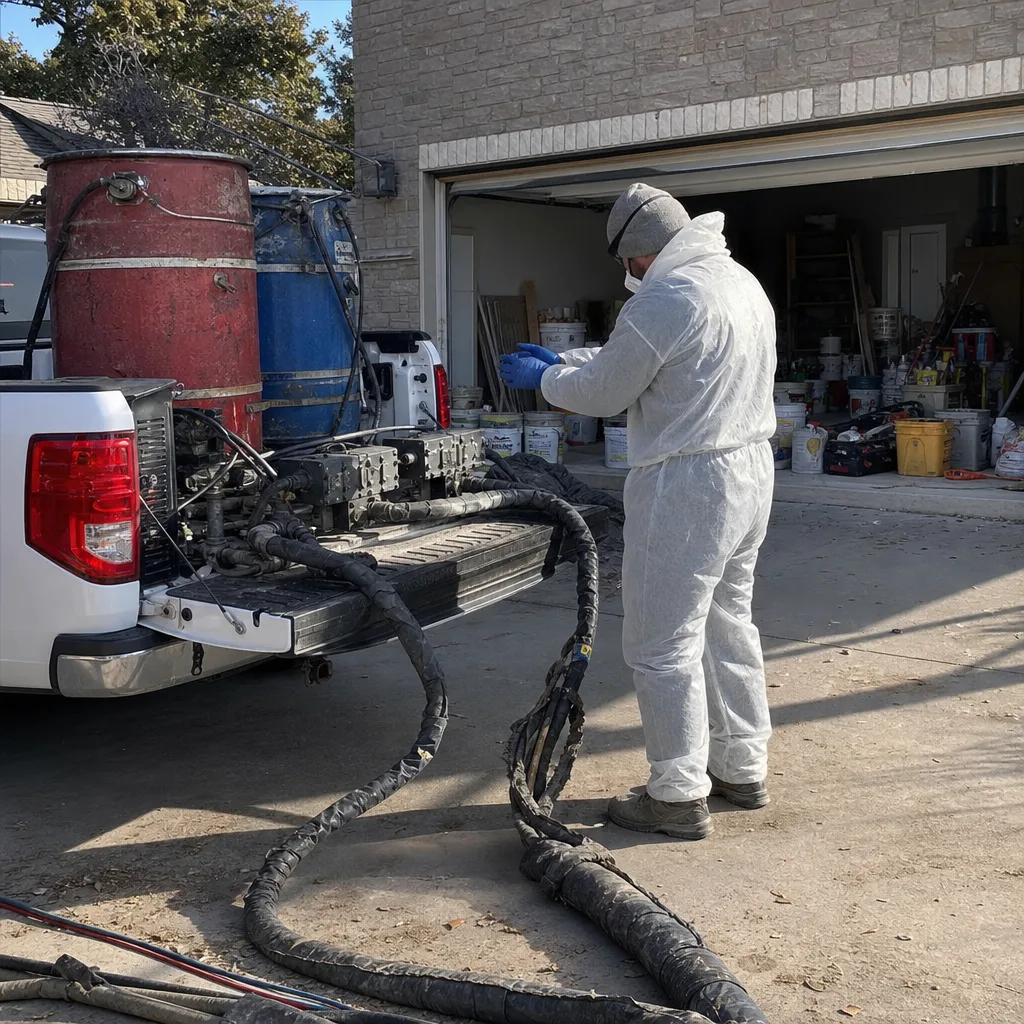
How much does blown-in insulation cost for a 2,000 square foot home in Cedar Park?
For a 2,000 square foot home in Cedar Park, a full attic blown-in insulation job with air sealing to R-49 typically runs between $2,200 and $3,200. That range assumes the attic deck is accessible, no significant insulation removal is needed, and the existing depth is at or above R-11. If the attic is partially finished or has limited clearance – common in the hip-roof designs built in Twin Creeks and Forest Oaks – expect the quote to land toward the upper end. Call (737) 245-6428 for a written price specific to your address – we don’t quote blind, but a 10-minute phone call can usually narrow the range considerably before we schedule a site visit.
Is blown-in insulation worth the cost in Cedar Park’s climate?
Yes, and the payback period in Cedar Park is shorter than in most of the country because of the extreme cooling load. A properly air-sealed attic with R-49 blown-in insulation typically reduces cooling costs by 20 to 35 percent compared to an unsealed attic at R-13 – the starting condition of many 1990s-era Cedar Park homes. At current electricity rates and the average Cedar Park cooling season running May through October, most homeowners recover the cost of the insulation job within three to five years through reduced utility bills, then continue seeing those savings for the 20+ year lifespan of the material.
What is the cheapest blown-in insulation option in Cedar Park?
The lowest-cost entry point for blown-in attic insulation in Cedar Park is a top-up job starting around $1,100 – adding blown-in material over existing insulation in a straightforward attic with good access and no removal needed. That price point does not include air sealing, which we won’t skip – if air sealing is needed (and in most pre-2005 Cedar Park homes it is), the floor for a complete, correctly sequenced job is closer to $1,600. A quote that comes in significantly below $1,100 for a full attic job is almost certainly excluding something material – ask the contractor to show you the line items in writing.
How long does blown-in insulation installation take in Cedar Park?
Most blown-in insulation jobs in Cedar Park take 4 to 8 hours for the full scope – air sealing plus blowing – in a typical attic between 1,200 and 2,000 square feet. Larger attics, limited access, or significant air sealing requirements can extend the job to a full day. We give you a time estimate in the written scope before we start, so you know what the day looks like. You don’t need to be home for the entire duration, but we do ask that someone be available at the start and end of the job for walk-through documentation.
Should I remove old insulation before adding blown-in insulation in Cedar Park?
Not always – but sometimes yes, and the difference matters. If your existing insulation is structurally intact, at or above R-11, and free of moisture damage or rodent contamination, we can blow directly over it after completing attic air sealing. That’s the lower-cost path and it’s the right call in those conditions. If the existing material is compressed to near zero, contaminated with rodent droppings or urine (common near the Brushy Creek greenbelt), or wet from a past leak, removal is necessary before any new material goes in. Removal and disposal typically adds $800 to $1,800 to the project. We assess this during the estimate walk and tell you directly what we found – it’s documented in the written scope either way. For complete information on that process, see our insulation removal and replacement service.
Does Envelope Insulation Co. offer financing for blown-in insulation in Cedar Park?
Financing options are discussed at the time of estimate – contact us at (737) 245-6428 to ask what’s currently available. What doesn’t change regardless of payment method is the written price before any work starts. Under Haven Standard Clause 1, you receive a flat written price and written scope before anyone lifts a tool – that’s true whether you’re paying in full upfront or arranging a payment plan.
Key Takeaways
- Blown-in insulation in Cedar Park typically costs $1,400 to $3,200 for most homes, with air sealing included.
- R-49 is the recommended target for Cedar Park’s climate zone – R-38 meets code minimum but leaves performance on the table.
- Air sealing before blowing is not optional – it’s the correct sequence and a prerequisite on every job we do.
- Before-and-after blower-door readings are provided on applicable jobs so you can verify the result in a real number, not a feeling.
- Every job includes a written price before work starts, a Documented Photo Record, and the 365-Day Done Right Promise.
- Oncor and Pedernales Electric rebates may apply – ask your utility provider before booking.
Get a Written Price for Your Cedar Park Home
If you’re ready to find out what our Blown-In Insulation services will cost for your specific home in Cedar Park, call (737) 245-6428. Wes Okafor and the Envelope Insulation Co. team have been doing this work since 2016 – 9,000+ homes sealed and insulated across the Austin metro, every one with a written price before the job started and a documented record when the crew left. You’ll get a flat written estimate with a full scope attached, not a ballpark. If you already have a competing estimate, bring it – we’ll read it with you under the Free Second Opinion offer and help you understand what you’re actually comparing.
No voicemail loops. A live person answers. That’s how it works here.
Pricing reflects the Cedar Park market as of 2026. Topside Attic Insulation Cedar Park offers free estimates – call (737) 245-6428.
Written by Wes Okafor, Owner at Envelope Insulation Co., serving Cedar Park since 2016.
What Our Customers Say
"They air-sealed the attic floor before insulating and showed me the blower-door number before and after. The upstairs is finally the same temperature as downstairs."
- Marisol D."The winter gas bill dropped by about a third. They had estimated a quarter, so they under-promised."
- Genevieve R."Crawl space encapsulation done properly. Photographs of the vapour barrier at every seam, and the damp smell in the hallway is gone."
- Ainsley P.