
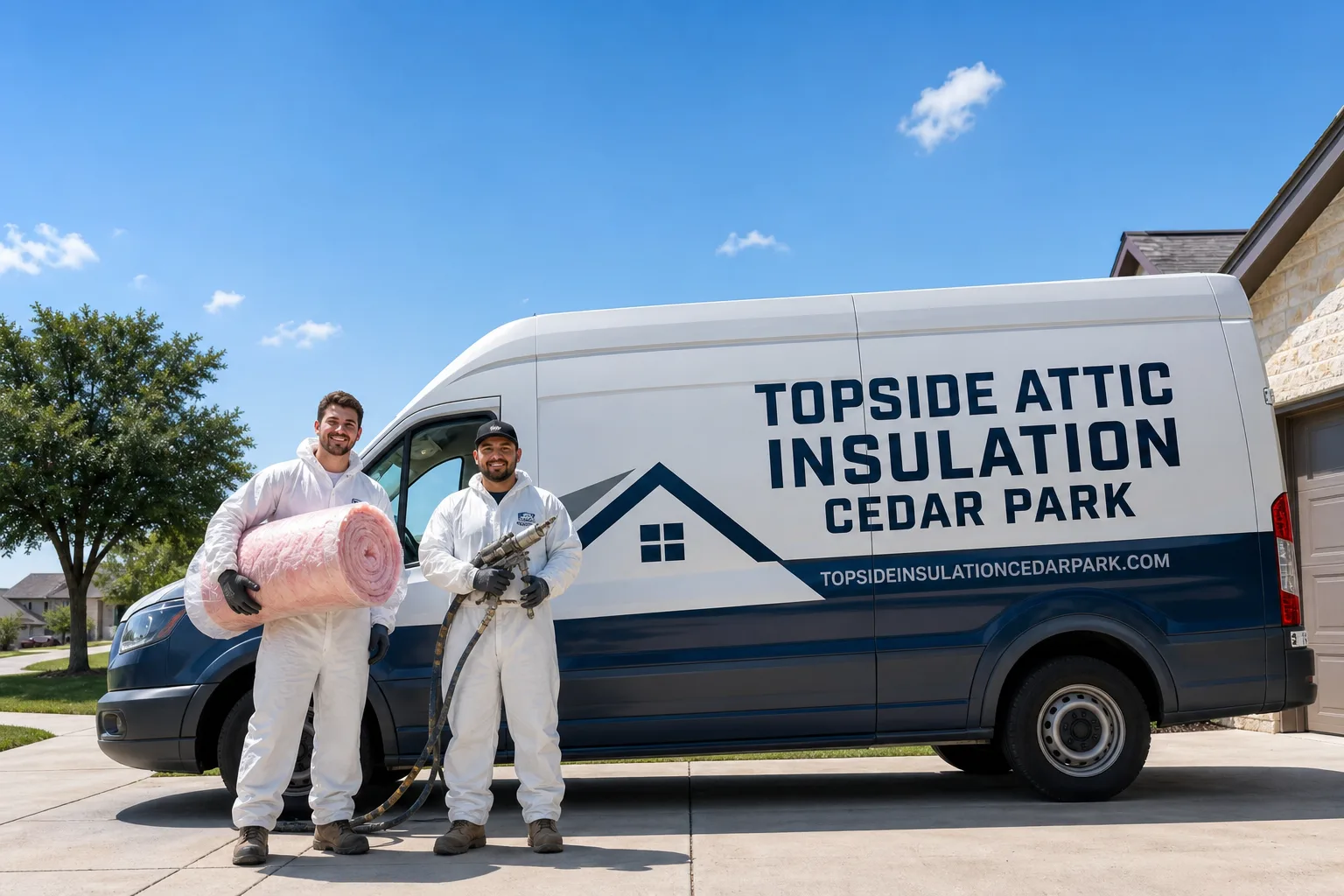
How Much Does Spray Foam Insulation Cost in Cedar Park?
Spray foam insulation in Cedar Park, TX typically costs between $1,800 and $6,500 for a whole-attic application in a home sized 1,500 to 3,000 square feet, with most jobs landing around $2,800 to $4,200 depending on foam type, thickness, and site conditions. Open-cell foam runs roughly $0.44 to $0.65 per board foot, while closed-cell foam runs $1.00 to $1.50 per board foot - and yes, those ranges reflect what Cedar Park contractors are actually pricing jobs at in 2026, not national averages pulled from a cost aggregator. If you want a flat, written number before any work starts, that is exactly how we operate at Envelope Insulation Co., under Haven Standard Clause 1: a written price and written scope before anyone lifts a tool.
Spray Foam Insulation Cost Breakdown (2026)
The table below reflects pricing as Wes Okafor and the Envelope Insulation Co. team are seeing it in the Cedar Park market heading into 2026. These are job-level ranges, not per-square-foot estimates stripped of context.
| Application / Scope | Foam Type | Typical Cedar Park Price Range |
|---|---|---|
| Attic roofline (spray to rafters, 1,500 sq ft home) | Open-cell, 5-6 in. | $1,800 - $2,800 |
| Attic roofline (spray to rafters, 2,500 sq ft home) | Open-cell, 5-6 in. | $2,800 - $4,200 |
| Attic roofline, climate-critical (closed-cell, 2 in.) | Closed-cell | $3,200 - $5,500 |
| Crawl space encapsulation + rim joist spray | Closed-cell, 2 in. rim | $1,400 - $3,000 |
| New construction wall cavities (2,000 sq ft home) | Open-cell, 3.5 in. | $3,500 - $6,500 |
| Rim joist only (existing home, full perimeter) | Closed-cell, 2 in. | $600 - $1,200 |
| Garage ceiling or bonus room above garage | Open-cell or closed-cell | $900 - $2,200 |
| Air sealing + spray foam combo (attic floor penetrations sealed before foam) | Two-component spray + open-cell | $2,200 - $4,800 |
A note on how to read that last line item: at Envelope Insulation Co., air sealing is not an add-on to a spray foam quote. It is a prerequisite. We will not spray over an unsealed attic floor because doing so traps air leakage pathways beneath the foam, leaving the home’s thermal envelope just as drafty as before at half the accessible surface area. The air sealing scope – top plates, can lights, plumbing penetrations, electrical chases – is completed first and priced into the written quote you receive before work begins.
What Does “Board Foot” Mean?
A board foot is the spray foam industry’s standard unit: a 12-inch by 12-inch area covered to a depth of one inch. So a 1,500-square-foot attic sprayed to five inches of open-cell foam equals 7,500 board feet. At $0.50 per board foot, that’s $3,750 in materials and labor combined. Contractors who quote per square foot without specifying thickness are leaving out half the equation.
Open-Cell vs. Closed-Cell in Cedar Park’s Climate
Cedar Park sits in IECC Climate Zone 2A – hot, humid summers and mild but occasionally freezing winters. That climate context matters for foam selection in ways that generic pricing guides never mention.
- Open-cell foam (roughly R-3.6 to R-3.8 per inch) is vapor-permeable, which means it allows a small amount of moisture movement. In a well-ventilated and properly conditioned home, that is usually fine in Cedar Park. It costs less per board foot and fills irregular cavities easily.
- Closed-cell foam (roughly R-6.5 to R-7 per inch) acts as its own vapor retarder, adds structural rigidity, and holds up if the attic ever sees a roof leak. It costs more, but in Cedar Park homes that experienced significant moisture intrusion during Winter Storm Uri events in 2021, it is the choice we often recommend for roofline applications and any below-grade surface.
The decision between the two is not about which foam is “better.” It is about which foam matches your home’s assembly, your HVAC setup, and your budget. We will walk through that with you before writing the quote.
What Affects Spray Foam Insulation Pricing in Cedar Park
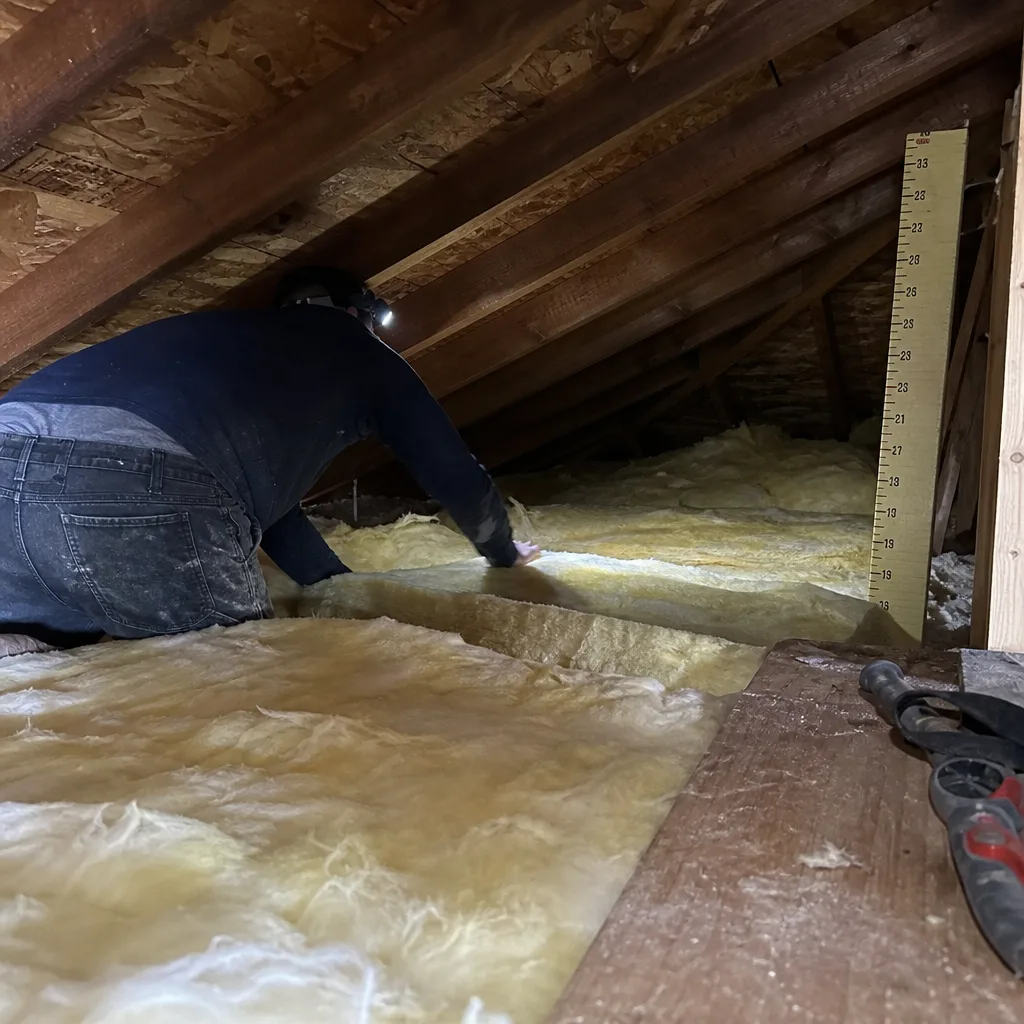
Six factors move the needle more than any other when a Cedar Park homeowner gets a spray foam quote. Some you can influence; some you cannot.
- Foam type and thickness required. As the table above shows, closed-cell foam costs roughly 2x open-cell per board foot. In Cedar Park’s Zone 2A climate, IRC code requires attics to meet a minimum of R-38 for new construction – open-cell foam needs about 10 inches to get there, while closed-cell needs roughly 5.5 to 6 inches. More inches equals more board feet equals a higher invoice.
- Home size and attic geometry. A 1,600-square-foot Ranch-style home in Buttercup Creek might have a relatively simple gable roof and accessible rafter bays. A 2,800-square-foot two-story in Twin Creeks, with hip rooflines, knee walls, and HVAC equipment staged in the attic, takes meaningfully more setup time and material. Geometry – not just square footage – drives labor hours.
- Existing insulation removal. Spray foam cannot go over fiberglass batts or blown-in cellulose on a roofline application. If your Cedar Park home has existing attic insulation that needs to come out before foam can go in, removal adds $0.15 to $0.35 per square foot depending on depth and contamination. Rodent activity, which we see regularly in attics in the Brushy Creek and Lakeline areas, can push that cost higher due to bagging and decontamination requirements.
- Attic access and clearance. Spray rigs are large. Tight eave spaces under a low-pitch roof on a slab-on-grade home in Forest Oaks require extension equipment and more time per square foot. Homes with pull-down stair access versus scuttle holes also affect setup time. If a technician cannot safely move through the space, the bid will reflect that.
- Air sealing scope before foam. This is a Cedar Park-specific consideration that most cost guides ignore entirely. Homes built in the 1990s and early 2000s – a large portion of the housing stock in areas like Anderson Mill West and Cedar Park’s older Leander Road corridor – were framed before air sealing was a standard practice. They have open top plates, unsealed can-light penetrations, and HVAC chases running through unconditioned attic space. Sealing those before foam adds time and material but dramatically improves the performance outcome. At Envelope Insulation Co., we will not skip it: sealed first, then insulated.
- Material cost fluctuation. Spray foam chemicals – polyol and isocyanate – are petrochemical derivatives. Their prices track with oil markets. In Cedar Park, as of early 2026, closed-cell foam pricing has stabilized after the 2022-2023 spike, but remain roughly 18 to 22 percent above 2019 levels. Open-cell has tracked similarly. The ranges on this page reflect current market pricing; if you received a quote from another contractor more than six months ago, get it rewritten.
How to Save on Spray Foam Insulation in Cedar Park
There are real ways to reduce what you pay for Spray Foam Insulation in Cedar Park. There are also ways that look like savings on the invoice but cost you more in utility bills and callbacks. The distinction matters.
Ways That Actually Work
- Combine scopes on a single mobilization. The most expensive line on any spray foam job is the rig mobilization – prepping the equipment, masking the space, and setting up the hoses and proportioner. If you are going to do the attic roofline, do the rim joist and the garage ceiling on the same trip. Splitting those into two jobs costs you a second mobilization fee.
- Check for Austin Energy or Oncor rebates before you schedule. Cedar Park falls within Oncor’s service territory for electricity. Oncor has offered rebates for insulation upgrades in the past, and the programs change yearly. Call their efficiency program line or check their website before booking, because rebates often require pre-approval before work starts – not after. We are happy to help you document the scope in the format most rebate programs require.
- Get the air sealing done at the same time. This feels counterintuitive because air sealing adds a line to the quote. But if spray foam is installed without air sealing the attic floor penetrations first, you have paid for insulation on a building envelope that still leaks conditioned air through every can light and top-plate gap. You will run your HVAC harder, pay more per month in utility costs, and eventually wonder why your energy bills barely moved. The air sealing is not an upgrade. It is what makes the foam work.
- Bring in a second opinion on any written quote. Under Haven Standard, Envelope Insulation Co. offers a free second opinion on any written estimate. Bring us a competitor’s quote and we will read it with you line by line – foam type, thickness, board footage, and what is and is not included. We are not the only contractor in Cedar Park worth hiring, but we can tell you whether a quote is priced correctly for the scope described.
- Ask about the blower-door baseline. Before you spend $3,000 or $4,000 on spray foam, know your starting point. A blower-door test – a pressurization reading that shows, in a single number, how much conditioned air your home is losing – costs a fraction of a spray foam job and tells you whether spray foam is even the right intervention for your home’s air leakage problem. In some Cedar Park homes, the majority of air leakage is at the attic floor, not the roofline, and blown-in cellulose after thorough air sealing outperforms spray foam at lower cost. We will tell you that honestly if the data points that direction.
Ways That Look Like Savings But Are Not
- Reducing thickness below code minimum to cut cost. At R-3.6 per inch, open-cell foam needs 10.5 inches to reach R-38. At 7 inches you are at roughly R-25 – out of compliance with IRC requirements for Cedar Park and performing well below where it should. Some contractors will bid lower thicknesses without flagging the code issue. Check the thickness spec on any quote you receive.
- Choosing a contractor who does not document their work. Spray foam cannot be inspected after it cures over surfaces. If a contractor does not photograph the substrate condition before spraying, the coverage during application, and the finished surface after cure, you have no documentation that the job was done to the quoted thickness and specification. At Envelope Insulation Co., a documented photo record is included on every visit – not as a premium option, but as standard practice under the Haven Standard.
For a written price on your specific Cedar Park home – with the scope documented and the foam type explained before any work starts – call Wes Okafor and the team at (737) 245-6428. Estimates are free and the quote is written before any work begins, no exceptions.
Cedar Park-Specific Considerations You Won’t Find in a National Price Guide
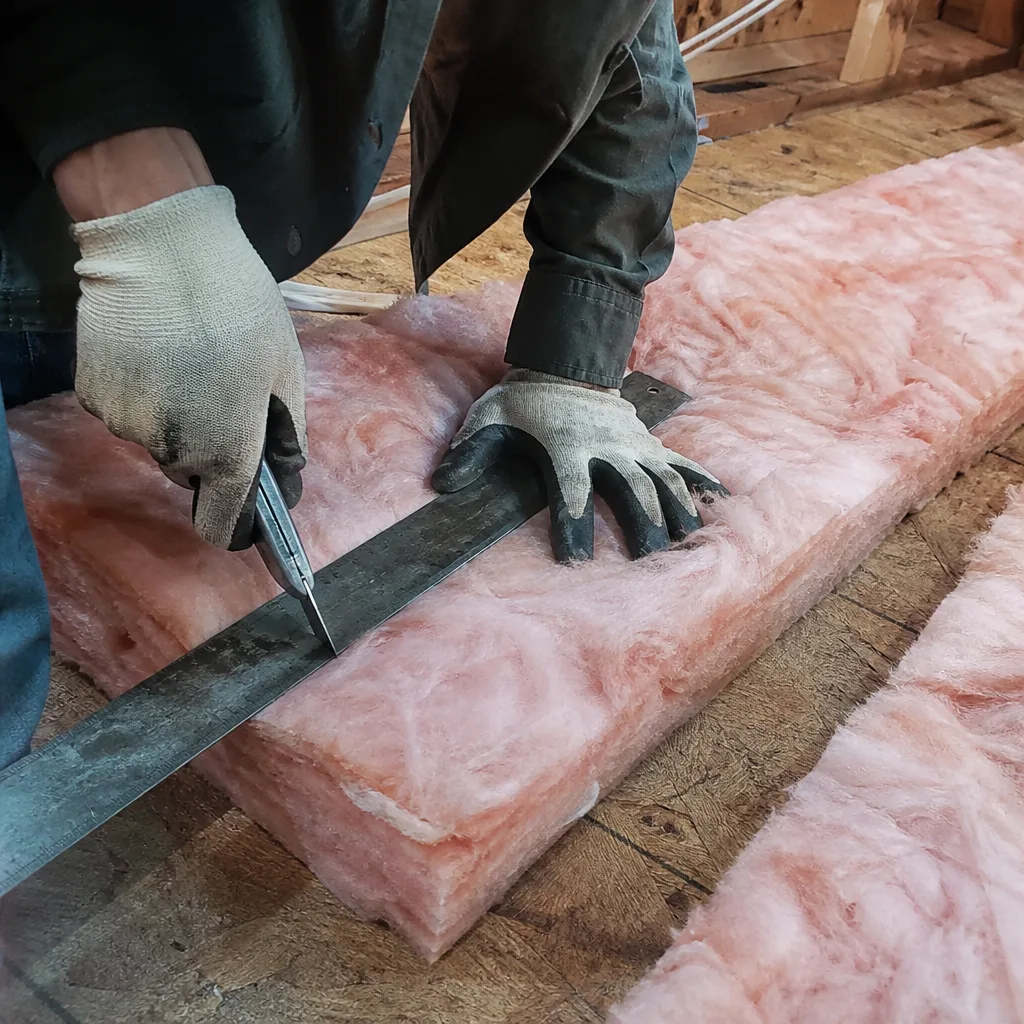
Cedar Park’s housing stock has a few patterns that show up often enough in our work that they are worth naming explicitly, because they affect spray foam pricing and performance in ways that generic cost articles never mention.
The 1995-2010 Build Window Problem
A significant share of Cedar Park’s homes were built during the city’s fastest growth period, roughly 1995 to 2010, when subdivisions like Buttercup Creek, Forest Oaks, and Anderson Mill West were filling out rapidly. Builders of that era in the Austin metro were not required to meet today’s air sealing standards, and in practice, attic air sealing was almost never done. These homes have open top-plate walls, unblocked framing cavities that connect conditioned space to the attic, and can lights that run directly into the attic with no box or gasket.
When Wes Okafor’s team blower-door tests a 2000-vintage Cedar Park home before work, we routinely see readings in the range of 4,000 to 6,500 CFM50 – cubic feet per minute of air moving through the envelope at 50 pascals of pressure, the industry standard test condition. After attic air sealing and spray foam on the roofline, the same homes typically read 2,000 to 3,500 CFM50. That delta – the before-and-after number – is what you paid for. We publish it on every applicable job.
Radiant Heat Load in the Cedar Park Attic
Cedar Park’s summer attic temperatures routinely exceed 150 degrees Fahrenheit on a west or south-facing roofline. Spray foam applied to the roofline (the rafters) converts the attic from an unconditioned “vented” space to a conditioned or semi-conditioned “unvented” space. The HVAC equipment and ductwork that was previously roasting in a 150-degree attic is now sitting in a space that holds closer to 80 to 85 degrees. The duct leakage losses that cost you money every August drop significantly even before you account for the foam’s R-value. That is a Cedar Park performance outcome specific to the climate – and it is one reason why spray foam on the roofline, despite the higher upfront cost compared to blown-in cellulose on the attic floor, often produces faster payback in this market.
The Winter Storm Uri Legacy
Since 2021, we have worked in Cedar Park homes that sustained pipe and insulation damage during the February 2021 freeze event. Closed-cell foam, in particular, holds up to moisture intrusion better than open-cell or fiberglass and does not absorb standing water the way cellulose can. If your Cedar Park home had water damage in the attic or crawl space during Uri or during the flooding events in 2023, and the insulation was replaced with blown-in fiberglass or cellulose at that time, it may be worth having the attic floor evaluated before assuming the replacement installation is still performing correctly.
FAQs – Spray Foam Insulation Cost in Cedar Park
How much does spray foam insulation cost per square foot in Cedar Park, TX?
In Cedar Park, open-cell spray foam costs roughly $0.44 to $0.65 per board foot, and closed-cell costs $1.00 to $1.50 per board foot. A “board foot” is one square foot of coverage at one inch of thickness, so a 2,000-square-foot attic sprayed to six inches of open-cell equals 12,000 board feet – multiply by $0.50 and you are at $6,000 before any prep or air sealing. Most residential attic jobs in Cedar Park run $2,800 to $4,800 for the foam itself, depending on foam type, thickness, and attic geometry. Call (737) 245-6428 for a written number specific to your home’s square footage and roof style.
Is open-cell or closed-cell spray foam better for Cedar Park’s climate?
Both foam types perform well in Cedar Park’s Zone 2A climate when installed correctly. Open-cell is vapor-permeable, fills irregularly shaped rafter bays easily, and costs roughly half as much per board foot. Closed-cell delivers a higher R-value per inch (R-6.5 to R-7 vs. R-3.6 to R-3.8), acts as its own vapor retarder, and holds up better if the attic sees moisture. For roofline applications in Cedar Park homes with a history of roof leaks or condensation issues, closed-cell is usually the more durable choice. For most standard attic conversions in well-maintained homes, open-cell performs well at a lower cost. The right answer depends on your home’s specific assembly and HVAC setup – we will walk through that in writing before quoting.
Does spray foam insulation lower energy bills in Cedar Park, and by how much?
Yes. Converting a vented attic to an unvented (conditioned) attic with spray foam on the roofline typically reduces cooling loads in Cedar Park homes by 15 to 30 percent, with higher savings in homes that had leaky ductwork staged in the old unconditioned attic space. The exact reduction depends on your home’s existing air leakage rate, the condition of your ductwork, and how well the foam application was executed. We measure the starting point with a blower-door test – a pressurization reading in CFM50 – before work begins, and we record the post-work number so you can see the documented performance change rather than estimating it.
Can I spray foam an attic that already has blown-in insulation?
It depends on where you want to apply the foam. If you are converting to an unvented roofline application (foam sprayed to the rafters), the existing blown-in insulation on the attic floor needs to be removed first – you cannot simply spray over it and expect the thermal boundary to shift correctly. If you are adding spray foam to rim joists or wall cavities only, the existing attic floor insulation can stay. In Cedar Park homes where the blown-in insulation was installed correctly and is still in good condition, we sometimes recommend a hybrid approach: thorough air sealing of the attic floor followed by additional blown-in to meet current R-38 or R-60 requirements, which can cost significantly less than a full roofline spray foam conversion. We will tell you which approach makes more sense for your home based on what we find when we look at it.
How long does spray foam insulation last, and does it come with a warranty?
Properly installed spray foam – both open-cell and closed-cell – has an effective lifespan of 25 to 30 years or more in most residential applications. It does not settle, it does not absorb moisture the way fiberglass batts can, and it does not shift under rodent pressure the way loose-fill cellulose sometimes does. At Envelope Insulation Co., every job completed under the Haven Standard carries the 365-Day Done Right Promise: if it is not done right, we make it right, backed by a written warranty delivered before work starts. The warranty terms are in writing before anyone begins – not as a handshake offer after the crew leaves. If you are comparing warranties across Cedar Park contractors, ask to see the written document before signing anything.
Key Takeaways
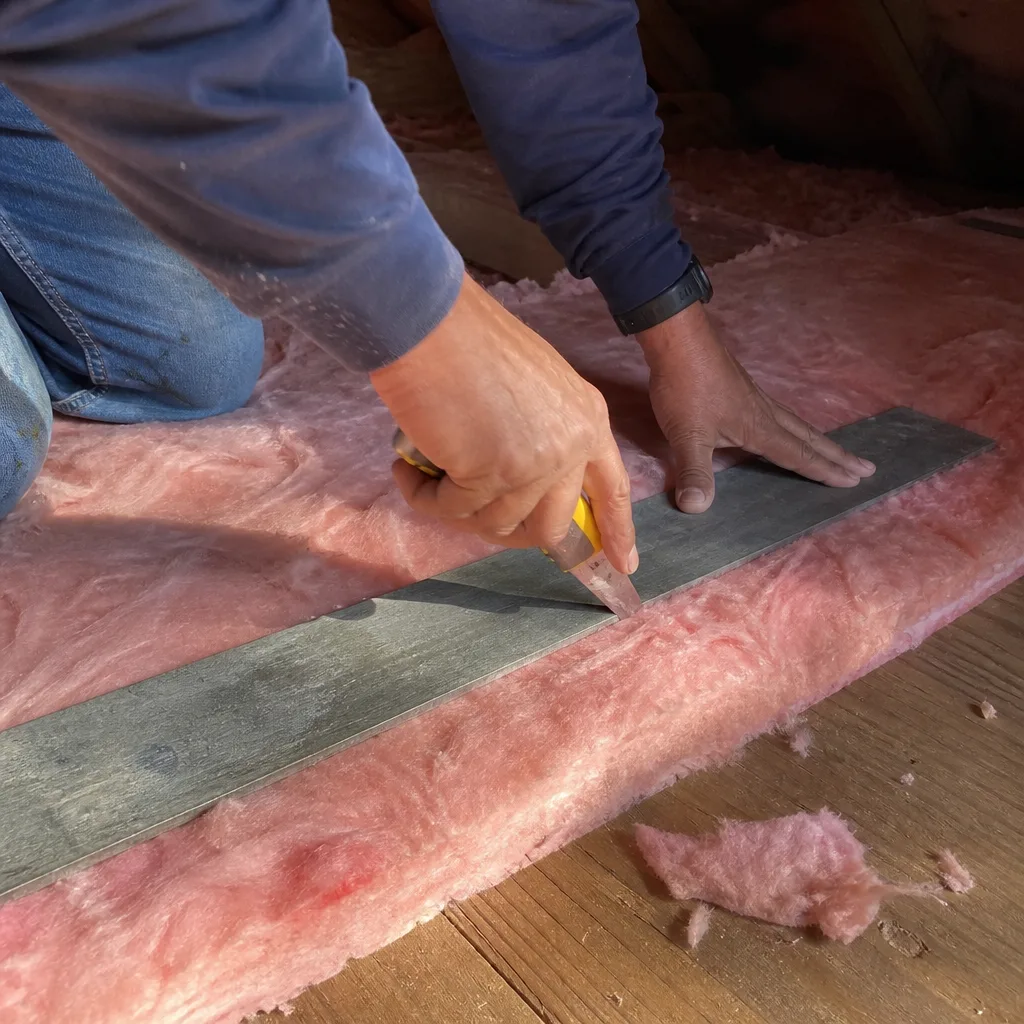
- Spray foam insulation in Cedar Park runs $1,800 to $6,500 for most residential jobs, with the majority of attic applications landing between $2,800 and $4,800.
- Open-cell foam costs roughly $0.44 to $0.65 per board foot; closed-cell costs $1.00 to $1.50 per board foot.
- Air sealing must be completed before foam is applied to produce a measurable improvement in a home’s air leakage rate – and a blower-door test before and after the work documents the result in a single verifiable number.
- Cedar Park’s Zone 2A climate, the 1995-2010 build window, and summer attic temperatures above 150 degrees Fahrenheit all affect which foam type and application method delivers the best payback for your specific home.
- At Envelope Insulation Co., Wes Okafor and the team operate under the Haven Standard: a written price before any work starts, a documented photo record when the crew leaves, and before-and-after blower-door readings published on every applicable job.
- A free second opinion on any written estimate from another contractor is available by calling (737) 245-6428.
Get a Written Price Before Any Work Starts
If you are a Cedar Park homeowner researching our Spray Foam Insulation services, you now have the market’s actual price ranges and enough context to evaluate any quote you receive. The next step is a site visit – which at Envelope Insulation Co. always ends with a flat, written price for the documented scope before anyone starts work.
Wes Okafor leads every estimate with the same approach: look at what is actually in the attic, measure what the blower-door test tells us, and write a price that reflects your home’s specific conditions rather than a square-footage formula. We work throughout Cedar Park, including Buttercup Creek, Twin Creeks, Forest Oaks, Anderson Mill West, and the Lakeline corridor. Call (737) 245-6428 to schedule a free estimate. A live person will answer – no voicemail loops, no callback windows measured in business days.
Under Haven Standard Clause 1: you will have the written price and written scope in hand before any work begins, and a documented photo record when the crew leaves. That is how Envelope Insulation Co. has operated since 2016, on every one of the 9,000-plus homes we have sealed and insulated across the Cedar Park and greater Austin market.
Written by Wes Okafor, Owner at Envelope Insulation Co. (operating as Topside Attic Insulation Cedar Park), serving Cedar Park, TX since 2016. Pricing reflects the Cedar Park market as of 2026. Topside Attic Insulation Cedar Park offers free estimates – call (737) 245-6428.
What Our Customers Say
"The winter gas bill dropped by about a third. They had estimated a quarter, so they under-promised."
- Genevieve R."Crawl space encapsulation done properly. Photographs of the vapour barrier at every seam, and the damp smell in the hallway is gone."
- Ainsley P."Fixed price, clean work, and they hauled the old material away as agreed."
- Todd M.